facebook

Private teachers in Saint

Find your perfect private tutor in Saint.
Learn with our teachers at home or in their studio.

0 Teachers your wish list
|
zoom in iconzoom out icon

613 private teachers in Saint

Students' Choice

Elise

verified teacher icon
Recently active
Recently active
4.9

45 reviews

(45)

69€

60-min

/h

trusted teacher iconTrusted teacher
student icon
9Students

Private German lessons by qualified academicTranslate this text using Google Translate.

Private German lessons by qualified academicTranslate this text using Google Translate.

With a university degree in German language and literature (Master of Arts in German with a specialization in medieval languages and literature) and solid experience, I offer private German lessons for all levels and all age groups. My courses are designed to be adapted to the age, level and specific needs of each individual. They aim to introduce the language, consolidate concepts, fill gaps, and prepare for exams (ECR 8P, compulsory school leaving certificates, entrance exams for gymnasiums, maturity and university exams, Goethe Zertifikat up to B2). Specifics for academic support: Since this is primarily a long-term endeavor, I emphasize methodology by taking the time to "learn how to learn" effectively: every exercise is explained in detail, which may make its execution slower. Quality takes precedence over quantity in order to achieve optimal results over time. Students bring their own course materials (notebooks, textbooks, tablets and/or computers, dictionaries, assessments...). Another important point: in order for my help to be beneficial, it is necessary that the student provides regular personal work between lessons. This essentially involves rereading your notes, repeating exercises similar to those carried out together or even moving forward in learning vocabulary. Specifics for conversation classes: The topics are based on interests and/or specific needs for exam preparation. I attach particular importance to pronunciation, fluency and vocabulary. I usually correct at the end of a conversation exercise with detailed feedback, in order to avoid any blockages and to work on fluency. Depending on the level of the students and/or their expectations (exam preparations/assessments/desire for improvement for example), I work on the choice of appropriate words, grammatical accuracy, the ability to formulate more or less complex sentences. Specifics for exam preparation: The courses offer to acquire solid tools to learn to write, to comment on literary texts and a methodology to work on oral comprehension. The student must bring their own exam preparation brochure, available in all bookstores. For Goethe Institute model exams, the exam books from Cornlesen are particularly suitable. The other alternative would be to download and print before the start of the course a copy of the Goethe Institute exam available on the institute's website. Specifics for listening comprehension: I primarily use audiovisual materials downloaded from the Deutsche Welle website, which offers a variety of recordings suitable for all levels, with a very practical approach. Over time, students not only gain fluency in listening comprehension but also enrich their basic vocabulary through exercises. I also work with the Goethe-Institut's oral tests to familiarize them with spoken language. Specifics for written expression work: I begin by explaining in the first lesson some methodological tools to acquire writing skills. The student has the opportunity to start writing during the course or do a writing exercise on duty and give it to me to correct (send by email or at the beginning of the next lesson). The corrections are explained in detail. In addition, at the time of booking, the student can send me a draft copy before the lesson so that I can meet his needs even more quickly. Besides my presence with the student, every lesson involves preparation time before and after, particularly for the assignments I correct. My goal is to design an individualized course, so I take the necessary time to write detailed comments in my corrections or offer advice to maximize each student's success. In addition, each student can contact me at any time outside of class by email if necessary. Feel free to contact me for more information, and I look forward to supporting you in your learning. 😊

Ecole Accompagnement

verified teacher icon
Recently active
Recently active
108€

60-min

/h

✅ STRATEGIC SUPPORT: COMMUNICATION, INFLUENCE & PROJECT DEVELOPMENT – BY A RECOGNIZED AND CERTIFIED EXPERTTranslate this text using Google Translate.

✅ STRATEGIC SUPPORT: COMMUNICATION, INFLUENCE & PROJECT DEVELOPMENT – BY A RECOGNIZED AND CERTIFIED EXPERTTranslate this text using Google Translate.

➤ Turn your trades into victories! Whether it's to negotiate a contract or remuneration, defend an idea, advance a project, start a business, convince a partner, gain the support of a team, resolve a conflict or simply make yourself better understood, one thing can make all the difference: knowing who you are dealing with and how to communicate with that person. Because there is no single way to communicate effectively. The same method won't work for everyone. A rational person isn't persuaded in the same way as an emotional one. A cautious person doesn't react like an ambitious one. A decision-maker, a colleague, a client, an investor, a partner, or a loved one doesn't have the same expectations, motivations, or interests. The goal is therefore to learn to observe, understand, analyze and adapt your communication in order to deploy the right tool, the right method and the right strategy, at the right time and in front of the right person. ➤ Understanding humans to communicate better Our way of communicating relies largely on understanding certain mechanisms of human psychology. Human beings are naturally attentive to what directly concerns them. They are sensitive to their interests, needs, fears, curiosity, recognition, need for security, and desire to be understood and valued. The idea is therefore not simply to say what you have to say, but to understand: -How can you make your interlocutor want to listen to you? -How can you present your message so that it makes sense to him? -How to spark their interest? -How can we address his concerns before he even expresses them? -How to create a dynamic favorable to your objective? For example, rather than immediately presenting an idea solely from your own perspective, you will learn to identify what may interest your interlocutor and to build your communication around their concerns. Even a simple, common phrase like, "What I'm about to explain could be of real interest to you, particularly because..." can already capture more attention than a presentation focused solely on your own needs. But of course, there are many more techniques for subtly influencing someone. Similarly, understanding certain mechanisms such as curiosity, self-interest, recognition, trust, consistency, emotion, or risk perception allows for a more relevant and effective approach. ➤ Profiling & analysis of interlocutors Before communicating effectively, you must first understand who you are addressing. You will learn to analyze your interlocutor through different elements: -His way of communicating -His priorities and interests -His motivations ️ --His needs and expectations -His potential resistance and objections -His decision-making process -His relationship to risk -His personal or professional stakes -The verbal and non-verbal signals he can express -What can promote or hinder its adoption The goal: to no longer communicate automatically or identically with everyone. You will learn to adapt your speech, posture, arguments, questions and strategy depending on the person you are facing. ➤ Advance your projects and ambitions Do you have a project? Do you want to create a company, launch an activity, advance within your organization, defend an idea, obtain the agreement of a decision-maker, or get several people or departments to collaborate? A project is not based solely on its quality. It also depends on your ability to: - Identify the right contacts -Understanding the interests of each stakeholder -️ Knowing how to approach each person - Adapt your communication according to the department or function - Present your project from the angle most relevant to each individual - Anticipate objections and resistance - Create alliances and gain support - Negotiating effectively when interests diverge - Knowing when to insist, when to rephrase, when to wait, or when to change approach The same project may require several communication strategies depending on the person you are addressing. The goal is to give you the necessary tools to understand this dynamic and move your project forward with more method, strategy and efficiency. ➤ Negotiation: much more than defending one's position Whether it's for negotiating: A contract A salary A partnership A budget A strategic project A career progression A decision Or resolve a conflict Negotiation is not just about finding good arguments. It also involves understanding: Who is in front of you? What he really wants. What he stands to gain. This is what he is trying to avoid. What are his interests? What are its constraints? And what strategy can create a favorable outcome? ➤ On the agenda: support tailored to your objectives -Psychology of communication & understanding of behaviors -Understanding some fundamental mechanisms of human psychology -Identify the needs, motivations and interests of your interlocutors -Understanding why some approaches work with some people and fail with others -Use interest, curiosity, recognition, trust and other communication levers -Craft a message that makes people want to listen Profiling and analysis of interlocutors -Observe and analyze how a person communicates -Identify your priorities and your way of working -Detect potential resistance and objections -Understanding verbal and behavioral signals -Adapt your strategy to the person and the context Persuasive communication -Formulate your arguments with impact -To promote your ideas so that they are considered -Structuring a convincing speech -Ask the right questions -Create interest and engagement -Adapt your language and your approach -Develop your ability to persuade without engaging in unnecessary power struggles Strategic negotiation -Identify and utilize negotiation levers: alternatives, common interests, concessions, and room for maneuver -Preparing effectively for a negotiation -Anticipate different scenarios -Identify the interests and positions of stakeholders -Build a suitable strategy -Managing objections and deadlock situations -Knowing how to evolve a discussion when the initial strategy is not working -Maximize your chances of reaching a favorable agreement Project strategy & support -Clarify your objective and your strategy -Identify the different stages and priorities -Understanding who to interact with and in what order -Prepare your discussions with the various stakeholders -Adapt your communication according to the departments, partners or decision-makers Prepare for your important appointments -Anticipate difficulties and resistance -Deploy the most relevant tools and methods according to each step Conflict management and complex situations -Understanding the mechanisms that give rise to a conflict -Identify the real issues behind the positions expressed -Manage your emotions and those of the person you are speaking with -Develop active and strategic listening -Moving beyond unnecessary power struggles -Regaining control of a difficult exchange -Find constructive and sustainable solutions The right tool, at the right time, with the right person This is one of the central principles of this support. Knowing a technique is not enough. You also need to know: -When to use it. -With whom. -In what context? -And in what a way. The same technique can be extremely effective with one person and totally counterproductive with another. You will therefore learn to develop a true strategic reading of interactions, so that you no longer act solely on intuition, but understand the dynamics at play and consciously choose your approach. ➤ Tailored support This program is aimed particularly at: -Entrepreneurs and project leaders -Business leaders and executives -Managers and executives -Young professionals -Self-employed individuals and professionals -People wishing to advance within their company -Liberal professionals (lawyers, doctors, etc.) -Anyone with a project, ambition, or goal to achieve -Anyone wishing to improve their relationships and communication in a personal setting Each support program is tailored to your specific situation and concrete objectives. We can work directly on your projects, negotiations, appointments, relationship difficulties, or professional situations. The goal is not simply to learn concepts. You learn to use them practically in your own life. ➤ A practical, engaging, and results-oriented teaching approach We alternate methodological input, analysis of real situations, role-playing, simulations, preparation of your discussions and personalized feedback. You can bring: -A project to be developed. -A negotiation to prepare for. -An important appointment. -A conflict to be resolved. -A difficult person to manage. -An idea worth defending. -A business to launch. -Or simply an ambition you wish to realize. Let's analyze the situation together: -What is your objective? -Who are the relevant stakeholders? -What are their interests and what is at stake? -What obstacles might arise? -What strategy should we adopt? -What approach should be used? -Which arguments should be prioritized? -What tools should be deployed? -And most importantly: at what point? ➤ Become a strategic communicator The goal of this support is to enable you to develop a skill that will serve you in all areas of your life: -Understanding people. -Understanding the situations. -Understanding the issues. -Then adapt your communication and strategy to achieve your objectives. Whether you are setting up a project, developing a business, advancing professionally, negotiating an opportunity or managing a complex personal situation, you will have concrete methods, tools and strategies to communicate with greater impact, intelligence and efficiency. Stop letting your projects, ideas, or ambitions depend solely on your intuition. Learn to understand people, decode situations, and deploy the right strategy at the right time to advance what truly matters to you. ✅ THE TRAINER - TEACHER CONSULTANT A graduate of a prestigious French Grande École and an Ivy League university in the United States, he combines academic rigor with modern teaching methods. With over 18 years of experience in Europe and North America, he has taught at prestigious international institutions (both public and private), and regularly speaks in Switzerland, France, Belgium, Luxembourg, and Canada, as well as at various forums and conferences. A recognized specialist, he offers personalized and accessible support based on active listening, a proven methodology, and tailored teaching methods. Whether through one-on-one sessions, workshops, or group training, his approach combines customization, efficiency, and professionalism for rapid, visible results. ✅ LOCATIONS: Switzerland (Geneva, Lausanne, Fribourg, Zurich, Neuchâtel, Lugano, Basel, Bern, Lucerne), Belgium (Brussels, Antwerp, Charleroi, Liège), Luxembourg. On request: France (Paris, Lyon) and Canada (Montreal). Currently, we primarily use videoconferencing, a highly popular format: it offers the same quality as in-person meetings, flexible organization, time savings, flexibility, comfort, and an eco-friendly approach. Content, notes, and recommendations are shared directly via a dedicated chat. ➤ Languages: French and English. ➤ Reduced and stable fees, accessible without compromising on quality. ➤ Gift vouchers available all year round. ➤ Schedules defined together according to your constraints. ➤ 100% tailor-made program, adapted to each need. ➤ Noticeable progress from 2 sessions (2026 study). ✅ Why choose this training? -International expertise at the service of your objectives. -Personalized sessions with concrete tools. -A lively, interactive and results-oriented approach. -A motivating and supportive environment, fostering confidence and rapid progress. -Tangible results in just a few sessions.

Qamille

verified teacher icon
Recently active
Recently active
5.0

1 reviews

(1)

108€

60-min

/h

trusted teacher iconTrusted teacher
student icon
1Students

✅ SEMIOLOGY, 'BEHAVIORALISM' ('BEHAVIORAL' ANALYSIS, 'PROFILING') IN THE SERVICE OF EFFECTIVE COMMUNICATION AND SPEAKING 🚀Translate this text using Google Translate.

✅ SEMIOLOGY, 'BEHAVIORALISM' ('BEHAVIORAL' ANALYSIS, 'PROFILING') IN THE SERVICE OF EFFECTIVE COMMUNICATION AND SPEAKING 🚀Translate this text using Google Translate.

➤ A follower of the "message beneath the message", as Roland Barthes would say, the semiologist is above all a detective of language and helps you in this sense: he sees meaning, deciphers and carefully analyzes the signs that surround him to interpret their meaning, reports on the effects of meaning, the connotations and the implicit present in the communication. He starts from the surface signs visible to all to bring out the latent meanings. His interest is most often focused on the phenomena "on the margin", at first glance not very significant, which are located behind the scenes, rather than on stage. In short, all these elements not necessarily visible at first glance. What applies to semiological analysis? Everything: Images, logos, websites, gestures, behaviors, words, speeches, symbols, spaces, in short everything that allows humanity to communicate. On the other hand, the semiological method cannot be invented since it is very specific. Like an iceberg, it is a question of going from superficial and visible signs to latent signs and meanings. ➤ A fascinating discipline, semiology and the analysis of gestures, behaviors and verbal & non-verbal language allows us to decipher the signs of our personal and professional daily lives. In a political speech, on an advertisement, or through our gestures in the professional and personal context, our words and behaviors, the narration of signs mark a certain relationship to the world. ➤ By learning to dissect the meaning of words and gestures, semiology allows us to take a particular look at the coherence of communication and its relevance (versus the opposite), to understand the details of our own speech, and then to make good use of it. ➤ Thus, from the semiological methodology (rigorous, specific, objectifying), verbal, graphic, symbolic and behavioral identities can emerge. ➤ Finally, semiology is neither a matter of philosophy (it only operates from one or more corpora, concrete materials to be analyzed) nor of psychology (it is less interested in intentions than in the signs produced). It is an analysis, a look at one's own communication and that of others which allows one to react better intuitively. ➤ This is why these sessions are intended to be above all practical: filmed exercises, analysis of images to be dissected and then implementation of techniques / tools / methodology which will help you in your daily life, to improve your verbal and non-verbal language but also to decipher and understand that of others. ➤ Among the content browsed: 1) identify and act on behaviors: -transmission of acquired knowledge on non-verbal communication in order to quickly detect intentions -immersive team-building mode to bring out helpful behaviors (despite the saboteurs) 2) Profiling - Diagnose and guide based on a written or visual corpus: -build the storytelling -bring out a type of profile -understand insights 3) Brand Strategy - Create a new brand, company or personal positioning 4) Concrete techniques & a targeted methodology for: ✓Acquire practical tools to improve your rhetoric/repartee ✓Decode and use the practical communication tools of great leaders ✓Fundamentals (practices) of eloquence but also of oratorical art (intonation, gaze, gestures, elocution, range, emotions, pronunciation, development of one's own style of charisma, etc.) to ensure consistency between content and the form ✓Fundamentals of Body Language to support and not interfere with the speech while being convinced & convincing. ✓ Highlighting their speech & promoting their speaking to arouse interest, by building on their strengths. ✓Creation of a coherence between the message emitted & the message received in order to improve its speech and in fact, its professional/personal relations. ✓Management of Q&A sessions & external reactions during an intervention or an oral exchange. ✓Practical tools to put your interlocutor at ease and appear friendly/interested. ✓To succeed in a negotiation/mediation. ✓On the one hand, learning to say 'no' simply in three steps AND on the other hand, getting people to say 'yes'. ✓To turn sentences into positive AND constructive. ✓To manage conflicts (eg 'assertive' communication techniques, eg CNV techniques - Non Violent Communication). ✓To put NLP (neuro-linguistic programming) at the service of communication. ✓To adopt effective, simple, fair and engaging language. ✓To use sentences, turns of phrase & expressions allowing to be precise, simple, effective & challenging. ✓To manage your personal & professional relationships with, for example, the preparation of your ratings. ✓Make your hypersensitivity a strength to tame your abilities. ✓Listening proactively and expressing / conveying ideas / message clearly. ✓Avoid letting your emotions show and propose a constructive solution to problems, while drawing on your own relational skills. ✓Be better equipped to recognize and immediately remedy situations that weaken their authority and affect their ability to communicate effectively. ✓Enhance their potential for expression and creativity (often underestimated until now) and 'apparent' sociability ✓Develop not necessarily self-confidence, but the 'appearance' of self-confidence, refine one's listening to respond adequately, open up to the resources of the imagination, free oneself from the rational to then structure one's speech. ✓Relate their communication objectives (project, institution, values, ideas, demands, etc.) to the form of their expression. ✓Learn and put into practice persuasive communication techniques and better understand the perception that others have of oneself. In order to improve his skills of 'self-presentation' and conveyed image. ✓Practical techniques to foster the engagement of the other party. ✓Strengthen the structure of its communication and develop a convincing argument in order to sell its ideas and projects. ✓ Optimizing internal and external relationships are professional fundamentals so that the structure of sessions, business dialogue and mastery of change communication are valuable. ✓ Decode advertisements, logos and slogans, Understand the impact of images and symbols on our emotions, Analyze cultural trends across the media, Create your own visual messages with formidable efficiency ✓ Analysis of non-verbal communication: - paralinguistic level: voice analysis, intonations, speech rate (...) - proxemic level: analysis of the distance between bodies/individuals - kinesic level: analysis of postures, gestures and facial expressions - infralinguistic level: analysis of physiological changes (dilation of pupils, blushing, sweating, etc.) - symbolic level: analysis of what adorns the body such as clothing, badges, tattoos (...) ➤ The semiologist or semiotician is led to specialize in certain universes, whether it is luxury, mass consumption or behavioral and body dynamics. His analyst side (linguist, semantician, semiologist, semiotician) and lecturer on the themes of negotiation and non-verbal communication will support your approach. ➤ So, discover the hidden secrets of signs if you are curious to understand the mechanisms behind advertisements, works of art, films or even social networks, if you want to learn to decipher hidden messages and analyze the signs that influence our thoughts and actions on a daily basis. As part of a fun and interactive learning experience, with concrete exercises for a captivating immersion. ➤ In short, in a context guided by the tools of semiology, the ability to speak in public is today an essential transversal skill to assert oneself, inform, negotiate and convince. However, to master the keys to successful public communication, it is necessary to strengthen the impact of one's own speeches: by structuring one's interventions and taking into account the circumstances and expectations of the audience; by making an impression through storytelling; by integrating the psychological and emotional factors of effective oral communication; by integrating emotions into the preparation of the message and arguments; by anticipating objections and delicate situations; by preparing and structuring an attractive and convincing presentation framework; by experimenting with the rules of improvisation; by adequately managing difficult situations (...). ➤ Whether your goal is personal or professional, speaking is a predominantly physical activity, relying on a body, a voice, a breath, a rhythm (diction), an emotion and above all techniques, tools, a method, a know-how, reflecting the involvement of the speaker in his speech, all guided by the principles of semiology and behavioral analysis. ➤ So, how do you listen and be listened to, convince and be impactful, challenge and make an impression, enhance your content, address your audience appropriately and optimize the quality and clarity of the exchange/message? It is precisely about going through, implementing and deploying practical and effective techniques of oral presentation, simple intervention or 'one to one` exchange, aimed at challenging your audience or interlocutor, taking care of the content as well as the form, all in a professional or personal setting. For this, there are verbal and non-verbal communication techniques, based on semiology. ➤ Thus, mastered, the practical method allows, through a set of simulations and scenarios based on your daily experience supporting pragmatic & concrete techniques, to improve self-confidence, assurance, ease by overcoming embarrassment and controlling emotion in public. But also to work on leadership & charisma, in a context where empathy and emotional intelligence are at the service of communication, all based on the founding principles of semiology. ➤ To master the keys to successful public communication, it is necessary to master certain practical aspects of semiology, to strengthen the impact of your speeches: by structuring your interventions and taking into account the circumstances and expectations of the audience; by making an impression through storytelling; by integrating the psychological and emotional factors of effective oral communication; by integrating emotions into the preparation of the message and arguments; by anticipating objections and delicate situations; by preparing and structuring an attractive and convincing presentation framework; by experimenting with the rules of improvisation; by adequately managing difficult situations (...). ➤ In short, each session combines techniques & practical exercises adapted to your daily situations (filmed with your agreement in order to be reviewed, commented on, decoded together live), so that you can apply them immediately, and from the 1st session. 🚀 Discover the Hidden Secrets of Signs. Dive into the fascinating world of semiology with our practical training! Are you curious to understand the mechanisms behind written or oral communication? Learn to decipher hidden messages and analyze the signs that influence our thoughts and actions on a daily basis, with fun and interactive learning: Beyond theory, you will participate in concrete exercises, case studies to master the art of communication. Join us for a captivating immersion in one of the most exciting fields of human sciences! THE TRAINER ➤ With training from Grande Ecole post-preparatory classes & Ivy League university in the United States, our teacher trainer has specialized and has worked for more than 15 years in the field, in Europe and North America, in renowned international public and private establishments, regularly speaking in forums and conferences, and also offering personalized INDIVIDUAL support, with pedagogy and careful methodology as the watchwords. ➤ PLACE, TIMETABLE, PRICES ✓ Locations: Geneva-Lausanne-Fribourg-Zurich-Neuchâtel-Lugano-Basel-Neuchâtel-Berne-Lucerne-Brussels-Luxembourg-Paris-Lyon. But currently, these sessions continue to be offered by videoconference in the current context and in accordance with general demand which is almost unanimous on this subject. ✓ Indeed, apart from the classic advantages of videoconferencing (time saving related to travel & their unforeseen events, eco-responsibility, increased schedule flexibility, etc.), the quality of the session & the interaction remain identical. In addition, the entire exchange, notes and recommendations are immediately transcribed on the dedicated chat. ✓ To support us among ourselves & to be pleasant to you in this sustainable / particular period and in a spirit of solidarity, the fees are temporarily reduced and will not increase after the start of our sessions. ✓ Languages: French/English. ✓ The progress following these private sessions is perceptible from 1 to 2 sessions (*2024 study). ✓ As other people do regularly, you can also please your loved ones by offering gift vouchers available all year round.

Valentin

57€

60-min

/h

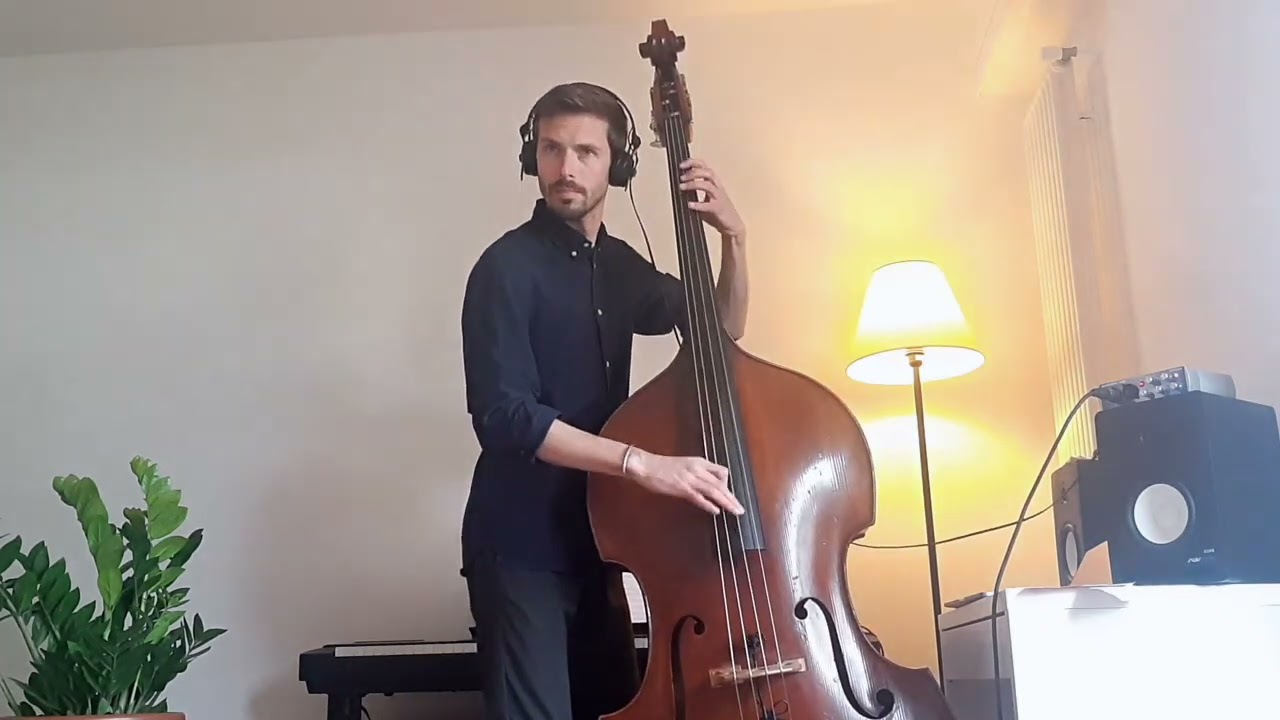
🎻 Learn the cello with passion and pleasure!Translate this text using Google Translate.

🎻 Learn the cello with passion and pleasure!Translate this text using Google Translate.

For the past three years, I have been teaching cello in music schools and within musical associations in France. This experience has allowed me to work with a wide variety of students: children who are beginners or already musicians, teenagers, adult beginners, as well as people wishing to take up the cello again after several years of interruption. This diversity of students has convinced me of one thing: there is no single right way to learn music. That's why I adapt my teaching methods to each individual, taking into account their age, level, needs, personality, and above all, their goals. For children: I aim to create an environment that is structured, fun, and motivating. Technical learning remains essential, but it must be accompanied by curiosity and enjoyment. I use a variety of exercises and tools, sometimes more innovative ones, to make musical concepts concrete and facilitate understanding. The goal is to allow the child to progress while gradually developing their autonomy and confidence. For adults: Have you always wanted to learn the cello? Did you start when you were younger and want to pick it up again? It's never too late to rediscover the joy of playing. I adapt to each person's pace, without imposing any predefined goals. We can work on the basics, gradually review technique, explore a repertoire you love, or delve deeper into specific aspects according to your interests. I can also integrate music theory concepts directly into instrumental work when it is useful. Above all, I want to share my passion: beyond technique, what motivates me in teaching is the act of passing on knowledge. I love seeing a student overcome a difficulty, understand something new, and above all, gain confidence in their playing. My goal is for each lesson to allow students to progress, discover and enjoy making music. I am currently pursuing my advanced cello studies at the Haute École de Musique (HEMU) in Lausanne, while continuing to develop my teaching experience. Whether you are a beginner, wish to take up the cello again or are looking to improve your skills, I will be happy to build with you a tailor-made teaching program that truly corresponds to your musical project.

PreviousShowing results 1 - 25 of 6131 - 25 of 613Next

Our students from Saint evaluate their teacher.

To ensure the quality of our teachers, we ask our students from Saint to review them.

Only reviews of students are published and they are guaranteed by Apprentus. Rated 4.8 out of 5 based on 91 reviews.

Elise is very knowledgeable and does an excellent job adapting her tutoring to the needs of the student. Her experience in tutoring allows her to employ techniques like the use of shared notes that can be collaboratively edited and used for future reference. As a student, this helps with targeting aspects of speech and language that can be improved. As someone who has tried other formats of language learning, I found this style to be especially helpful with everyday spoken language.

Nico is an absolute gem! My son loved every minute of their lessons and Nico’s knowledge is so incredible with great teaching skills. I would choose him again without a doubt! Very reliable too! Thank you so much for such a fantastic lessons Nico!

Omar explains very well and clear. Perfect for what we need: preparation for the maturité. Thanks.

To ensure the quality of our teachers, we ask our students from Saint to review them.

Only reviews of students are published and they are guaranteed by Apprentus. Rated 4.8 out of 5 based on 91 reviews.

Map
Map