facebook

Find the Best Online Python Tutors & Teachers for Private Lessons

For over a decade, our private Python tutors have been helping learners improve and fulfil their ambitions. With one-on-one lessons online, you’ll enjoy high-quality, personalised teaching that’s tailored to your goals, availability, and learning style.

Find Your Perfect Teacher

Browse our selection of Python tutors & teachers and use the filters to find your ideal online class

Contact Teachers for Free

Share your goals and preferences with teachers and choose the Python class that suits you best

Book Your First Lesson

Plan the schedule for your first class together. Once your teacher confirms the appointment, you're all set to start on the front foot!

534 online python teachers

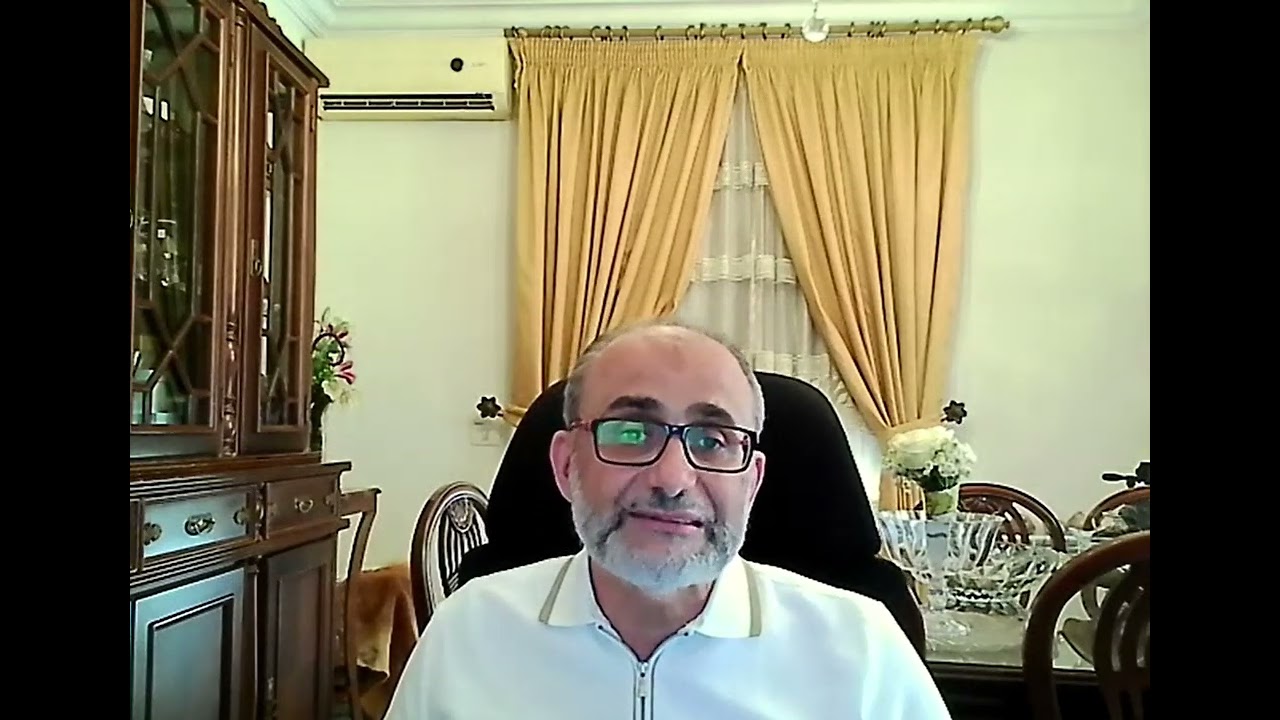
Amr

verified teacher icon
Egypt
Recently active
Recently active
5.0

3 reviews

(3)

$15

60-min

/h

trusted teacher iconTrusted teacher
student icon
1Students

Python programming (Basic to Advanced) , Practical CourseTranslate this text using Google Translate.

Python programming (Basic to Advanced) , Practical CourseTranslate this text using Google Translate.

In today's rapidly evolving technological landscape, **Python programming** has emerged as one of the most **critical skill sets** for professionals across industries. With applications spanning web development, data science, artificial intelligence, automation, and more, Python continues to dominate as the **language of choice** for developers and organizations worldwide. This proposal outlines a comprehensive Python course designed and delivered by **Amr**, a developer and instructor with over **20 years of experience** in the field. The course combines fundamental programming concepts with practical, real-world applications, ensuring students gain not just theoretical knowledge but **marketable skills** that align with current industry demands. By leveraging cutting-edge teaching methodologies and extensive professional experience, this course offers an unparalleled learning opportunity for aspiring programmers and experienced developers alike. ## 1 Introduction to Python Programming Python has established itself as a **powerhouse programming language** across various domains, from web development and data analysis to artificial intelligence and automation. As of 2025, the demand for Python skills continues to soar, with industry giants like Cisco, IBM, and Google leveraging its capabilities for their projects . Python's dominance in the technology sector is undeniable – it remains the **most requested programming language** in job postings across multiple industries, including finance, healthcare, technology, and entertainment. The language's popularity stems from several key factors: its **user-friendly syntax** that resembles natural English, making it exceptionally accessible for beginners; its **versatile nature** that supports multiple programming paradigms; and its **extensive ecosystem** of libraries and frameworks that simplify complex programming tasks. Python's cross-platform compatibility ensures code runs seamlessly on Windows, macOS, and Linux environments, while its open-source nature has fostered a massive community of contributors who continuously expand its capabilities . These attributes make Python not just a programming language but a **comprehensive toolset** for solving diverse computational problems. For professionals looking to future-proof their careers, Python offers **exceptional value**. According to industry data, Python developers in the United States earn an average of **$116,028 per year**, reflecting the high market demand for these skills . Beyond financial rewards, Python proficiency opens doors to cutting-edge fields like machine learning, natural language processing, and data analytics – domains that are shaping the future of technology across industries. ## 2 Course Overview & Learning Objectives ### 2.1 Course Philosophy This Python programming course is designed with a **practice-oriented approach** that emphasizes hands-on learning and real-world application. Unlike traditional programming courses that focus heavily on theory, this program balances conceptual understanding with **practical implementation**, ensuring students develop the skills needed to solve actual business problems. The curriculum is structured to build proficiency gradually, starting with fundamental concepts and progressing to advanced applications, with each module incorporating **project-based learning** components. ### 2.2 Key Learning Objectives Upon successful completion of this course, students will be able to: - **Demonstrate proficiency** in core Python programming concepts including data structures, control flow, functions, and file handling - **Develop functional applications** using Python for various domains including web development, data analysis, and automation - **Implement object-oriented programming** principles to create modular, maintainable code - **Utilize popular Python libraries** such as Pandas, NumPy, and BeautifulSoup for specialized tasks - **Integrate with databases** and web APIs to create full-stack applications - **Apply debugging and testing** techniques to ensure code quality and reliability - **Build portfolio-worthy projects** that demonstrate marketable skills to potential employers ## 3 Instructor Qualifications & Experience ### 3.1 Professional Background **Amr** brings an exceptional **twenty-year track record** of development and instruction experience to this Python course. His extensive background encompasses both corporate training and software development, providing a unique blend of pedagogical expertise and practical knowledge. With credentials including a **Bachelor of Computer Science and Management Technology** from Modern Academy and a **Computer Science Diploma** from Arab Academy for Science and Technology, Amr possesses the academic foundation to complement his extensive professional experience. His career demonstrates **progressive responsibility** and expertise across multiple programming languages and frameworks. Beginning as a technical instructor at renowned institutions including NewHorizons, Knowlogy, and Informatica, he quickly established himself as a developer at Microtech and ITS, where he worked on enterprise-level systems including **ERP and banking applications**. This combination of education and hands-on development experience creates an ideal foundation for teaching programming concepts with both theoretical rigor and practical relevance. ### 3.2 Industry Client Portfolio Amr's exceptional teaching credentials are further enhanced by his impressive roster of **corporate clients**, which includes some of the world's most recognized brands: - **Technology Leaders**: Microsoft, IBM, Siemens, Vodafone, and Telecom Egypt - **Financial Institutions**: National Bank of Egypt, NSGB, CIB, and Central Bank of Egypt - **Global Consumer Brands**: Pepsi, Coca-Cola, Nestlé, Cadbury, and Americana - **Industrial Conglomerates**: Chrysler, Valeo, 3M, ABB, and BP (British Petroleum) - **Government Entities**: Libya Government IT Department, Sudan Army Officers, Egyptian Airports Company This diverse client experience has provided Amr with **unparalleled insight** into how Python is applied across different industries and organizational contexts. His exposure to various business domains allows him to teach Python not as an abstract academic exercise but as a **practical tool** for solving real business problems. ### 3.3 Teaching Methodology Amr employs a **learner-centered approach** that emphasizes interactive engagement and practical application. His teaching philosophy is based on the principle that programming is best learned through doing, rather than passive listening. Each concept is introduced through **clear explanations** followed immediately by hands-on exercises that reinforce learning. He adapts his pace and approach based on student comprehension, ensuring no one is left behind while maintaining challenging content for advanced learners. *Table: Instructor's Recent Training Engagements (2023-2025)* | **Year** | **Corporate Clients** | **Training Centers** | **Technologies Covered** | |----------|-----------------------|----------------------|--------------------------| | **2023** | International Finance Corporation, Raya Integration | Raya Academy, IT-Egypt | VBA, Office Automation, Web Technologies, Software Fundamentals with C#, SQL Server Database Design and Querying, Introduction to .NET Core Framework, Building ASP.NET Core Web API, Front-End Development Basics (HTML, CSS, JavaScript, TypeScript), Advanced Front-End Development with Angular, Integration and Deployment | | **2024** | 3M, Pepsi | NewHorizons, Radio & Television Institute, Informatics (Lebanon), Total-Tech (KSA), Global Business Star (USA) | SQL Query (20761), SQL Development (20762), SQL Admin (20764,20765), Tabular, MQL5, ASP.NET Core MVC Web Applications (20486), Programming in C# (20483), Programming in HTML5 with JavaScript and CSS3 (20480), LINQ, EF (Entity Framework) | | **2025** | Siemens, Vodafone | YAT, Future University | Full Stack Development, Data Analysis | ## 4 Detailed Course Curriculum ### 4.1 Module Breakdown The Python course is structured into **eight comprehensive modules** that systematically build programming proficiency from foundation to advanced application: 1. **Python Fundamentals** (10 hours): Syntax, variables, data types, operators, and basic input/output operations. Students will write their first programs and understand how Python interprets and executes code. 2. **Control Structures & Functions** (15 hours): Conditional statements (if/elif/else), loops (for/while), function definition, parameters, return values, and scope. Emphasis on writing clean, reusable code. 3. **Data Structures** (20 hours): Lists, tuples, dictionaries, sets, and their appropriate applications. Includes comprehensive exercises on data manipulation and storage. 4. **Object-Oriented Programming** (20 hours): Classes, objects, inheritance, polymorphism, and encapsulation. Students will learn to structure code using OOP principles for better maintainability. 5. **File Handling & Modules** (10 hours): Reading/writing files, exception handling, importing modules, and creating custom modules. Practical applications for data persistence. 6. **Web Development with Python** (25 hours): Introduction to Flask/Django frameworks, REST APIs, and basic front-end integration. Students will build a functional web application. 7. **Data Analysis & Visualization** (25 hours): Using Pandas for data manipulation, NumPy for numerical computing, and Matplotlib/Seaborn for visualization. Real-world datasets will be used for analysis. 8. **Introduction to Automation & Scripting** (15 hours): Applying Python to automate repetitive tasks, web scraping with BeautifulSoup, and working with APIs. ### 4.2 Practical Projects The curriculum includes **five portfolio projects** that allow students to apply their learning: 1. **Data Analysis Project**: Analyzing real business data to extract insights and create visualizations 2. **Web Application Project**: Building a fully functional web application with database integration 3. **Automation Script**: Creating a practical tool to automate a repetitive computer task 4. **API Integration Project**: Connecting to external services and processing returned data 5. **Final Capstone Project**: A comprehensive application that demonstrates mastery of course concepts ### 4.3 Python in Marketing Analytics A special section of the course will focus on **Python applications in digital marketing**, covering how Python can be used for marketing automation, data analysis, and operations . Students will learn: - **Working with APIs** to connect different software tools and automate marketing workflows - **Web scraping** to gather data from web pages for content analysis and competitive intelligence - **Text analysis** for sentiment analysis, content optimization, and customer feedback processing - **Data analysis** for marketing analytics using Pandas and visualization libraries - **Technical SEO** applications using Python libraries like advertools and EcommerceTools This specialized content demonstrates Python's versatility beyond traditional programming roles, showing its value in business functions like marketing where data skills are increasingly crucial. ## 5 Training Methodology & Delivery ### 5.1 Interactive Learning Approach This Python course employs a **multimodal teaching methodology** that accommodates diverse learning styles while ensuring practical skill development. Each session follows a structured pattern: 1. **Concept Introduction**: Clear explanation of programming concepts with real-world analogies 2. **Live Coding Demonstration**: Step-by-step coding examples that students can follow along 3. **Guided Practice**: Structured exercises with instructor support and immediate feedback 4. **Independent Challenge**: Problem-solving activities that require applying concepts creatively 5. **Code Review**: Collaborative analysis of solutions to identify best practices and improvements This approach ensures that students not only understand theoretical concepts but develop the **problem-solving mindset** essential for effective programming. The emphasis is always on writing clean, efficient, and maintainable code following industry standards. ### 5.2 Hands-On Labs & Exercises A distinctive feature of this course is the extensive **hands-on programming practice** integrated throughout the curriculum. Students will spend approximately **60% of course time** actively writing code rather than passively listening to lectures. Practical components include: - **Coding exercises** for each new concept introduced - **Mini-projects** that combine multiple concepts into functional applications - **Debugging challenges** that develop problem-solving skills - **Code optimization** activities focusing on efficiency and performance - **Pair programming** sessions to foster collaboration and knowledge sharing ِSend me if you have any questions, Regars, Amr

play iconVideo

Ammar

verified teacher icon
Canada
Recently active
Recently active
5.0

1 reviews

(1)

$23

60-min

/h

trusted teacher iconTrusted teacher
student icon
2Students

Master AI, Machine Learning, Data Science, Python & Programming with a PhD Engineer and Professor | 25+ Years’ Expertise | All levelsTranslate this text using Google Translate.

Master AI, Machine Learning, Data Science, Python & Programming with a PhD Engineer and Professor | 25+ Years’ Expertise | All levelsTranslate this text using Google Translate.

A- TOPICS YOU CAN EXPLORE AND MASTER: 1- PYTHON FOUNDATIONS • Variables, data types, operators, conditional structures, loops, functions, modules, files, exceptions, and object-oriented programming • Lists, tuples, dictionaries, sets, comprehensions, debugging, and writing clear, reusable, well-structured code • Jupyter Notebook, Anaconda, Visual Studio Code, virtual environments, and package management 2 — PROGRAMMING, ALGORITHMS, AND COMPUTER SCIENCE FOUNDATIONS • Algorithmic thinking, problem decomposition, pseudocode, flowcharts, procedural programming, object-oriented programming, recursion, and modular program design • Fundamental data structures including arrays, lists, stacks, queues, dictionaries/hash tables, sets, trees, graphs, and their appropriate use • Searching, sorting, traversal, algorithm efficiency, computational complexity, Big-O notation, debugging, testing, code organization, and problem-solving strategies • Practical programming exercises ranging from beginner problems to university-level algorithmic and computational challenges 3- DATA PREPARATION AND EXPLORATION • NumPy and pandas for importing, cleaning, transforming, filtering, grouping, reshaping, and merging data • Missing values, duplicates, outliers, inconsistent formats, data leakage, and data-quality validation • Exploratory data analysis using descriptive statistics, Matplotlib, Seaborn, and graphical interpretation 4- MATHEMATICAL FOUNDATIONS • Linear algebra, vectors, matrices, derivatives, optimization, probability, and statistics • Loss functions, gradients, distance measures, regularization, likelihood, and model complexity • Mathematical concepts are explained according to the learner’s level and the requirements of the selected algorithms 5- SUPERVISED MACHINE LEARNING • Linear and polynomial regression, logistic regression, and regularized models • k-nearest neighbours, decision trees, random forests, gradient boosting, support vector machines, and Naive Bayes classifiers • Classification, regression, model assumptions, decision boundaries, feature importance, and interpretation of results 6- UNSUPERVISED LEARNING • Clustering using k-means, hierarchical clustering, and density-based methods • Principal component analysis, dimensionality reduction, anomaly detection, and pattern or structure discovery • Method selection, evaluation of data structure, and interpretation of results without predefined labels 7- MODEL EVALUATION AND IMPROVEMENT • Training, validation, and test sets; cross-validation; hyperparameter optimization • Accuracy, precision, recall, specificity, F1 score, ROC–AUC, confusion matrices, MAE, MSE, RMSE, and R2 • Underfitting, overfitting, bias–variance trade-off, class imbalance, feature engineering, feature selection, scaling, and regularization 8- DEEP LEARNING • Neural-network foundations, activation functions, forward propagation, backpropagation, and gradient descent • Multilayer perceptrons, convolutional neural networks, recurrent neural networks, and Transformer foundations • TensorFlow, Keras, or PyTorch depending on the learner’s project and working environment 9- ARTIFICIAL INTELLIGENCE APPLICATIONS • Natural language processing, text classification, embeddings, sentiment analysis, and foundations of language models • Computer vision, image classification, fundamental principles of object detection, and image preprocessing • Recommendation systems, forecasting, anomaly detection, intelligent automation, and decision-support applications 10- GENERATIVE AI AND LARGE LANGUAGE MODELS • Transformer architecture, tokens, embeddings, attention mechanisms, prompt engineering, Retrieval-Augmented Generation (RAG), and model evaluation • Use of artificial-intelligence APIs, vector databases, document-retrieval systems, and structured AI-enabled workflows when relevant • Reliability, hallucinations, bias, privacy, responsible use, and appropriate human validation 11- TOOLS AND LIBRARIES • Python, NumPy, pandas, Matplotlib, Seaborn, scikit-learn, SciPy, Statsmodels, TensorFlow, Keras, and PyTorch • Jupyter Notebook, Anaconda, Visual Studio Code, Git, GitHub, SQL, Excel, and Power BI when useful to the project • Additional libraries may be introduced depending on the selected specialization and dataset 12- PROJECTS, RESEARCH, AND INTERVIEW PREPARATION • Complete projects covering data preparation, model development, evaluation, interpretation, and presentation of results • University assignments, dissertations, theses, research projects, portfolio projects, technical interviews, and professional applications • Code review, debugging, documentation, reproducibility, model comparison, and communication of results ------------------------------------------------------------------------------------------------------------------------------------------------------------------------------- B- PERSONALIZED TUTORING: LEARNING HOW TO REASON Machine learning and artificial intelligence become much more accessible when mathematics, algorithms, Python code, data, and real-world applications are clearly connected. My lessons help you move beyond simply copying code or using models as “black boxes.” You will learn how to define the problem correctly, prepare the data, select an appropriate algorithm, understand how it works, train and evaluate the model, diagnose errors, improve performance, and interpret results rigorously and responsibly. Each lesson is personalized according to your current level, mathematical background, programming experience, dataset, university work, research project, interview preparation, or professional objective. We begin by identifying your existing knowledge, software environment, expected outcomes, and main conceptual or technical difficulties. We then establish a structured learning plan. The first lesson combines a discussion of your background, objectives, and tutoring needs; an initial assessment of your current knowledge; personalized planning and organization of future sessions; and a short trial lesson to determine the most effective learning approach. A typical session may include conceptual explanation, development of mathematical intuition, live coding, guided implementation, model evaluation, technical problem solving, and a concise summary of the next steps. You may work with your own dataset, university assignment, research project, or professional problem, provided that confidential information is handled appropriately. I can also provide structured examples and datasets suited to your level. My goal is not simply to help you run an algorithm. It is to help you understand why it is appropriate, how it learns from data, how to evaluate it correctly, why it may fail, and how to build a reliable, interpretable, and scientifically rigorous solution.

Video thumbnail
Play icon
Ammar's video

Hassane

verified teacher icon
Morocco
Recently active
Recently active
$28

60-min

/h

trusted teacher iconTrusted teacher

Experienced computer science teacher and trainer (Ms-Project, C#, UML, Python, SCRUM, TRADOS)Translate this text using Google Translate.

Experienced computer science teacher and trainer (Ms-Project, C#, UML, Python, SCRUM, TRADOS)Translate this text using Google Translate.

Hello, My name is Hassane, and I've been passionate about computers for over 20 years. With two decades of teaching experience, I've had the privilege of supporting learners of all ages and levels in developing their computer skills and achieving their professional and personal goals. Computer science is an essential skill today, opening the door to countless opportunities. Whether you want to learn programming, website design, data analysis, or complex problem-solving, I'm here to guide you every step of the way. What I propose: In my classes, we explore a wide range of topics to meet the needs of both beginners and advanced learners: Computer fundamentals: master the basics to get started, Hardware, Software, Binary, Operating system. Programming: learn to code efficiently in different languages (C#, Python, VBA). Web development: creating modern websites and applications. Databases: understanding, managing and analyzing data, UML, MERISE. Project management: Ms-Project, Agil, Scrum, Kanban Teaching methods: I adopt a dynamic and interactive approach to ensure a rich and enjoyable learning experience: Interactive courses: clear explanations adapted to your pace. Practical exercises: to immediately apply the concepts learned. Collaborative projects: developing real solutions as a team. Personalized monitoring: answer your questions and support your progress. Why choose me? 20 years of experience in computer teaching. Proven methods suitable for all levels. Personalized support to help you achieve your goals. A passion for passing on skills that make a difference. Whether you are a student, a professional looking to retrain, or simply curious, my courses will provide you with the tools you need to succeed in this rapidly evolving field. Join me today! Please contact me to learn more or to discuss your specific needs. Together, let's build your digital future. Hassane Experienced computer teacher and trainer

Jayaram

verified teacher icon
India
$46

60-min

/h

Applied Data Science Lab: From Raw Data to Business ImpactTranslate this text using Google Translate.

Applied Data Science Lab: From Raw Data to Business ImpactTranslate this text using Google Translate.

Overview Transitioning from learning data science theory to solving actual business problems is the hardest step for any aspiring data professional. [Insert Chosen Course Title] is an intensive, mentor-led program designed to simulate a real-world data team environment. Instead of working through synthetic, pre-cleaned textbook datasets, you will take on messy, complex industry scenarios and turn them into end-to-end data products. What You’ll Experience End-to-End Execution: Walk through the full data lifecycle—from problem scoping and data extraction to exploratory analysis, modeling, and executive stakeholder presentation. Industry-Standard Workflows: Work with messy real-world datasets, practice Git-based version control, write production-ready code, and structure reports that business leaders actually care about. 1-on-1 & Group Mentorship: Receive continuous code reviews, architectural feedback, and project guidance mirroring the experience of working under a Senior Data Scientist or Analytics Lead. Portfolio-Ready Deliverables: Graduate with 2–3 complete, polished projects that demonstrate actual business value to hiring managers—not just another churn prediction copy-pasted from Kaggle. Who This Is For Aspiring Data Analysts, Data Scientists, and recent graduates who know Python, but want the practical experience, confidence, and portfolio needed to land high-impact roles in the industry.

Ali

verified teacher icon
United Kingdom
5.0

2 reviews

(2)

$41

60-min

/h

trusted teacher iconTrusted teacher
student icon
1Students

Python, C and C++ private lessons with a university lecturer and MSc engineerTranslate this text using Google Translate.

Python, C and C++ private lessons with a university lecturer and MSc engineerTranslate this text using Google Translate.

I teach Python, C and C++ one to one, online or in person around Birmingham. Most of my students fall into one of three groups. Some are at GCSE or A-Level and need to get comfortable with a language before an exam or a coursework deadline. Some are at university, usually on an engineering or computing degree, and have hit something specific that isn't clicking: pointers, memory, recursion, object orientation, or a project that won't compile. And some are adults starting from nothing, often because work has started asking them to automate things. Lessons are built around code you can run. I'll ask what you're working on and where you got stuck, then we write something small together, break it on purpose, and work out what the error message is actually telling you. Reading error messages properly is half of programming and almost nobody teaches it. Areas I cover regularly: Python from the basics through functions, data structures, file handling, object orientation and libraries like NumPy and Pandas C and C++, including the parts that cause most of the trouble: pointers, memory management, structs, classes and compilation GCSE and A-Level Computer Science across all exam boards, including pseudocode, trace tables and written paper technique A-Level NEA projects and university coursework, plus debugging sessions and code review Embedded C for Arduino, ESP32 and microcontroller projects, which is the work I do professionally After each lesson I send written notes covering what we did, worked through step by step, so you have something to revise from later rather than trying to remember what was on screen. First session is free and lasts 30 minutes. We use it to work out what you need and whether I'm the right person for it. If I'm not, I'll say so and point you somewhere better. Message me with what you're studying and what's giving you trouble, and I'll tell you honestly how I'd approach it.

PreviousShowing results 1 - 25 of 5341 - 25 of 534Next

Our students evaluate their Python teacher.

To ensure the quality of our Python teachers, we ask our students to review them.

Only reviews of students are published and they are guaranteed by Apprentus. Rated 4.9 out of 5 based on 248 reviews.

“ Baia was instrumental in helping my daughter prepare for the OMPT-F exam. From the very first lesson, she was organized, knowledgeable, and focused on the areas that mattered most for success on the test. What sets Baia apart is her ability to explain complex mathematical concepts in a simple, structured way while building confidence at the same time. Her engineering background gives her a deep understanding of mathematics and allows her to explain not only how to solve problems, but also why the concepts work. She provided targeted practice materials, mock exams, and clear guidance on the key topics that carried the highest impact. Baia was always responsive to questions between lessons and consistently went above and beyond to ensure my daughter was fully prepared. Thanks to her support, my daughter developed a much stronger understanding of mathematics and a more positive attitude toward the subject. She now approaches challenging problems with far more confidence than before. I highly recommend Baia to anyone preparing for the OMPT exams, university mathematics, or looking for a patient, knowledgeable, and highly effective math tutor. ”

“ I've been studying with Mohamed for several months now, and I can confidently say he is one of the smartest and most effective teachers I've ever worked with. He not only has a deep understanding of Python and Data Science, but he truly knows how to teach. Mohamed has a rare combination of strong technical expertise and outstanding teaching skills. He can explain complex topics in a simple and clear way, and he always chooses examples and exercises that really help you grasp the material. What I value most is his focus on practical application: we don’t get stuck in theory — we move straight to solving tasks that are relevant to real-world work. This makes each lesson extremely useful and efficient 👌🏼 ”

“ Ghous is a very kind and pleasant teacher. He explains everything clearly and is always responsive and supportive. He adapts to the student’s pace and is very flexible when it comes to scheduling and learning preferences. He has a strong command of Electrical Engineering topics and is able to explain even complex concepts in a simple and understandable way. Ghous is also very helpful with assignments, even when they are in a different language, which shows both his deep subject knowledge and his adaptability. I’m very satisfied with his lessons and would definitely recommend him to others. ”

To ensure the quality of our Python teachers, we ask our students to review them.

Only reviews of students are published and they are guaranteed by Apprentus. Rated 4.9 out of 5 based on 248 reviews.

Map
Map