facebook

Private teachers in Riad Saudi Arabia

Find your perfect private tutor in Riad Saudi Arabia.
Learn with our teachers at home or in their studio.

0 Teachers your wish list
|
zoom in iconzoom out icon

359 private teachers in Riad Saudi Arabia

Mahmoud

verified teacher icon
284 CNY

60-min

/h

trusted teacher iconTrusted teacher

Online and in-person law courses in public, private, and Sharia law.

Online and in-person law courses in public, private, and Sharia law.

The law isn't difficult... it just needs someone to explain it properly. You won't memorize laws and forget them — you'll understand the logic of the law and apply it yourself. My promise to you After the first lesson, you'll find that law is about logic and ideas, not memorizing texts. It will stay with you even after the exam. Why me? 🧠 Mind maps for each topic By linking each idea to the next so that the information is retained and does not get scattered. ⚖️ Master's degree + actual teaching experience Not just an academic — I've taught over 1000 students and I know where they stumble. 💡 Simplification without exaggeration The explanation is simple but profound — the law is to be understood, not memorized. 🗓️ Times that suit you Flexible online lessons — book a time that suits you. ◈ My words: "The law isn't memorized — it's understood. And I'm here to show you the difference." I am Mahmoud Hindi, a law teacher with a master's degree in law. I have been teaching law part-time since 2013 and have taught more than a thousand students. A person passionate about teaching law subjects, distinguished by their ability to easily convey information. In my explanation, I relied on mind maps to convey the information more easily to the student. Focus on helping the student understand the law without memorization, because the law is understood, not memorized.

Dr Arwa

207 CNY

60-min

/h

trusted teacher iconTrusted teacher

Experienced teacher of basic medical sciences and clinical subjects.

Experienced teacher of basic medical sciences and clinical subjects.

English below! Are you having difficulty with medicine or pharmacy subjects? Don't worry! With a specialized doctor who helps you understand the information simply and ensures excellence! Private lessons in: • Anatomy • Physiology • Pharmacology • Biochemistry • Pathology • Pharmaceutics Clinical (medicine, surgery, pediatrics + obstetrics & gynecology) And other medical, pharmaceutical and health science materials. Why choose me? • Simplified explanation in an easy style and smart memorization • Periodic reviews and tests • Continuous support throughout the week • Experience in dealing with students from different universities ● Qualifications: - University teaching assistant. - Bachelor of Medicine and Surgery with Honors. Fellowship of the Royal College of Surgeons of England. - Diploma in Fundamentals of Medical Education. - Diploma in Scientific Research and Scientific Writing **Struggling with Medical or Pharmacy Subjects? Don't Worry!** You've got a specialized doctor here to help you understand the material easily and guarantee excellence! **Private Tutoring in:** - **Anatomy** - **Physiology** - **Pharmacology** - **Biochemistry** - **Pathology** - **Pharmaceutics** - **Clinical Subjects** (Medicine, Surgery, Pediatrics, Obstetrics & Gynecology) ...and other medical, pharmacy, and health science subjects. **Why Choose Me?** - Simplified explanations with an easy approach and smart memorization techniques - Regular reviews and assessments -Continuous support throughout the week - Experience working with students from various universities **Qualifications:** -University Teaching Assistant -Bachelor of Medicine and Surgery (Honors) - Membership of the **Royal College of Surgeons (UK)** - Diploma in **Medical Education Fundamentals** - Diploma in **Scientific Research & Academic Writing**.

Motwakel

verified teacher icon
497 CNY

60-min

/h

trusted teacher iconTrusted teacher

In this lesson, we will learn about the rule for forming the Grand Seventh Scale, or what is known as the Do-Ajam Scale in Eastern music.

In this lesson, we will learn about the rule for forming the Grand Seventh Scale, or what is known as the Do-Ajam Scale in Eastern music.

The grand scale of Do, or (Maqam Do Ajam), consists of seven tones, and the eighth tone is an answer to the first tone. The tones are arranged starting with the tone of Do, which is in the middle of the piano keyboard. The scale is applied from the bottom to the top, towards the right hand, that is, from left to right, and ends on The pitch of the “du” at the top of the keyboard is the answer to the basic “du” tone, where the tone or sound number eight is the same as the base sound (du). It is called the answer tone, and the answer tone is in (a sharp pitch). How do we recognize the D tone on the piano keyboard? We notice the presence of black keys on the piano keyboard, and these black keys are grouped in twos and threes. So how do we recognize the du tone? We can know the du tone through the binary groups. The white colored du tone is located directly to the left of the binary group, meaning it is the first sound that follows the binary group. The Do major scale is a white piano keyboard, meaning it is seven letters repeated in thick or sharp pitches. There is an important piece of information that you must know, which is that the rule that forms the Do ladder is the same rule that must be applied to extract the rest of the large western stairs, so you should focus a little in this lesson. When we want to go up the stairs, we go up a rung, then a rung, then a rung, and so on until the end of the stairs. This applies to the D major scale, as we move from the D major note, then the next note, then the next one, then the next note, and this only happens (on the white piano keyboard). ) all the way to the eighth tone, which is the tone of “do answer.” So how can we know the De Major scale with the names of the rest of the tones of the scale? Kalati (read from left to right) is C-Do-Ra-Me-Fa-Sol--La-Si-(Do) and this is on the white piano keyboard only. So how can we know the rule for the formation of the major Do scale? First, we must get to know the half-tone scale or the choromatic scale, which is a scale that starts from the white do tone and ends at the do answer tone, but in this scale you must go through all the tones. The black and white pianos in order, arriving at the tone of the answer, which is called the half-step scale, in which the sound moves half a step, then half a step, then half a step, and so on until the chord scale is completed. The base or movements of the Do Major or Do major scale are as follows: - From the base tone (Do to Ra) it is a full degree - From Ra to Me it is a degree - From Me-Fa it is a half degree because there is no black key between them - And from Fa to Sol it is a degree -And from Sol to La a degree - From La to Si a degree - And from Si to a tone The answer is Do is half a degree because there is no black key between them). In this way, we have become acquainted with the Dou el-Kebir movement, which is the basis for drawing the grand western stairs, which is as follows (one degree, then one degree, then half a degree, then one degree - one degree - one degree - half a degree) This rule is applied to the rest of the musical tones

play iconVideo

Mohamed

437 CNY

60-min

/h

trusted teacher iconTrusted teacher

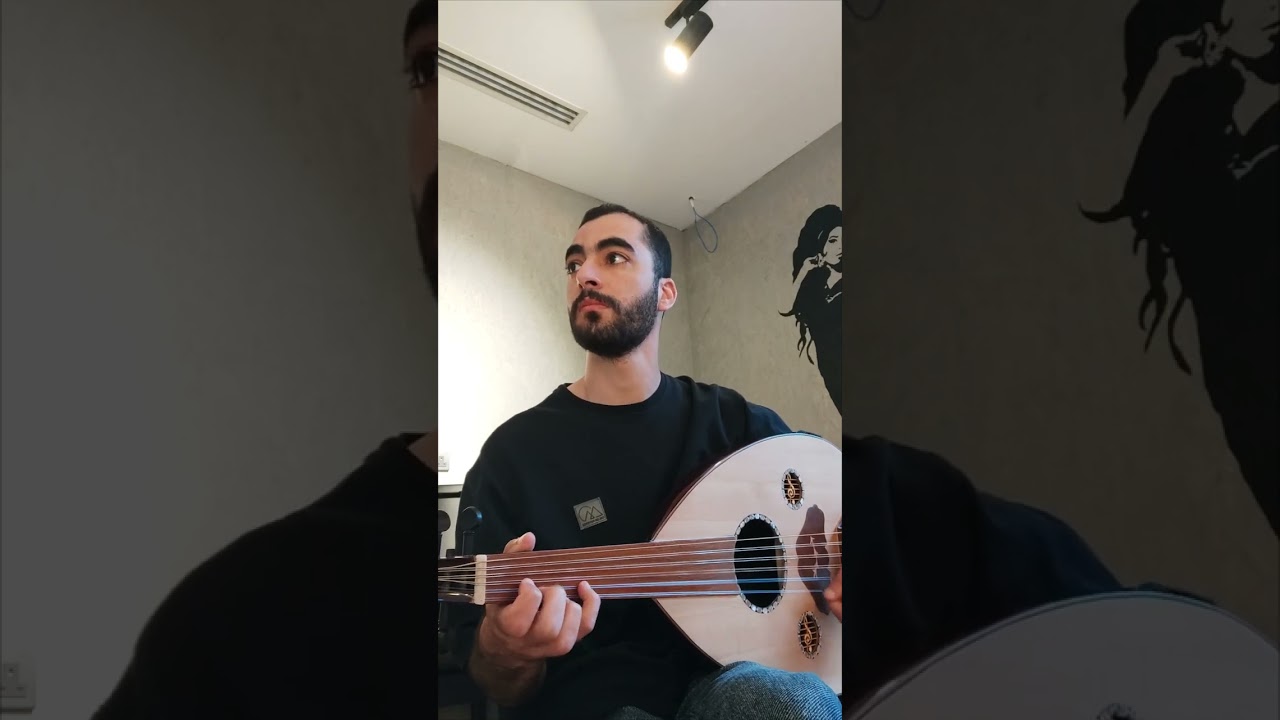
Oud instrument, Arabic singing, and music theory lessons for all levels.

Oud instrument, Arabic singing, and music theory lessons for all levels.

* Introduction to the Oud Instrument: * History of the Oud and its significance in Arabic music. * Different parts of the Oud (soundbox, face, neck, pegs, strings). * Different types of Oud (Arabic, Turkish, Persian). * How to hold the Oud and sit correctly. * How to use the plectrum (risha/zend). * Basics of Playing: * Learning how to produce clear sounds from the strings. * Exercises to strengthen fingers and improve hand coordination. * Learning the names of the strings and how to tune them (Dozan). * Introduction to basic musical modes (maqamat) in Arabic music (such as Maqam Rast, Nahawand, Hijaz). * Learning basic musical notation and how to read it (if necessary). * Simple Melodies and Exercises: * Learning to play simple and well-known melodies. * Exercises to develop a sense of rhythm. For Advanced Levels: * Deepening Knowledge of Maqamat: * In-depth study of various Arabic maqamat and their branches. * Learning how to modulate between maqamat. * Analyzing melodies and musical pieces from the perspective of maqamat. * Developing Playing Techniques: * Learning advanced playing techniques such as trills, tremolos, and slides. * Improving playing speed and accuracy. * Developing the ability for musical expression. * Improvisation and Taqasim: * Introduction to the art of improvisation (taqasim) in Arabic music. * Learning how to build improvisational taqasim based on maqamat. * Developing the ability to listen and interact musically. * Arabic Music Theory: * In-depth study of Arabic music theory, including intervals, rhythms, and musical forms. * Playing Advanced Musical Pieces: * Learning to play classical and contemporary Arabic musical pieces. * Analyzing and interpreting musical works. Lessons may also include: * Listening and Analysis: Listening to Oud music recordings and analyzing them. * History and Culture: Exploring the history and culture of the Oud instrument in the Arab world. * Basic Oud Maintenance: Learning how to care for and maintain the Oud. Overall, the Oud lessons aim to provide students with the necessary skills and knowledge to understand and play Arabic music on this beautiful instrument.

Video thumbnail
Play icon
Mohamed's video
PreviousShowing results 26 - 50 of 35926 - 50 of 359Next

Our students from Riad Saudi Arabia evaluate their teacher.

To ensure the quality of our teachers, we ask our students from Riad Saudi Arabia to review them.

Only reviews of students are published and they are guaranteed by Apprentus. Rated 5.0 out of 5 based on 15 reviews.

“ I found Adel after earlier attempts to get a good instructor to help my nephew prepare for his baccalaureate and I am so happy I did. He worked very closely with my nephew, guiding him and explaining to him what he should do all the way to the very end. I strongly recommend Adel and will not hesitate to request his services again if a need arises. Adel, thank you so much for your patience and dedication. Much appreciated. ”

“ Chan has been teaching my kids (5 and 3year old) Chinese as bignners .. my kids love her, she is able to engage them and I can see they are improving gradually I like her method with kids, by using games and toys to teach them language ”

“ Amazing session Our daughter has just started learing the piano with Joseph, and the patience and thoroughness he showed is exemplary ”

To ensure the quality of our teachers, we ask our students from Riad Saudi Arabia to review them.

Only reviews of students are published and they are guaranteed by Apprentus. Rated 5.0 out of 5 based on 15 reviews.

Map
Map