facebook

Find the Best Online Electronic Circuits Tutors & Teachers for Private Lessons

For over a decade, our private Electronic Circuits tutors have been helping learners improve and fulfil their ambitions. With one-on-one lessons online, you’ll enjoy high-quality, personalised teaching that’s tailored to your goals, availability, and learning style.

Find Your Perfect Teacher

Browse our selection of Electronic Circuits tutors & teachers and use the filters to find your ideal online class

Contact Teachers for Free

Share your goals and preferences with teachers and choose the Electronic Circuits class that suits you best

Book Your First Lesson

Plan the schedule for your first class together. Once your teacher confirms the appointment, you're all set to start on the front foot!

116 online electronic circuits teachers

Youssef

verified teacher icon
Belgium
Recently active
Recently active
4.8

13 reviews

(13)

24€

60-min

/h

trusted teacher iconTrusted teacher
student icon
3Students

Electronics, Control of industrial systems, C/C++ VHDL programming, digital and analog electronics, MATLAB simulationTranslate this text using Google Translate.

Electronics, Control of industrial systems, C/C++ VHDL programming, digital and analog electronics, MATLAB simulationTranslate this text using Google Translate.

Hello, I am a doctoral student in electrical engineering and associate professor in engineering sciences, experienced in the field of electrical engineering, I offer support courses in the subjects of engineering sciences (Electronics, automatics, electrical engineering, automation, programming). Digital electronics Analog electronic electromagnetism (propagation of high frequency waves) Automatic (continuous, sampled) electrical engineering (transformers, electrical machines, switching power supply) C / c ++ programming, Assembler, ARM, STM32 renewable energy (wind, PV) engineering Sciences RDM Python,VHDL PIC Microprocessor and Microcontroller Signal processing and data acquisition Engineering Sciences These courses allow the student to get up to speed and regain confidence in all scientific subjects, just as they prepare him effectively for the Baccalaureate, the Preparatory Classes or various examinations of the engineering classes. COURSE OBJECTIVES AND PEDAGOGICAL APPROACH Resumption and deepening of fundamental concepts through exercises with course reminders. Put the student in a situation of questioning and research. Respond to individual issues and questions Exercise training in order to achieve real mastery of the content. Learn to build theoretical reasoning from observable facts or hypotheses. Specific preparation for higher education requirements (in-depth content, increase in work capacity, enrichment of scientific background) This educational approach is effective since it has often led me to interesting results with my students. Associate professor provides support courses in electrical engineering

Students' Choice

Ali

verified teacher icon
United Kingdom
5.0

2 reviews

(2)

32€

60-min

/h

trusted teacher iconTrusted teacher
student icon
1Students

Electrical and Electronics Engineering tuition for university students, taught by a university lecturerTranslate this text using Google Translate.

Electrical and Electronics Engineering tuition for university students, taught by a university lecturerTranslate this text using Google Translate.

I teach Electrical and Electronic Engineering online to university students, postgraduates, college students and serious self learners across the UK and Europe. Lessons are in English. I hold an MSc in Electronics and Electrical Engineering with Distinction and I teach as a Visiting Lecturer on a Master's level module at a UK university. I also work as a freelance electronics engineer, designing circuit boards and writing firmware for real clients, and I have two accepted international conference papers. I set and mark university assignments myself, so I know where marks are won and lost on lab reports, coursework and project write ups. Who this is for Undergraduates on electrical, electronic, mechatronic or general engineering degrees at any European university. Final year, Master's and thesis students working on an engineering project. A Level, IB and college students taking physics or engineering. Career changers and self taught learners who want the fundamentals done properly rather than picked up from scattered videos. I work with students on UK, IB and continental European programmes. An unfamiliar syllabus or a module structured differently from the UK is not a problem. Send me the material and I will work from it. What we cover Circuit analysis in DC and AC, including Kirchhoff's laws, Thevenin and Norton equivalents, superposition, phasors and AC power. Operational amplifiers and analogue electronics. Digital electronics and logic design. Signals and Systems and Digital Signal Processing, covering Fourier analysis, Laplace and z transforms, sampling and filter design. Control systems, transfer functions, root locus, Bode plots, stability and PID tuning. Semiconductor devices and power electronics. Embedded systems and microcontroller programming in C with Arduino, ESP32 and PIC. Simulation and tooling including MATLAB, Simulink, LTspice, Multisim and Proteus. Circuit board design in KiCAD. Lab reports, coursework, project supervision and exam technique. How lessons work Send me your lecture notes, assignment brief, lab sheet or the circuit that refuses to work, and I plan the session around it before we meet. Nothing generic. Most students are stuck on one or two specific ideas rather than a whole module, so the first job is finding out which. Then we work through it with proper worked examples and real circuit diagrams, and I hand the problem back to you while I watch and correct, because you learn far more doing it than watching me do it. If the real gap is the maths underneath a topic, complex numbers, phasors, Laplace transforms, we go back and fix that first, because everything after it depends on it. You finish each session with annotated notes and a clear next step, and you can message me between lessons with questions. Practical details Lessons are online over Google Meet or Zoom, with screen sharing and a shared whiteboard so we can draw circuits and work through derivations together. Sessions run 60 or 90 minutes. Evenings and weekends available across European time zones. Tell me your module, your deadline and exactly where you are stuck, and I will come back with a plan for the first session.

play iconVideo

Ahmed

verified teacher icon
Egypt
5.0

1 reviews

(1)

12€

60-min

/h

trusted teacher iconTrusted teacher

Basics of Electronics Engineering, Arduino Programming, and Smart Home CircuitsTranslate this text using Google Translate.

Basics of Electronics Engineering, Arduino Programming, and Smart Home CircuitsTranslate this text using Google Translate.

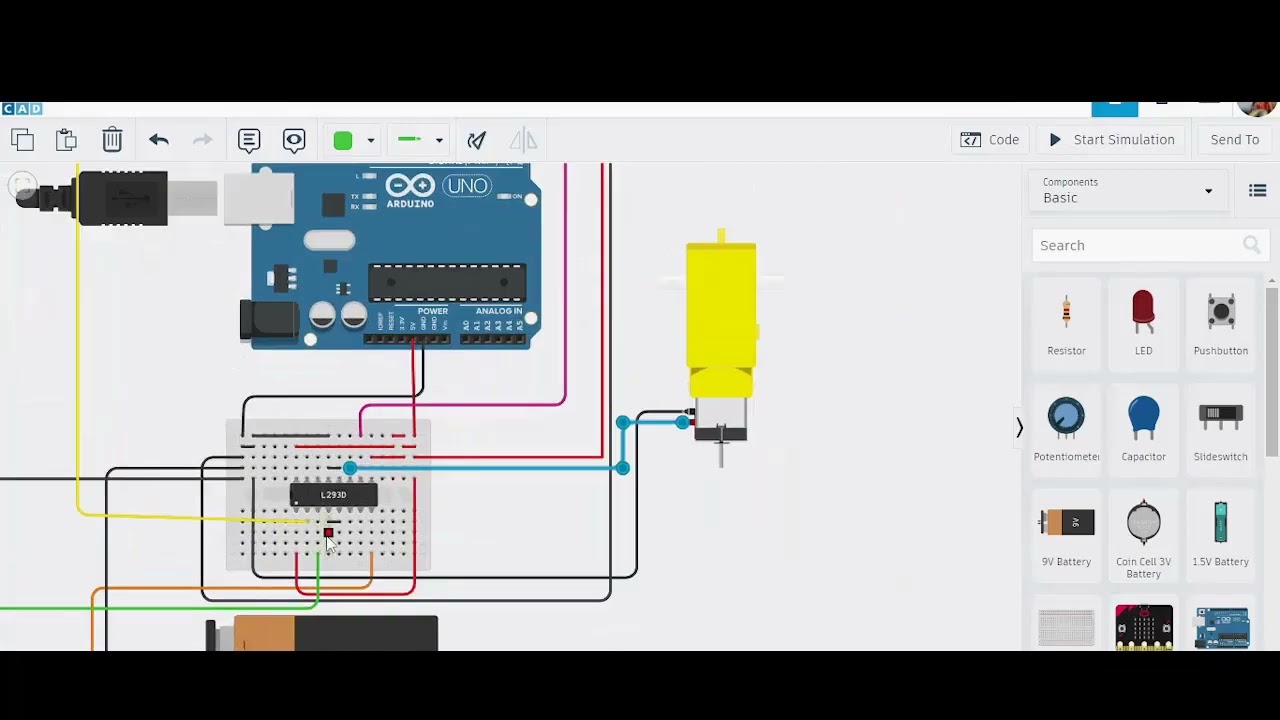
Learn from the ground up, starting with the fundamentals of electronics and various electronic components. Understand the necessary electrical connections to design and program smart home and Internet of Things (IoT) circuits. Explore what Arduino is and the programming language used to control it. Discover how to create programs to control home devices using a mobile phone. Training includes working with real Arduino circuits as well as using simulation software. I offer practical and simplified training that starts from the fundamentals of electronics and progresses to designing and programming smart home and Internet of Things (IoT) systems. The course includes clear theoretical explanations and hands-on applications using real circuits and digital simulation software. Course Content Electronics Fundamentals Introduction to essential electronic components: resistors, capacitors, diodes, transistors, and sensors Understanding proper electrical connections Reading electronic circuits and using the breadboard What is Arduino and How Do We Program It? Introduction to Arduino boards Explanation of the C/C++ programming language used for Arduino How to upload code and test projects step by step Designing and Programming Smart Home Circuits Connecting sensors and smart switches Controlling lighting and household devices Designing a system to control the home using a mobile phone Introduction to IoT and integrating it with home automation Mobile Phone Home Control Creating simple control interfaces Connecting using Wi-Fi or Bluetooth Turning devices on and off and monitoring sensors remotely Practical Training Working with real Arduino circuits Using simulation software such as Tinkercad and Proteus Building ready-to-use practical projects Who Is This Course For? Beginners in electronics Students interested in learning Arduino programming Anyone who wants to build a smart home project Anyone looking to understand how electronics work in a simple and practical way

Video thumbnail
Play icon
Ahmed's video

Ossama

France
5.0

2 reviews

(2)

25€

60-min

/h

trusted teacher iconTrusted teacher

Analog and digital electronics: As a Doctor and Associate Professor in Electrical Engineering, I offer quality teaching.Translate this text using Google Translate.

Analog and digital electronics: As a Doctor and Associate Professor in Electrical Engineering, I offer quality teaching.Translate this text using Google Translate.

Doctor of Electrical Engineering and Associate Professor of Electrical Engineering, I offer quality teaching for BTS, CPGE, University and Technical High School. I master the teaching of analog and digital electronics, covering components, integrated circuits and embedded systems. - Fundamentals of electronics: Definitions, basic concepts, Kirchhoff's laws. - Electronic components: Resistors, capacitors, inductors, diodes. - Operational amplifiers: Operation, characteristics, applications. - Basic analog circuits: Amplifiers, filters, oscillators. - Introduction to digital electronics: Binary logic, logic gates, combinational circuits. - Numbering systems: Conversion between bases, adders, subtractors. - Transistors: Bipolar transistors, field effect transistors, characteristics, applications. - Transistor amplifiers: Configuration, gain calculations, stability. - Analog integrated circuits: Voltage regulators, A/D and D/A converters. - Sequential digital systems: Flip-flops, registers, counters. - Microcontrollers and microprocessors: Architecture, basic programming, interfaces. - Analysis of electronic circuits: Frequency and time analysis methods. - Advanced analog circuits: Differential amplifiers, power amplifiers, active filters. - Modulation and demodulation techniques: AM, FM, PM. - Embedded systems: Design of real-time systems, communication between peripherals. - Test and measurement techniques: Oscilloscope, spectrum analyzer, signal generators. -

Mohamed

Tunisia
27€

60-min

/h

trusted teacher iconTrusted teacher

Courses in Electrical Engineering, Electronics, Robotics and Embedded Systems.Translate this text using Google Translate.

Courses in Electrical Engineering, Electronics, Robotics and Embedded Systems.Translate this text using Google Translate.

I am a final-year engineering student specializing in Electrical Engineering and a Master's degree in Embedded Systems, with extensive experience in advanced projects in electronics, robotics, and embedded development. I tutor students from high school through university (Bachelor's, ISET, preparatory classes, engineering schools). My goal is to help each student gain a deep understanding of the concepts, succeed in their exams, and develop strong practical skills. -->Electricity & Electrotechnics +Basics: Kirchhoff's laws, RLC circuits, Thévenin/Norton theorem +Electrical machines: asynchronous motors, transformers, inverters +Control & automation -->Analog & Digital Electronics Amplifiers, filters, regulators, switched-mode power supplies +VHDL, combinational and sequential logic +Microcontrollers: PIC, STM32, ESP32, Arduino -->Robotics & Embedded Systems +Sensors, actuators, ROS (basics), motor control +Arduino, Raspberry Pi, STM32, ESP32 projects +Design of mobile robots, drones, robotic arms -->Methodology & Personalized Support +Help with homework, projects, reports and exam preparation +Clear explanations, progressive exercises, simulations (MATLAB, Simulink, Proteus) +Follow-up adapted to the student's pace and level

Dounya

verified teacher icon
France
33€

60-min

/h

trusted teacher iconTrusted teacher

As an engineer in electronics and radiofrequency technologies, I support you in mastering complex concepts.Translate this text using Google Translate.

As an engineer in electronics and radiofrequency technologies, I support you in mastering complex concepts.Translate this text using Google Translate.

As an electronics engineer specializing in radio frequencies (RF), microwaves, and printed circuit board (PCB) design, I offer personalized courses to help you master advanced electronic technologies. My expertise covers a wide range of skills, including: - Design of RF and analog circuits. - Design of multilayer PCBs integrating complex functionalities (microstrip, stripline, etc.). - Simulation and optimization with tools like Altium Designer, KiCad, LTspice, CST Studio, and ADS (Advanced Design System). - Electromagnetic compatibility (EMC) and compliance testing. - Design of IoT (Internet of Things) systems and integration of wireless modules (Wi-Fi, Bluetooth, LoRa, ZigBee). - Signal analysis and digital processing (FFT, digital filtering). With a strong background in R&D, I combine theory and practical applications to teach complex concepts such as: - RF amplifiers and active/passive filters. - Switching power supplies (SMPS) and linear regulators. - Microcontrollers and embedded systems (STM32, Arduino, ESP32). - Electronic manufacturing: creation of Gerber files, production monitoring, assembly and testing. I have already successfully supported more than 50 students, helping them master key concepts such as computer-aided design (EDA), circuit debugging, and functional prototypes. Recognized for my teaching skills, my patience, and my ability to make electronics intuitive, I adapt to the needs of each student, whether it is to succeed in an academic project, launch a prototype, or perfect professional skills. Methodology My courses are suitable for all levels, with a progressive and personalized approach: 1) Theoretical bases: exploration of fundamental principles (Kirchhoff’s laws, Thévenin and Norton’s theorems, circuit analysis). 2) Concrete applications: simulation of electronic circuits, design of multilayer PCBs, optimization for RF performances, and manufacturing of prototypes. 3) Practical projects: realization of complete systems, from idea to design, integrating microcontrollers, RF modules, and laboratory tests. I rely on professional tools and offer additional resources: 1) Interactive simulations (CST Studio, LTspice). 2) Guides on electronic manufacturing (creating Gerber files, assembly). 3) Technical support for advanced tools: ADS, HFSS, MATLAB, Python. Contact Feel free to contact me to learn more or book a session. Together, we will explore advanced electronic technologies, and I will help you achieve your academic, professional, or personal goals.

Mohamed

verified teacher icon
Egypt
26€

60-min

/h

trusted teacher iconTrusted teacher

Electrical circuits for Engineering and technological studentsTranslate this text using Google Translate.

Electrical circuits for Engineering and technological studentsTranslate this text using Google Translate.

Course Title: Electrical Circuits (Circuit Theory: DC and AC) Course Description: Welcome to Electrical Circuits, also known as Circuit Theory! This course is your gateway to mastering the essential concepts of DC and AC circuit analysis, forming the backbone of electrical engineering. Whether you're attending online or onsite, we’ll explore topics like Ohm’s Law, Kirchhoff’s Laws, circuit theorems, transient and steady-state behavior, and power analysis in AC circuits. Key areas of focus include: Understanding and applying circuit laws and theorems Analyzing resistive, capacitive, and inductive circuits Investigating transient response and AC frequency behavior Exploring practical circuit design and real-world applications This course combines theoretical learning with hands-on problem-solving to prepare you for advanced studies and practical engineering challenges. I am passionate about creating an engaging and supportive learning environment for you. If you have questions, need clarification, or want to discuss circuit concepts, please don’t hesitate to reach out. I’m here to help you succeed and make the most of this course! هذا المقرر يقدم أساسيات تحليل الدوائر الكهربائية وهو حجر الأساس في هندسة الكهرباء. سنتناول قوانين أوم وكيرشوف، النظريات المختلفة مثل ثيفينين ونورتون، وتحليل استجابة الدوائر في الحالات العابرة والمستقرة. سواء كنت تحضر المحاضرات حضوريًا أو عبر الإنترنت، سأكون دائمًا متاحًا لدعمك والإجابة على استفساراتك. لا تتردد في التواصل معي إذا احتجت لأي مساعدة. هدفي هو مساعدتك على فهم المادة وتحقيق النجاح!

play iconVideo

Humberto

verified teacher icon
Dominican Republic
24€

60-min

/h

trusted teacher iconTrusted teacher

Digital Electronics from Scratch. PLUS!!!! ALL SIMULATED EXERCISES in PROTEUS.Translate this text using Google Translate.

Digital Electronics from Scratch. PLUS!!!! ALL SIMULATED EXERCISES in PROTEUS.Translate this text using Google Translate.

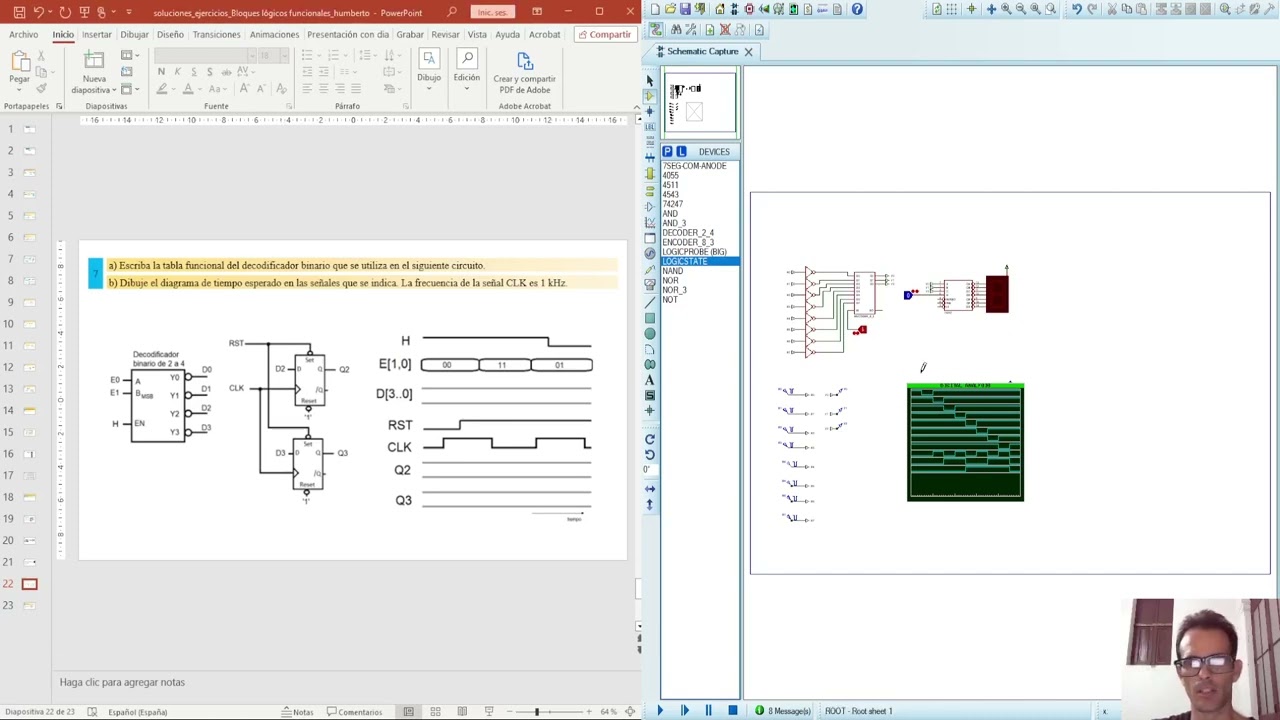
Proteus Software! Topic 1 Fundamentals of Digital Electronics Introduction - What does Digital Electronics study? - Binary and hexadecimal number systems - Introduction to switching algebra (logical operators, fundamental theorems) Combinational logic circuits (Logic level of abstraction) - Structural description: Logic gates - Functional description: Truth tables, logical expressions, logical expressions in canonical forms - Simplification of logical functions using the Karnaugh map method - Optional combinations. Design criteria: minimum cost and minimum risk. - Application of De Morgan's theorem in the design of combinational logic circuits with logic gates Topic 2 Regular Functional Logic Blocks (RTL level of abstraction) - Definition and classification (combinatorial and sequential) - Hierarchical approach in digital design Regular combinatorial functional logic blocks - Arithmetic (adders, comparators, ALU) - Data selectors (multiplexers) Code converters (binary decoder, BCD-7 segment, binary encoder) - Structural (gate design) and functional description of the functional logic blocks (truth tables, functional tables, logical expressions, timing diagrams) - Application examples - Hierarchical design in Proteus Topic 3 Synchronous State Machines Synchronous State Machines (MES) Method for CSS Analysis and Design. - Designing non-regular CSS using the synchronous state machine method.

Video thumbnail
Play icon
Humberto's video
play iconVideo

Mohamed

verified teacher icon
Oman
13€

60-min

/h

trusted teacher iconTrusted teacher

Physics courses for universities and secondary studentsTranslate this text using Google Translate.

Physics courses for universities and secondary studentsTranslate this text using Google Translate.

Teaching physics courses for university majors A simplified and detailed explanation of university courses in the physics course such as Electronics Electricity Magnetism Solids Spectra General physics Electronics: A course that introduces the basic concepts of electronics, such as electric current, voltage, and resistance. Students learn about the different components of electronic circuits, how they work together, and how to design and build electronic devices. Electricity: A course that covers the principles of electricity, such as voltage, current, and resistance. Students learn about the different types of electricity, how it is generated, and how it is used. Magnetism: A course that covers the principles of magnetism, such as magnetic fields and forces. Students learn about the different types of magnets, how they work, and how they are used. Solids: A course that covers the properties of solids, such as their structure, composition, and behavior. Students learn about the different types of solids, how they are formed, and how they are used. Spectra: A course that covers the emission and absorption of light by matter. Students learn about the different types of spectra, how they are produced, and how they are used. General physics: A course that covers the basic principles of physics, such as mechanics, thermodynamics, and electromagnetism. Students learn about the laws of physics and how they can be used to explain the natural world. تدريس المقررات الفيزيائية للتخصصات الجامعية باللغة الإنجليزية يتم شرح مبسط ومفصل للمقررات الجامعية في مقرر الفيزياء مثل إلكترونيات - كهربية - مغناطيسة - جوامد - أطياف - فيزياء عامة

Video thumbnail
Play icon
Mohamed's video
PreviousShowing results 1 - 25 of 1161 - 25 of 116Next

Our students evaluate their Electronic Circuits teacher.

To ensure the quality of our Electronic Circuits teachers, we ask our students to review them.

Only reviews of students are published and they are guaranteed by Apprentus. Rated 4.8 out of 5 based on 158 reviews.

“ Ghous is a very kind and pleasant teacher. He explains everything clearly and is always responsive and supportive. He adapts to the student’s pace and is very flexible when it comes to scheduling and learning preferences. He has a strong command of Electrical Engineering topics and is able to explain even complex concepts in a simple and understandable way. Ghous is also very helpful with assignments, even when they are in a different language, which shows both his deep subject knowledge and his adaptability. I’m very satisfied with his lessons and would definitely recommend him to others. ”

“ Monther provided instruction to supplement first-year UK university curriculum in Electronics and Electrical circuits. His instruction was provided via Zoom over the course of about 5 weeks. All instruction was performed in English. Monther was an expert in the topic and found creative ways to improve knowledge and to explain difficult topics. Monther’s instruction absolutely contributed to successful completion of these challenging courses for a first-year UK university student. I would highly recommend Monther for these technical topics. ”

“ Highly recommended teacher!!! Matias teaching methods are great. Very clear and concise. Doesn’t waste your time explaining meaningless background information and always lectures with the intent to help you understand the material. He’s helped me understand content for my master course on Python and is one of the best lecturers that I’ve had. Your passion and dedication is beyond words! Thank you for getting me through this hard quick semester, I honestly would have never passed if it was not for your help! Thank you so much once again! ”

To ensure the quality of our Electronic Circuits teachers, we ask our students to review them.

Only reviews of students are published and they are guaranteed by Apprentus. Rated 4.8 out of 5 based on 158 reviews.

Map
Map