facebook
favorite button
super instructor icon
Trusted teacher
This teacher has a fast response time and rate, demonstrating a high quality of service to their students.
member since icon
Since February 2022
Instructor since February 2022
Python For All Ages & Absolute Beginners with experienced tutor with 10 years of Experience
course price icon
From 15 Fr /h
arrow icon
In today’s world, the ability to code continues to grow in importance. Coding is no longer the sole domain of computer scientists and programmers, but rather a useful skill to have in any career.

Students with an eye to their future know that learning to code is important, but figuring out which one to learn can be an intimidating task. Some languages are easier to learn, while others have a wider application. But one language sits right in the sweet spot.

With a balance of being both easy to learn and widely used in the real world, we suggest learning Python.

=>Python Introduction
Introduction to Python Interpreter and program execution, Using Comments, Literals, Constants,
=>Python’s Built-in Data types, Numbers (Integers, Floats, Complex Numbers, Real, Sets), Strings (Slicing, Indexing,
Concatenation, other operations on Strings), Accepting input from Console, printing statements, Simple ‘Python’
programs.
=>Operators, Expressions, and Python Statements Assignment statement, expressions, Arithmetic, Relational,
Logical, Bitwise operators and their precedence, Conditional statements: if, if-else, if-elif-else; simple programs,
Notion of iterative computation and control flow –range function, While Statement, For loop, break statement,
Continue Statement, Pass statement, else, assert.

=> Sequence Data Types Lists, tuples, sets, and dictionary, (Slicing, Indexing, Concatenation, other operations on
Sequence data type), the concept of mutability,
=>Functions Top-down approach of problem-solving, Modular programming and functions, Function parameters,
Local variables, the Return statement, DocStrings, global statement, Default argument values, keyword arguments,
var args parameters. Library functions

=> Object-Oriented Programming
Classes, Objects, methods, Inheritance, Encapsulation

=> Final Project- A GUI Game Application in Python
Extra information
Online Via Webcam
Location
location type icon
Online from India
Age
Children (7-12 years old)
Teenagers (13-17 years old)
Adults (18-64 years old)
Seniors (65+ years old)
Student level
Beginner
Intermediate
Advanced
Duration
60 minutes
90 minutes
120 minutes
The class is taught in
English
Hindi
Reviews
Availability of a typical week
(GMT -04:00)
New York
at teacher icon
Online via webcam
Mon
Tue
Wed
Thu
Fri
Sat
Sun
00-04
04-08
08-12
12-16
16-20
20-24
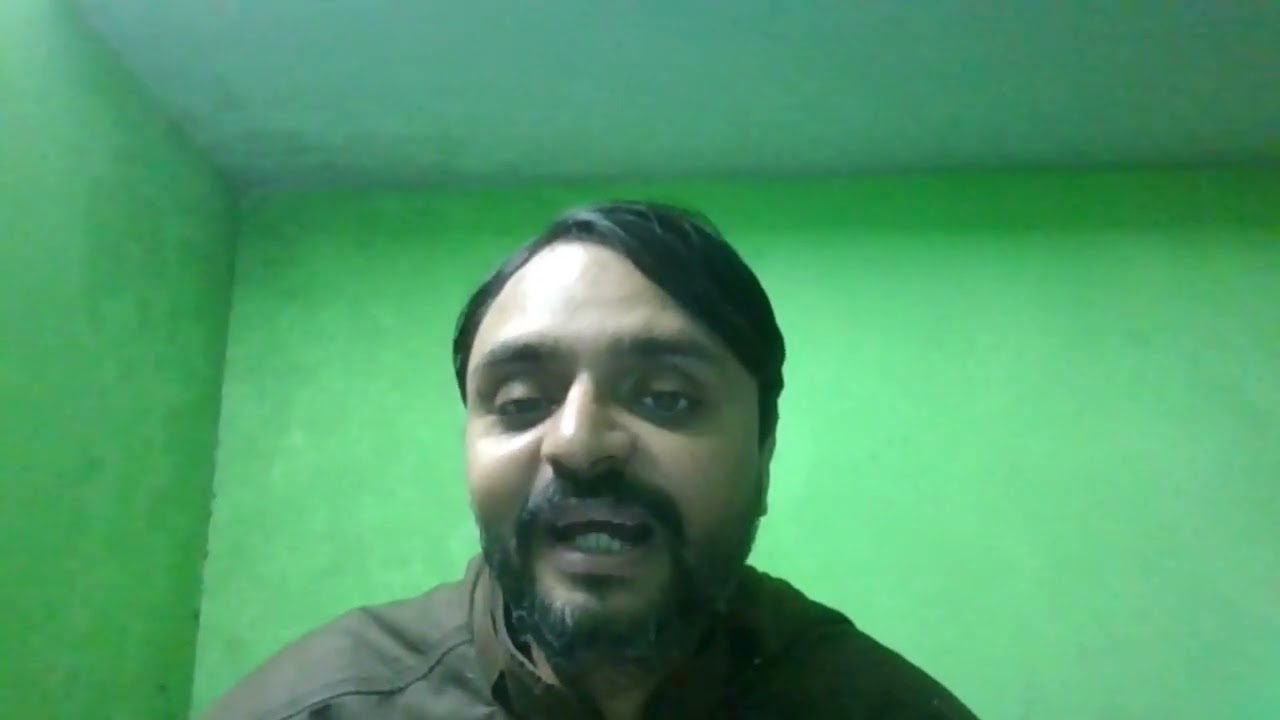
I have been teaching programming for 10 years. I have taught thousands of students of all age groups online and in-person successfully in my teaching career. I teach C, Python, JAVA, Data Science, PANDAS, NUMPY, GAME DEVELOPMENT, Django framework, Flask, JavaScript, Node Js, HTML, CSS, MySQL, PostgreSQL, PHP. But Python, JAVA, and C are my favorite languages to teach. I work as a full-stack web developer as well. I did many website projects. Recently I developed a Python Django fully dynamic Video MemberShip Website for a training institute. Where students can log in and learn by watching video courses. Currently, I'm working on a CRM Website for one of my US clients.
I have been helping college students with their coding assignments and projects for many years. I did many data science projects as well for my clients.
I love teaching kids. I have students who are under 10 learning game development with me.
I believe that everything can be achieved with hard work. So I always encourage my students to work harder. I teach all programming concepts in detail and in an easier way so that my students can understand easily and succeed.
As I have been teaching programming for many years. So I know the problems students have to face in the journey of learning a programming language pretty well. So I use the easiest and simplest way to explain all the programming concepts
I love helping people with all programming languages. Teaching is my passion. I love teaching coding in the fun and simplest way. That's why the students of all levels love learning with me.
If you are looking for making a career in web development, Data Science, Game Development, Or wanna learn programming like C, Python, Java, and Javascript in a fun and easiest way or you need help for your college assignments, message me to book a lesson with me.
Read more
Similar classes
arrow icon previousarrow icon next
verified badge
Engineer and senior professor of engineering sciences provides support courses in analog and digital electronics at all levels, engineering schools. having a scientific and technical knowledge, five years of experience in the field of teaching, teaching and a sense of listening and analysis, I am able to help pupils and students and train them in the chapters of which they have difficulties. for more info please contact me
verified badge
Learn to code with method and logic
Whether it's to succeed in the NSI (Digital Sciences and Technology) specialization in high school, design personal projects, or prepare for higher scientific studies, mastering code relies on solid algorithmic thinking. I help students understand the structure of programming languages and the logic of data.

Subject areas and languages taught:

Algorithms & Logic: Designing data structures and solving problems.

Programming Languages: Python, C/C++, C# and Java.

Data Management: Analysis and SQL queries / databases.

Basic Web Development: HTML & CSS for creating structured pages.

The goal is to take the student from simply writing code to true autonomy in development.
verified badge
As a Franco-Belgian management teacher, I give Excel lessons with passion!
Whether remotely or face-to-face, I offer many examples and exercises to accompany you.
I travel without problem throughout the region of Brussels and its surroundings, for lessons of at least 2 hours. For France, courses are only given remotely.

Here are some key words that will be covered in my classes:
Scenario analysis, Year, Rounding, Today, Bdnb, Bdnbval, Bdsum, Search, Column, Copy/paste in values, Copy/paste with transposition, Consolidation, Date, Datedif, Determat, Dollar, Right, Righterg, Equiv, Esterror, Estna, Frequency, Filter (simple and advanced), Format of cells, Left, Large.Value, Printing of documents, Index, Indirect, Inversemat, Day, Weekday, Line, Matrix, Max, Maxa, Max.Si, Min , Mina, Mina.If, Formatting of cells and ranges, Month, Average, Average.If, Nb, Nb.If, Nbval, Naming of cells and ranges, No, Small.value, Product, Productmat, Protection of cells, Lookup (Lookup), Lookupv (VLookup), Lookuph (HLookup), If (If), If.Not.Disp, If.Conditions, Iferror, Sum, Sumproduct, Sum.If, Sum.If.Set, Substitute , Pivot tables, Sorting, Cell locking

Do not hesitate to contact me to organize your lessons according to your needs and availability. Together, we will develop your Excel skills in an efficient and personalized way.
verified badge
If you’ve ever felt that science and math are difficult, it’s probably because no one showed you how to think like a problem solver.
In my classes, you’ll learn not just formulas or code but how to truly understand concepts, apply them, and build strong logical intuition.

I teach:
• 🔢 Mathematics: From algebra and calculus to applied problem-solving for real-world use.
• 💻 Computer Science: Coding fundamentals (Python, C++), algorithms, and logical thinking for beginners and intermediate learners.
• ⚛️ Physics: Mechanics, thermodynamics, and practical examples that make abstract ideas simple and visual.

As a Software Engineer and Master’s student in Engineering at Nagoya University, I bring both academic knowledge and hands-on experience from real projects. My teaching approach is interactive, visual, and deeply focused on understanding over memorization.

Let’s turn complex problems into clear, step-by-step insights — and make learning something you genuinely enjoy.
verified badge
Python is the most in-demand programming language in the world right now — and one of the easiest to learn with the right guidance.
Whether you've never written a line of code or you're a student who needs to pass a programming course, this is a practical, no-fluff introduction that gets you writing real code from session one.
What we can cover depending on your goals:

Python fundamentals: variables, loops, functions, data structures
- Object-oriented programming (OOP)
- Data manipulation with pandas and NumPy
- Introduction to machine learning with scikit-learn
- Database management with SQL
- C and Java upon request
- MATLAB and R available for engineering/science students

Why learn with me?
I'm not a student teaching on the side — I'm a professional engineer who uses Python daily for data analysis, modeling, and automation. I know exactly which concepts matter in the real world and which ones you can skip for now.
Sessions are 100% personalized: I adapt the pace, the examples, and the exercises to your background and your goal — whether that's passing your university exam, building a project, or landing a job.
verified badge
doctoral student in engineering sciences provides support courses in analog and digital electronics at any DEUG level and engineering schools. having scientific and technical knowledge, three years of experience in the field of teaching, pedagogy and a sense of listening and analysis, I am able to help pupils and students and train them in the chapters of which they are having difficulty. for more info please contact me
verified badge
You will learn Systematic Reasoning & Logical Thinking which is a requirement for entering Computer Science program in many universities.
The book “Delftse Foundations of Computation” especially its second chapter will be the main source of our lesson, but other more in-depth books will be also covered if you want to improve even further on logical thinking.
The topics in our lesson include:
• Propositional Logic: Logical operators; Precedence rules; Logical equivalence; Implications in English; Exclusive or; Universal operators; Classifying propositions
• Boolean Algebra: Substitution laws
• Logic Circuits: Logic gates; Combining gates to create circuits; From circuits to propositions; Disjunctive Normal Form; Binary addition.
• Predicate Logic: Predicates; Quantifiers; Tarski’s world and formal structures;
• Deduction: Valid arguments and proofs; Proofs in predicate logic

If you have any additional questions before starting a class, please feel free to ask me. I am here to assist! :)
verified badge
Master Python with Personalized Courses

Discover the art of programming with Python courses tailor-made to meet your specific needs. Whether you are a beginner, intermediate or professional, my lessons are suitable for all levels.

Why Choose My Courses?

Personalized Teaching Approach: Each course is tailored to your skill level and individual goals.

Practical Experience: Learn by doing with real-world projects that build your understanding and skills.

Ongoing Support: Get unlimited email support for any questions you have between sessions.

As a Python expert, I have a passion for teaching and sharing my knowledge. My goal is to guide you effectively in your learning journey.

Book Your First Lesson:

Start your journey to Python mastery now by booking your first lesson. Whether you aspire to enter the development field or hone your existing skills, these courses are designed for you.
verified badge
Experienced and patient teacher of logic for computer science.

I have taught logic, formal languages and automata theory to undergraduates for six years. My tutoring is adapted to the student's level and goals. Whether you need to learn logic for your studies, or you would simply like to know more about the subject, I will be more than happy to help you improve your understanding and skills.

Logic
The sciences presuppose a certain standard of rationality. An ability to distinguish between correct reasoning and claims that do not follow from the assumptions. In this class we study the basic principles of logic and apply mathematical techniques to the study thereof.
Topics include:
Propositional and Predicate Logic
Syntax and semantics
Natural deduction
Semantic tableaux
Correctness and soundness
Completeness

Formal languages and automata
A formal language is an abstraction of general characteristics of programming languages. Such a languages consists of a set of symbols together with some rules to determine whether a string made up out of those symbols is a member of the language.

Topics include:
Regular languages, context-free languages
Finite automata, pushdown automata, Turing machines
Regular expressions
Regular grammar, context-sensitive grammar
Pumping lemmas for regular and context-free languages
verified badge
This course introduces students to the fundamentals of Information and Communication Technology (ICT) and its role in modern society. Topics include computer hardware and software, digital communication tools, internet technologies, data management, cybersecurity, and emerging trends. Students will gain practical skills in using productivity software, conducting online research, and understanding the ethical and responsible use of digital resources. The course emphasizes both technical proficiency and digital literacy, preparing learners to confidently navigate and contribute to a technology-driven world.
verified badge
Objective: To understand AI without fear, to use it to simplify one's life, to know how to identify digital traps, and to use Word, Excel, etc. without difficulty.

1: Demystifying AI (What exactly is it?)
AI is not a movie robot: Difference between fiction and reality.

How it works (simply): The image of the "giant library": AI has read billions of books and uses them to predict the continuation of a sentence or create an image.

Where is it already present? Spell checkers, Netflix/YouTube suggestions, GPS, and voice assistants (Siri/Alexa).

2: Using AI to make life easier
Conversing with AI (ChatGPT, Claude, Gemini):

Ask him to write an administrative email or a complex letter.

Summarize a long newspaper article or document.

Plan a travel itinerary or find recipe ideas with what's left in the fridge.

AI for creativity and memory:

Generate images to illustrate a birthday card (Midjourney, DALL-E).

Using AI to restore or colorize old family photos.

3: Learning to "talk" to AI (The Art of the Prompt)
The context method: Why "Give me a cake recipe" is less effective than "I am allergic to gluten and I am hosting 4 people, give me a simple chocolate cake recipe".

The expert's role: Learning to tell AI "Act like a travel guide" or "Act like an expert gardener".

4: Precautions and Critical Thinking (The Survival Guide)
"Hallucinations": Understand that AI can make false claims with complete certainty (never take medical or legal advice from AI without verification).

Privacy protection:

Never give sensitive data (social security number, passwords, bank details) to an AI.

Knowing that everything we write to the AI is potentially used to train it.

Spotting "Deepfakes":

How to recognize a doctored image or video (details on the hands, strange reflections, slightly metallic voice).

Verify the information: the golden rule of cross-referencing sources.

5: Ethics and Impacts (To go further)
Copyright: Who owns an image created by AI?

The environmental impact: The water and energy consumption of AI servers.

The future: Will AI replace us or assist us?
verified badge
Session 1: Revolutionizing your Scientific Writing with LaTeX & AI
Duration: 2 Hours | Level: Beginner | Tools: Overleaf + AI**

First Hour: Foundations and Cloud Environment (60 min)

1. Introduction to LaTeX Philosophy (15 min)

- The "WYSIWYM" concept:** Explain the difference between Word (*What You See Is What You Get*) and LaTeX (*What You See Is What You Mean*). Why content takes precedence over form.
- Key advantages:** Unrivaled typographic quality, automatic reference management, stability on long documents (theses), and free of charge.
- The structure of a file:** Distinction between the **preamble** (the brain: settings and packages) and the **body of the document** (the heart: text).

2. Immersion in Overleaf (25 min)

- Configuration:** Creation of an account and first project "Blank Project".
- Exploring the interface:** The file panel (left), the code editor (middle) and the PDF preview (right).
- Real-time collaboration:** How to share a project and leave comments (like on Google Docs).
- History and versions:** How to revert to a previous version in case of a compilation error.

3. Practical Workshop: My First Document (20 min)

* Writing basic commands: `\documentclass`, `\usepackage[french]{babel}`, `\title`, `\author`.
* Compilation of the document and observation of the result.
* Structuring: Use of `\section` and `\subsection`.

Second Hour: Mathematics and the Magic of AI (60 min)

4. The Power of Mathematics (20 min)

- Mathematical modes:** Difference between the text (`$...$`) and the centered block (`\[...\]`).
- Essential syntax:** Fractions `\frac{}{}`, exponents `^`, indices `_`, and roots `\sqrt{}`.
- Introduction to AMS packages: Why amsmath and amssymb are essential for professional rendering.

5. From hand to screen: AI at the service of LaTeX (30 min)

- Presentation of OCR tools:** Use of **Mathpix Snip** (the leader) or models like Gemini/ChatGPT to transform a photo into code.
- Concrete demonstration:
1. Take a picture of a complex handwritten formula (e.g., an integral with matrices).
2. Use AI to generate the corresponding LaTeX code.
3. Correction and insertion: Learn to check the AI-generated code before copying and pasting it into Overleaf.

6. Conclusion and Q&A (10 min)

* Summary of achievements.
* Resources for further exploration
* Definition of the exercise for the next session.
verified badge
A- TOPICS YOU CAN EXPLORE AND MASTER:
1- PYTHON FOUNDATIONS
• Variables, data types, operators, conditional structures, loops, functions, modules, files, exceptions, and object-oriented programming
• Lists, tuples, dictionaries, sets, comprehensions, debugging, and writing clear, reusable, well-structured code
• Jupyter Notebook, Anaconda, Visual Studio Code, virtual environments, and package management

2 — PROGRAMMING, ALGORITHMS, AND COMPUTER SCIENCE FOUNDATIONS
• Algorithmic thinking, problem decomposition, pseudocode, flowcharts, procedural programming, object-oriented programming, recursion, and modular program design
• Fundamental data structures including arrays, lists, stacks, queues, dictionaries/hash tables, sets, trees, graphs, and their appropriate use
• Searching, sorting, traversal, algorithm efficiency, computational complexity, Big-O notation, debugging, testing, code organization, and problem-solving strategies
• Practical programming exercises ranging from beginner problems to university-level algorithmic and computational challenges

3- DATA PREPARATION AND EXPLORATION
• NumPy and pandas for importing, cleaning, transforming, filtering, grouping, reshaping, and merging data
• Missing values, duplicates, outliers, inconsistent formats, data leakage, and data-quality validation
• Exploratory data analysis using descriptive statistics, Matplotlib, Seaborn, and graphical interpretation

4- MATHEMATICAL FOUNDATIONS
• Linear algebra, vectors, matrices, derivatives, optimization, probability, and statistics
• Loss functions, gradients, distance measures, regularization, likelihood, and model complexity
• Mathematical concepts are explained according to the learner’s level and the requirements of the selected algorithms

5- SUPERVISED MACHINE LEARNING
• Linear and polynomial regression, logistic regression, and regularized models
• k-nearest neighbours, decision trees, random forests, gradient boosting, support vector machines, and Naive Bayes classifiers
• Classification, regression, model assumptions, decision boundaries, feature importance, and interpretation of results

6- UNSUPERVISED LEARNING
• Clustering using k-means, hierarchical clustering, and density-based methods
• Principal component analysis, dimensionality reduction, anomaly detection, and pattern or structure discovery
• Method selection, evaluation of data structure, and interpretation of results without predefined labels

7- MODEL EVALUATION AND IMPROVEMENT
• Training, validation, and test sets; cross-validation; hyperparameter optimization
• Accuracy, precision, recall, specificity, F1 score, ROC–AUC, confusion matrices, MAE, MSE, RMSE, and R2
• Underfitting, overfitting, bias–variance trade-off, class imbalance, feature engineering, feature selection, scaling, and regularization

8- DEEP LEARNING
• Neural-network foundations, activation functions, forward propagation, backpropagation, and gradient descent
• Multilayer perceptrons, convolutional neural networks, recurrent neural networks, and Transformer foundations
• TensorFlow, Keras, or PyTorch depending on the learner’s project and working environment

9- ARTIFICIAL INTELLIGENCE APPLICATIONS
• Natural language processing, text classification, embeddings, sentiment analysis, and foundations of language models
• Computer vision, image classification, fundamental principles of object detection, and image preprocessing
• Recommendation systems, forecasting, anomaly detection, intelligent automation, and decision-support applications

10- GENERATIVE AI AND LARGE LANGUAGE MODELS
• Transformer architecture, tokens, embeddings, attention mechanisms, prompt engineering, Retrieval-Augmented Generation (RAG), and model evaluation
• Use of artificial-intelligence APIs, vector databases, document-retrieval systems, and structured AI-enabled workflows when relevant
• Reliability, hallucinations, bias, privacy, responsible use, and appropriate human validation

11- TOOLS AND LIBRARIES
• Python, NumPy, pandas, Matplotlib, Seaborn, scikit-learn, SciPy, Statsmodels, TensorFlow, Keras, and PyTorch
• Jupyter Notebook, Anaconda, Visual Studio Code, Git, GitHub, SQL, Excel, and Power BI when useful to the project
• Additional libraries may be introduced depending on the selected specialization and dataset

12- PROJECTS, RESEARCH, AND INTERVIEW PREPARATION
• Complete projects covering data preparation, model development, evaluation, interpretation, and presentation of results
• University assignments, dissertations, theses, research projects, portfolio projects, technical interviews, and professional applications
• Code review, debugging, documentation, reproducibility, model comparison, and communication of results

-------------------------------------------------------------------------------------------------------------------------------------------------------------------------------
B- PERSONALIZED TUTORING: LEARNING HOW TO REASON
Machine learning and artificial intelligence become much more accessible when mathematics, algorithms, Python code, data, and real-world applications are clearly connected.

My lessons help you move beyond simply copying code or using models as “black boxes.” You will learn how to define the problem correctly, prepare the data, select an appropriate algorithm, understand how it works, train and evaluate the model, diagnose errors, improve performance, and interpret results rigorously and responsibly.

Each lesson is personalized according to your current level, mathematical background, programming experience, dataset, university work, research project, interview preparation, or professional objective. We begin by identifying your existing knowledge, software environment, expected outcomes, and main conceptual or technical difficulties. We then establish a structured learning plan.

The first lesson combines a discussion of your background, objectives, and tutoring needs; an initial assessment of your current knowledge; personalized planning and organization of future sessions; and a short trial lesson to determine the most effective learning approach.

A typical session may include conceptual explanation, development of mathematical intuition, live coding, guided implementation, model evaluation, technical problem solving, and a concise summary of the next steps.

You may work with your own dataset, university assignment, research project, or professional problem, provided that confidential information is handled appropriately. I can also provide structured examples and datasets suited to your level.

My goal is not simply to help you run an algorithm. It is to help you understand why it is appropriate, how it learns from data, how to evaluate it correctly, why it may fail, and how to build a reliable, interpretable, and scientifically rigorous solution.
verified badge
I'm a working MEP engineer, currently building Python automation for Revit workflows daily - plan checks, model coordination, and repetitive drafting tasks. I teach other engineers, architects, and BIM professionals how to do the same, using pyRevit and real project workflows, not toy examples.

Topics include:
pyRevit fundamentals and setup
Automating repetitive Revit tasks (model checks, plan generation, data extraction)
Writing custom scripts for your firm's specific workflows
Applying Python automation to real MEP/BIM projects
verified badge
Additional materials + practice qs | Lesson plans + regular feedback | Recording + session notes available

A common theme running through our lessons will be to simplify - even topics like electromagnetic induction can be reduced to small bits :)

Together, we'll:
1. Find learning gaps
2. Break concepts into small bits
3. Apply to real world and exam questions
4. Work on exam technique - like the difference between "explain" and "describe" questions
5. Build mark-scheme friendly language

“It's not that I'm so smart, it's just that I stay with problems longer”
- Albert Einstein, while studying superposition of waves, I’m sure :)
Video thumbnail
Play icon
Anurag's video
message icon
Contact Anurag
repeat students icon
1st lesson is backed
by our
Good-fit Instructor Guarantee
Similar classes
arrow icon previousarrow icon next
verified badge
Engineer and senior professor of engineering sciences provides support courses in analog and digital electronics at all levels, engineering schools. having a scientific and technical knowledge, five years of experience in the field of teaching, teaching and a sense of listening and analysis, I am able to help pupils and students and train them in the chapters of which they have difficulties. for more info please contact me
verified badge
Learn to code with method and logic
Whether it's to succeed in the NSI (Digital Sciences and Technology) specialization in high school, design personal projects, or prepare for higher scientific studies, mastering code relies on solid algorithmic thinking. I help students understand the structure of programming languages and the logic of data.

Subject areas and languages taught:

Algorithms & Logic: Designing data structures and solving problems.

Programming Languages: Python, C/C++, C# and Java.

Data Management: Analysis and SQL queries / databases.

Basic Web Development: HTML & CSS for creating structured pages.

The goal is to take the student from simply writing code to true autonomy in development.
verified badge
As a Franco-Belgian management teacher, I give Excel lessons with passion!
Whether remotely or face-to-face, I offer many examples and exercises to accompany you.
I travel without problem throughout the region of Brussels and its surroundings, for lessons of at least 2 hours. For France, courses are only given remotely.

Here are some key words that will be covered in my classes:
Scenario analysis, Year, Rounding, Today, Bdnb, Bdnbval, Bdsum, Search, Column, Copy/paste in values, Copy/paste with transposition, Consolidation, Date, Datedif, Determat, Dollar, Right, Righterg, Equiv, Esterror, Estna, Frequency, Filter (simple and advanced), Format of cells, Left, Large.Value, Printing of documents, Index, Indirect, Inversemat, Day, Weekday, Line, Matrix, Max, Maxa, Max.Si, Min , Mina, Mina.If, Formatting of cells and ranges, Month, Average, Average.If, Nb, Nb.If, Nbval, Naming of cells and ranges, No, Small.value, Product, Productmat, Protection of cells, Lookup (Lookup), Lookupv (VLookup), Lookuph (HLookup), If (If), If.Not.Disp, If.Conditions, Iferror, Sum, Sumproduct, Sum.If, Sum.If.Set, Substitute , Pivot tables, Sorting, Cell locking

Do not hesitate to contact me to organize your lessons according to your needs and availability. Together, we will develop your Excel skills in an efficient and personalized way.
verified badge
If you’ve ever felt that science and math are difficult, it’s probably because no one showed you how to think like a problem solver.
In my classes, you’ll learn not just formulas or code but how to truly understand concepts, apply them, and build strong logical intuition.

I teach:
• 🔢 Mathematics: From algebra and calculus to applied problem-solving for real-world use.
• 💻 Computer Science: Coding fundamentals (Python, C++), algorithms, and logical thinking for beginners and intermediate learners.
• ⚛️ Physics: Mechanics, thermodynamics, and practical examples that make abstract ideas simple and visual.

As a Software Engineer and Master’s student in Engineering at Nagoya University, I bring both academic knowledge and hands-on experience from real projects. My teaching approach is interactive, visual, and deeply focused on understanding over memorization.

Let’s turn complex problems into clear, step-by-step insights — and make learning something you genuinely enjoy.
verified badge
Python is the most in-demand programming language in the world right now — and one of the easiest to learn with the right guidance.
Whether you've never written a line of code or you're a student who needs to pass a programming course, this is a practical, no-fluff introduction that gets you writing real code from session one.
What we can cover depending on your goals:

Python fundamentals: variables, loops, functions, data structures
- Object-oriented programming (OOP)
- Data manipulation with pandas and NumPy
- Introduction to machine learning with scikit-learn
- Database management with SQL
- C and Java upon request
- MATLAB and R available for engineering/science students

Why learn with me?
I'm not a student teaching on the side — I'm a professional engineer who uses Python daily for data analysis, modeling, and automation. I know exactly which concepts matter in the real world and which ones you can skip for now.
Sessions are 100% personalized: I adapt the pace, the examples, and the exercises to your background and your goal — whether that's passing your university exam, building a project, or landing a job.
verified badge
doctoral student in engineering sciences provides support courses in analog and digital electronics at any DEUG level and engineering schools. having scientific and technical knowledge, three years of experience in the field of teaching, pedagogy and a sense of listening and analysis, I am able to help pupils and students and train them in the chapters of which they are having difficulty. for more info please contact me
verified badge
You will learn Systematic Reasoning & Logical Thinking which is a requirement for entering Computer Science program in many universities.
The book “Delftse Foundations of Computation” especially its second chapter will be the main source of our lesson, but other more in-depth books will be also covered if you want to improve even further on logical thinking.
The topics in our lesson include:
• Propositional Logic: Logical operators; Precedence rules; Logical equivalence; Implications in English; Exclusive or; Universal operators; Classifying propositions
• Boolean Algebra: Substitution laws
• Logic Circuits: Logic gates; Combining gates to create circuits; From circuits to propositions; Disjunctive Normal Form; Binary addition.
• Predicate Logic: Predicates; Quantifiers; Tarski’s world and formal structures;
• Deduction: Valid arguments and proofs; Proofs in predicate logic

If you have any additional questions before starting a class, please feel free to ask me. I am here to assist! :)
verified badge
Master Python with Personalized Courses

Discover the art of programming with Python courses tailor-made to meet your specific needs. Whether you are a beginner, intermediate or professional, my lessons are suitable for all levels.

Why Choose My Courses?

Personalized Teaching Approach: Each course is tailored to your skill level and individual goals.

Practical Experience: Learn by doing with real-world projects that build your understanding and skills.

Ongoing Support: Get unlimited email support for any questions you have between sessions.

As a Python expert, I have a passion for teaching and sharing my knowledge. My goal is to guide you effectively in your learning journey.

Book Your First Lesson:

Start your journey to Python mastery now by booking your first lesson. Whether you aspire to enter the development field or hone your existing skills, these courses are designed for you.
verified badge
Experienced and patient teacher of logic for computer science.

I have taught logic, formal languages and automata theory to undergraduates for six years. My tutoring is adapted to the student's level and goals. Whether you need to learn logic for your studies, or you would simply like to know more about the subject, I will be more than happy to help you improve your understanding and skills.

Logic
The sciences presuppose a certain standard of rationality. An ability to distinguish between correct reasoning and claims that do not follow from the assumptions. In this class we study the basic principles of logic and apply mathematical techniques to the study thereof.
Topics include:
Propositional and Predicate Logic
Syntax and semantics
Natural deduction
Semantic tableaux
Correctness and soundness
Completeness

Formal languages and automata
A formal language is an abstraction of general characteristics of programming languages. Such a languages consists of a set of symbols together with some rules to determine whether a string made up out of those symbols is a member of the language.

Topics include:
Regular languages, context-free languages
Finite automata, pushdown automata, Turing machines
Regular expressions
Regular grammar, context-sensitive grammar
Pumping lemmas for regular and context-free languages
verified badge
This course introduces students to the fundamentals of Information and Communication Technology (ICT) and its role in modern society. Topics include computer hardware and software, digital communication tools, internet technologies, data management, cybersecurity, and emerging trends. Students will gain practical skills in using productivity software, conducting online research, and understanding the ethical and responsible use of digital resources. The course emphasizes both technical proficiency and digital literacy, preparing learners to confidently navigate and contribute to a technology-driven world.
verified badge
Objective: To understand AI without fear, to use it to simplify one's life, to know how to identify digital traps, and to use Word, Excel, etc. without difficulty.

1: Demystifying AI (What exactly is it?)
AI is not a movie robot: Difference between fiction and reality.

How it works (simply): The image of the "giant library": AI has read billions of books and uses them to predict the continuation of a sentence or create an image.

Where is it already present? Spell checkers, Netflix/YouTube suggestions, GPS, and voice assistants (Siri/Alexa).

2: Using AI to make life easier
Conversing with AI (ChatGPT, Claude, Gemini):

Ask him to write an administrative email or a complex letter.

Summarize a long newspaper article or document.

Plan a travel itinerary or find recipe ideas with what's left in the fridge.

AI for creativity and memory:

Generate images to illustrate a birthday card (Midjourney, DALL-E).

Using AI to restore or colorize old family photos.

3: Learning to "talk" to AI (The Art of the Prompt)
The context method: Why "Give me a cake recipe" is less effective than "I am allergic to gluten and I am hosting 4 people, give me a simple chocolate cake recipe".

The expert's role: Learning to tell AI "Act like a travel guide" or "Act like an expert gardener".

4: Precautions and Critical Thinking (The Survival Guide)
"Hallucinations": Understand that AI can make false claims with complete certainty (never take medical or legal advice from AI without verification).

Privacy protection:

Never give sensitive data (social security number, passwords, bank details) to an AI.

Knowing that everything we write to the AI is potentially used to train it.

Spotting "Deepfakes":

How to recognize a doctored image or video (details on the hands, strange reflections, slightly metallic voice).

Verify the information: the golden rule of cross-referencing sources.

5: Ethics and Impacts (To go further)
Copyright: Who owns an image created by AI?

The environmental impact: The water and energy consumption of AI servers.

The future: Will AI replace us or assist us?
verified badge
Session 1: Revolutionizing your Scientific Writing with LaTeX & AI
Duration: 2 Hours | Level: Beginner | Tools: Overleaf + AI**

First Hour: Foundations and Cloud Environment (60 min)

1. Introduction to LaTeX Philosophy (15 min)

- The "WYSIWYM" concept:** Explain the difference between Word (*What You See Is What You Get*) and LaTeX (*What You See Is What You Mean*). Why content takes precedence over form.
- Key advantages:** Unrivaled typographic quality, automatic reference management, stability on long documents (theses), and free of charge.
- The structure of a file:** Distinction between the **preamble** (the brain: settings and packages) and the **body of the document** (the heart: text).

2. Immersion in Overleaf (25 min)

- Configuration:** Creation of an account and first project "Blank Project".
- Exploring the interface:** The file panel (left), the code editor (middle) and the PDF preview (right).
- Real-time collaboration:** How to share a project and leave comments (like on Google Docs).
- History and versions:** How to revert to a previous version in case of a compilation error.

3. Practical Workshop: My First Document (20 min)

* Writing basic commands: `\documentclass`, `\usepackage[french]{babel}`, `\title`, `\author`.
* Compilation of the document and observation of the result.
* Structuring: Use of `\section` and `\subsection`.

Second Hour: Mathematics and the Magic of AI (60 min)

4. The Power of Mathematics (20 min)

- Mathematical modes:** Difference between the text (`$...$`) and the centered block (`\[...\]`).
- Essential syntax:** Fractions `\frac{}{}`, exponents `^`, indices `_`, and roots `\sqrt{}`.
- Introduction to AMS packages: Why amsmath and amssymb are essential for professional rendering.

5. From hand to screen: AI at the service of LaTeX (30 min)

- Presentation of OCR tools:** Use of **Mathpix Snip** (the leader) or models like Gemini/ChatGPT to transform a photo into code.
- Concrete demonstration:
1. Take a picture of a complex handwritten formula (e.g., an integral with matrices).
2. Use AI to generate the corresponding LaTeX code.
3. Correction and insertion: Learn to check the AI-generated code before copying and pasting it into Overleaf.

6. Conclusion and Q&A (10 min)

* Summary of achievements.
* Resources for further exploration
* Definition of the exercise for the next session.
verified badge
A- TOPICS YOU CAN EXPLORE AND MASTER:
1- PYTHON FOUNDATIONS
• Variables, data types, operators, conditional structures, loops, functions, modules, files, exceptions, and object-oriented programming
• Lists, tuples, dictionaries, sets, comprehensions, debugging, and writing clear, reusable, well-structured code
• Jupyter Notebook, Anaconda, Visual Studio Code, virtual environments, and package management

2 — PROGRAMMING, ALGORITHMS, AND COMPUTER SCIENCE FOUNDATIONS
• Algorithmic thinking, problem decomposition, pseudocode, flowcharts, procedural programming, object-oriented programming, recursion, and modular program design
• Fundamental data structures including arrays, lists, stacks, queues, dictionaries/hash tables, sets, trees, graphs, and their appropriate use
• Searching, sorting, traversal, algorithm efficiency, computational complexity, Big-O notation, debugging, testing, code organization, and problem-solving strategies
• Practical programming exercises ranging from beginner problems to university-level algorithmic and computational challenges

3- DATA PREPARATION AND EXPLORATION
• NumPy and pandas for importing, cleaning, transforming, filtering, grouping, reshaping, and merging data
• Missing values, duplicates, outliers, inconsistent formats, data leakage, and data-quality validation
• Exploratory data analysis using descriptive statistics, Matplotlib, Seaborn, and graphical interpretation

4- MATHEMATICAL FOUNDATIONS
• Linear algebra, vectors, matrices, derivatives, optimization, probability, and statistics
• Loss functions, gradients, distance measures, regularization, likelihood, and model complexity
• Mathematical concepts are explained according to the learner’s level and the requirements of the selected algorithms

5- SUPERVISED MACHINE LEARNING
• Linear and polynomial regression, logistic regression, and regularized models
• k-nearest neighbours, decision trees, random forests, gradient boosting, support vector machines, and Naive Bayes classifiers
• Classification, regression, model assumptions, decision boundaries, feature importance, and interpretation of results

6- UNSUPERVISED LEARNING
• Clustering using k-means, hierarchical clustering, and density-based methods
• Principal component analysis, dimensionality reduction, anomaly detection, and pattern or structure discovery
• Method selection, evaluation of data structure, and interpretation of results without predefined labels

7- MODEL EVALUATION AND IMPROVEMENT
• Training, validation, and test sets; cross-validation; hyperparameter optimization
• Accuracy, precision, recall, specificity, F1 score, ROC–AUC, confusion matrices, MAE, MSE, RMSE, and R2
• Underfitting, overfitting, bias–variance trade-off, class imbalance, feature engineering, feature selection, scaling, and regularization

8- DEEP LEARNING
• Neural-network foundations, activation functions, forward propagation, backpropagation, and gradient descent
• Multilayer perceptrons, convolutional neural networks, recurrent neural networks, and Transformer foundations
• TensorFlow, Keras, or PyTorch depending on the learner’s project and working environment

9- ARTIFICIAL INTELLIGENCE APPLICATIONS
• Natural language processing, text classification, embeddings, sentiment analysis, and foundations of language models
• Computer vision, image classification, fundamental principles of object detection, and image preprocessing
• Recommendation systems, forecasting, anomaly detection, intelligent automation, and decision-support applications

10- GENERATIVE AI AND LARGE LANGUAGE MODELS
• Transformer architecture, tokens, embeddings, attention mechanisms, prompt engineering, Retrieval-Augmented Generation (RAG), and model evaluation
• Use of artificial-intelligence APIs, vector databases, document-retrieval systems, and structured AI-enabled workflows when relevant
• Reliability, hallucinations, bias, privacy, responsible use, and appropriate human validation

11- TOOLS AND LIBRARIES
• Python, NumPy, pandas, Matplotlib, Seaborn, scikit-learn, SciPy, Statsmodels, TensorFlow, Keras, and PyTorch
• Jupyter Notebook, Anaconda, Visual Studio Code, Git, GitHub, SQL, Excel, and Power BI when useful to the project
• Additional libraries may be introduced depending on the selected specialization and dataset

12- PROJECTS, RESEARCH, AND INTERVIEW PREPARATION
• Complete projects covering data preparation, model development, evaluation, interpretation, and presentation of results
• University assignments, dissertations, theses, research projects, portfolio projects, technical interviews, and professional applications
• Code review, debugging, documentation, reproducibility, model comparison, and communication of results

-------------------------------------------------------------------------------------------------------------------------------------------------------------------------------
B- PERSONALIZED TUTORING: LEARNING HOW TO REASON
Machine learning and artificial intelligence become much more accessible when mathematics, algorithms, Python code, data, and real-world applications are clearly connected.

My lessons help you move beyond simply copying code or using models as “black boxes.” You will learn how to define the problem correctly, prepare the data, select an appropriate algorithm, understand how it works, train and evaluate the model, diagnose errors, improve performance, and interpret results rigorously and responsibly.

Each lesson is personalized according to your current level, mathematical background, programming experience, dataset, university work, research project, interview preparation, or professional objective. We begin by identifying your existing knowledge, software environment, expected outcomes, and main conceptual or technical difficulties. We then establish a structured learning plan.

The first lesson combines a discussion of your background, objectives, and tutoring needs; an initial assessment of your current knowledge; personalized planning and organization of future sessions; and a short trial lesson to determine the most effective learning approach.

A typical session may include conceptual explanation, development of mathematical intuition, live coding, guided implementation, model evaluation, technical problem solving, and a concise summary of the next steps.

You may work with your own dataset, university assignment, research project, or professional problem, provided that confidential information is handled appropriately. I can also provide structured examples and datasets suited to your level.

My goal is not simply to help you run an algorithm. It is to help you understand why it is appropriate, how it learns from data, how to evaluate it correctly, why it may fail, and how to build a reliable, interpretable, and scientifically rigorous solution.
verified badge
I'm a working MEP engineer, currently building Python automation for Revit workflows daily - plan checks, model coordination, and repetitive drafting tasks. I teach other engineers, architects, and BIM professionals how to do the same, using pyRevit and real project workflows, not toy examples.

Topics include:
pyRevit fundamentals and setup
Automating repetitive Revit tasks (model checks, plan generation, data extraction)
Writing custom scripts for your firm's specific workflows
Applying Python automation to real MEP/BIM projects
verified badge
Additional materials + practice qs | Lesson plans + regular feedback | Recording + session notes available

A common theme running through our lessons will be to simplify - even topics like electromagnetic induction can be reduced to small bits :)

Together, we'll:
1. Find learning gaps
2. Break concepts into small bits
3. Apply to real world and exam questions
4. Work on exam technique - like the difference between "explain" and "describe" questions
5. Build mark-scheme friendly language

“It's not that I'm so smart, it's just that I stay with problems longer”
- Albert Einstein, while studying superposition of waves, I’m sure :)
Good-fit Instructor Guarantee
favorite button
message icon
Contact Anurag