✅ STRATEGIC SUPPORT: COMMUNICATION, INFLUENCE & PROJECT DEVELOPMENT – BY A RECOGNIZED AND CERTIFIED EXPERTTranslate this text using Google Translate.
✅ STRATEGIC SUPPORT: COMMUNICATION, INFLUENCE & PROJECT DEVELOPMENT – BY A RECOGNIZED AND CERTIFIED EXPERTTranslate this text using Google Translate.
➤ Turn your trades into victories!
Whether it's to negotiate a contract or remuneration, defend an idea, advance a project, start a business, convince a partner, gain the support of a team, resolve a conflict or simply make yourself better understood, one thing can make all the difference: knowing who you are dealing with and how to communicate with that person.
Because there is no single way to communicate effectively.
The same method won't work for everyone. A rational person isn't persuaded in the same way as an emotional one. A cautious person doesn't react like an ambitious one. A decision-maker, a colleague, a client, an investor, a partner, or a loved one doesn't have the same expectations, motivations, or interests.
The goal is therefore to learn to observe, understand, analyze and adapt your communication in order to deploy the right tool, the right method and the right strategy, at the right time and in front of the right person.
➤ Understanding humans to communicate better
Our way of communicating relies largely on understanding certain mechanisms of human psychology.
Human beings are naturally attentive to what directly concerns them. They are sensitive to their interests, needs, fears, curiosity, recognition, need for security, and desire to be understood and valued.
The idea is therefore not simply to say what you have to say, but to understand:
-How can you make your interlocutor want to listen to you?
-How can you present your message so that it makes sense to him?
-How to spark their interest?
-How can we address his concerns before he even expresses them?
-How to create a dynamic favorable to your objective?
For example, rather than immediately presenting an idea solely from your own perspective, you will learn to identify what may interest your interlocutor and to build your communication around their concerns.
Even a simple, common phrase like, "What I'm about to explain could be of real interest to you, particularly because..." can already capture more attention than a presentation focused solely on your own needs. But of course, there are many more techniques for subtly influencing someone.
Similarly, understanding certain mechanisms such as curiosity, self-interest, recognition, trust, consistency, emotion, or risk perception allows for a more relevant and effective approach.
➤ Profiling & analysis of interlocutors
Before communicating effectively, you must first understand who you are addressing.
You will learn to analyze your interlocutor through different elements:
-His way of communicating
-His priorities and interests
-His motivations
️ --His needs and expectations
-His potential resistance and objections
-His decision-making process
-His relationship to risk
-His personal or professional stakes
-The verbal and non-verbal signals he can express
-What can promote or hinder its adoption
The goal: to no longer communicate automatically or identically with everyone.
You will learn to adapt your speech, posture, arguments, questions and strategy depending on the person you are facing.
➤ Advance your projects and ambitions
Do you have a project?
Do you want to create a company, launch an activity, advance within your organization, defend an idea, obtain the agreement of a decision-maker, or get several people or departments to collaborate?
A project is not based solely on its quality.
It also depends on your ability to:
- Identify the right contacts
-Understanding the interests of each stakeholder
-️ Knowing how to approach each person
- Adapt your communication according to the department or function
- Present your project from the angle most relevant to each individual
- Anticipate objections and resistance
- Create alliances and gain support
- Negotiating effectively when interests diverge
- Knowing when to insist, when to rephrase, when to wait, or when to change approach
The same project may require several communication strategies depending on the person you are addressing.
The goal is to give you the necessary tools to understand this dynamic and move your project forward with more method, strategy and efficiency.
➤ Negotiation: much more than defending one's position
Whether it's for negotiating:
A contract
A salary
A partnership
A budget
A strategic project
A career progression
A decision
Or resolve a conflict
Negotiation is not just about finding good arguments.
It also involves understanding:
Who is in front of you?
What he really wants.
What he stands to gain.
This is what he is trying to avoid.
What are his interests?
What are its constraints?
And what strategy can create a favorable outcome?
➤ On the agenda: support tailored to your objectives
-Psychology of communication & understanding of behaviors
-Understanding some fundamental mechanisms of human psychology
-Identify the needs, motivations and interests of your interlocutors
-Understanding why some approaches work with some people and fail with others
-Use interest, curiosity, recognition, trust and other communication levers
-Craft a message that makes people want to listen
Profiling and analysis of interlocutors
-Observe and analyze how a person communicates
-Identify your priorities and your way of working
-Detect potential resistance and objections
-Understanding verbal and behavioral signals
-Adapt your strategy to the person and the context
Persuasive communication
-Formulate your arguments with impact
-To promote your ideas so that they are considered
-Structuring a convincing speech
-Ask the right questions
-Create interest and engagement
-Adapt your language and your approach
-Develop your ability to persuade without engaging in unnecessary power struggles
Strategic negotiation
-Identify and utilize negotiation levers: alternatives, common interests, concessions, and room for maneuver
-Preparing effectively for a negotiation
-Anticipate different scenarios
-Identify the interests and positions of stakeholders
-Build a suitable strategy
-Managing objections and deadlock situations
-Knowing how to evolve a discussion when the initial strategy is not working
-Maximize your chances of reaching a favorable agreement
Project strategy & support
-Clarify your objective and your strategy
-Identify the different stages and priorities
-Understanding who to interact with and in what order
-Prepare your discussions with the various stakeholders
-Adapt your communication according to the departments, partners or decision-makers
Prepare for your important appointments
-Anticipate difficulties and resistance
-Deploy the most relevant tools and methods according to each step
Conflict management and complex situations
-Understanding the mechanisms that give rise to a conflict
-Identify the real issues behind the positions expressed
-Manage your emotions and those of the person you are speaking with
-Develop active and strategic listening
-Moving beyond unnecessary power struggles
-Regaining control of a difficult exchange
-Find constructive and sustainable solutions
The right tool, at the right time, with the right person
This is one of the central principles of this support. Knowing a technique is not enough. You also need to know:
-When to use it.
-With whom.
-In what context?
-And in what a way.
The same technique can be extremely effective with one person and totally counterproductive with another.
You will therefore learn to develop a true strategic reading of interactions, so that you no longer act solely on intuition, but understand the dynamics at play and consciously choose your approach.
➤ Tailored support
This program is aimed particularly at:
-Entrepreneurs and project leaders
-Business leaders and executives
-Managers and executives
-Young professionals
-Self-employed individuals and professionals
-People wishing to advance within their company
-Liberal professionals (lawyers, doctors, etc.)
-Anyone with a project, ambition, or goal to achieve
-Anyone wishing to improve their relationships and communication in a personal setting
Each support program is tailored to your specific situation and concrete objectives.
We can work directly on your projects, negotiations, appointments, relationship difficulties, or professional situations.
The goal is not simply to learn concepts. You learn to use them practically in your own life.
➤ A practical, engaging, and results-oriented teaching approach
We alternate methodological input, analysis of real situations, role-playing, simulations, preparation of your discussions and personalized feedback.
You can bring:
-A project to be developed.
-A negotiation to prepare for.
-An important appointment.
-A conflict to be resolved.
-A difficult person to manage.
-An idea worth defending.
-A business to launch.
-Or simply an ambition you wish to realize.
Let's analyze the situation together:
-What is your objective?
-Who are the relevant stakeholders?
-What are their interests and what is at stake?
-What obstacles might arise?
-What strategy should we adopt?
-What approach should be used?
-Which arguments should be prioritized?
-What tools should be deployed?
-And most importantly: at what point?
➤ Become a strategic communicator
The goal of this support is to enable you to develop a skill that will serve you in all areas of your life:
-Understanding people.
-Understanding the situations.
-Understanding the issues.
-Then adapt your communication and strategy to achieve your objectives.
Whether you are setting up a project, developing a business, advancing professionally, negotiating an opportunity or managing a complex personal situation, you will have concrete methods, tools and strategies to communicate with greater impact, intelligence and efficiency.
Stop letting your projects, ideas, or ambitions depend solely on your intuition.
Learn to understand people, decode situations, and deploy the right strategy at the right time to advance what truly matters to you.
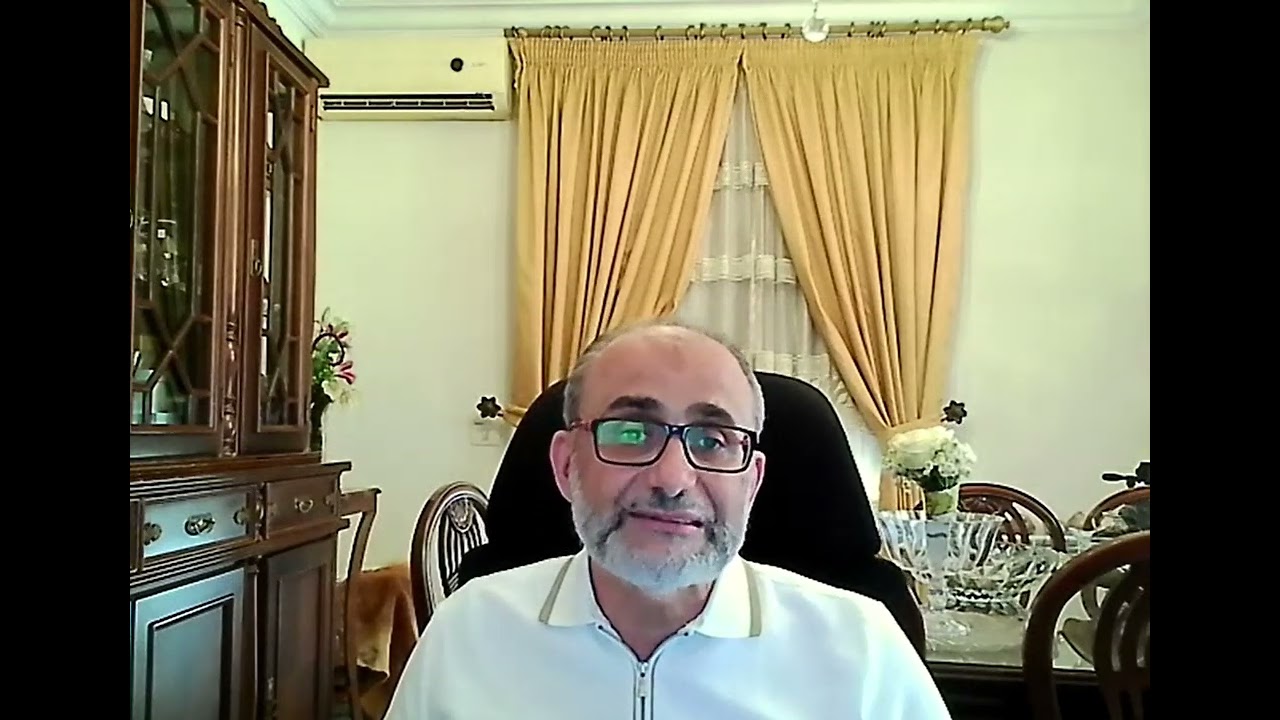
✅ THE TRAINER - TEACHER CONSULTANT
A graduate of a prestigious French Grande École and an Ivy League university in the United States, he combines academic rigor with modern teaching methods. With over 18 years of experience in Europe and North America, he has taught at prestigious international institutions (both public and private), and regularly speaks in Switzerland, France, Belgium, Luxembourg, and Canada, as well as at various forums and conferences.
A recognized specialist, he offers personalized and accessible support based on active listening, a proven methodology, and tailored teaching methods. Whether through one-on-one sessions, workshops, or group training, his approach combines customization, efficiency, and professionalism for rapid, visible results.
✅ LOCATIONS: Switzerland (Geneva, Lausanne, Fribourg, Zurich, Neuchâtel, Lugano, Basel, Bern, Lucerne), Belgium (Brussels, Antwerp, Charleroi, Liège), Luxembourg. On request: France (Paris, Lyon) and Canada (Montreal).
Currently, we primarily use videoconferencing, a highly popular format: it offers the same quality as in-person meetings, flexible organization, time savings, flexibility, comfort, and an eco-friendly approach. Content, notes, and recommendations are shared directly via a dedicated chat.
➤ Languages: French and English.
➤ Reduced and stable fees, accessible without compromising on quality.
➤ Gift vouchers available all year round.
➤ Schedules defined together according to your constraints.
➤ 100% tailor-made program, adapted to each need.
➤ Noticeable progress from 2 sessions (2026 study).
✅ Why choose this training?
-International expertise at the service of your objectives.
-Personalized sessions with concrete tools.
-A lively, interactive and results-oriented approach.
-A motivating and supportive environment, fostering confidence and rapid progress.
-Tangible results in just a few sessions.