facebook
favorite button
super instructor icon
Trusted teacher
This teacher has a fast response time and rate, demonstrating a high quality of service to their students.
member since icon
Since February 2022
Instructor since February 2022
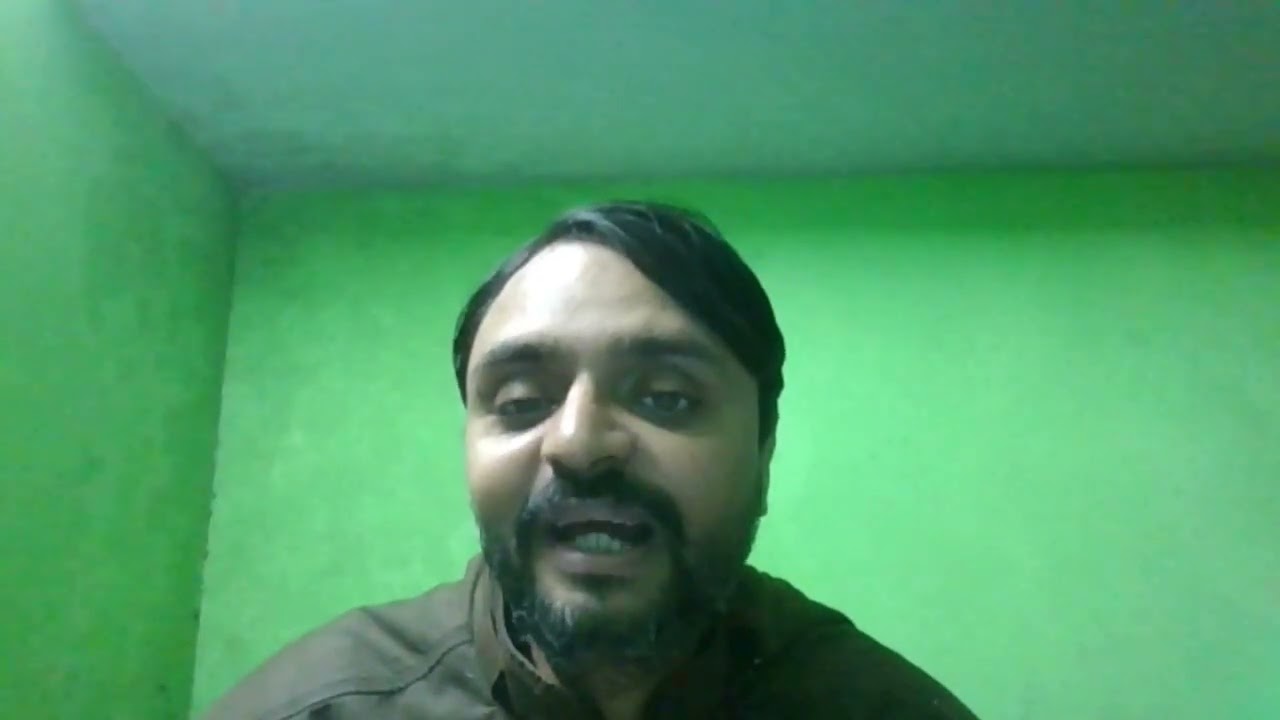
PYTHON TUTOR WITH 10 YEARS OF EXPERIENCE | DATA SCIENCE | GAME DEVELOPMENT | WEB DEVELOPMENT |Programming Classes | DJANGO | FLASK | JAVA
course price icon
From 13 $ /h
arrow icon
I have been teaching programming for 10 years. I have taught thousands of students of all age groups online and in-person successfully in my teaching career. I teach C, Python, JAVA, Data Science, PANDAS, NUMPY, GAME DEVELOPMENT, Django framework, Flask, JavaScript, Node Js, HTML, CSS, MySQL, PostgreSQL, PHP. But Python, JAVA, and C are my favorite languages to teach. I work as a full-stack web developer as well. I did many website projects. Recently I developed a Python Django fully dynamic Video MemberShip Website for a training institute. Where students can log in and learn by watching video courses. Currently, I'm working on a CRM Website for one of my US clients.
I have been helping college students with their coding assignments and projects for many years. I did many data science projects as well for my clients.
I love teaching kids. I have students who are under 10 learning game development with me.
I believe that everything can be achieved with hard work. So I always encourage my students to work harder. I teach all programming concepts in detail and in an easier way so that my students can understand easily and succeed.
As I have been teaching programming for many years. So I know the problems students have to face in the journey of learning a programming language pretty well. So I use the easiest and simplest way to explain all the programming concepts
I love helping people with all programming languages. Teaching is my passion. I love teaching coding in the fun and simplest way. That's why the students of all levels love learning with me.
If you are looking for making a career in web development, Data Science, Game Development, Or wanna learn programming like C, Python, Java, and Javascript in a fun and easiest way or you need help for your college assignments, message me to book a lesson with me.
Location
location type icon
Online from India
Age
Children (7-12 years old)
Teenagers (13-17 years old)
Adults (18-64 years old)
Seniors (65+ years old)
Student level
Beginner
Intermediate
Advanced
Duration
30 minutes
45 minutes
60 minutes
90 minutes
120 minutes
The class is taught in
English
Hindi
Reviews
Availability of a typical week
(GMT -05:00)
New York
at teacher icon
Online via webcam
Mon
Tue
Wed
Thu
Fri
Sat
Sun
00-04
04-08
08-12
12-16
16-20
20-24
In today’s world, the ability to code continues to grow in importance. Coding is no longer the sole domain of computer scientists and programmers, but rather a useful skill to have in any career.

Students with an eye to their future know that learning to code is important, but figuring out which one to learn can be an intimidating task. Some languages are easier to learn, while others have a wider application. But one language sits right in the sweet spot.

With a balance of being both easy to learn and widely used in the real world, we suggest learning Python.

=>Python Introduction
Introduction to Python Interpreter and program execution, Using Comments, Literals, Constants,
=>Python’s Built-in Data types, Numbers (Integers, Floats, Complex Numbers, Real, Sets), Strings (Slicing, Indexing,
Concatenation, other operations on Strings), Accepting input from Console, printing statements, Simple ‘Python’
programs.
=>Operators, Expressions, and Python Statements Assignment statement, expressions, Arithmetic, Relational,
Logical, Bitwise operators and their precedence, Conditional statements: if, if-else, if-elif-else; simple programs,
Notion of iterative computation and control flow –range function, While Statement, For loop, break statement,
Continue Statement, Pass statement, else, assert.

=> Sequence Data Types Lists, tuples, sets, and dictionary, (Slicing, Indexing, Concatenation, other operations on
Sequence data type), the concept of mutability,
=>Functions Top-down approach of problem-solving, Modular programming and functions, Function parameters,
Local variables, the Return statement, DocStrings, global statement, Default argument values, keyword arguments,
var args parameters. Library functions

=> Object-Oriented Programming
Classes, Objects, methods, Inheritance, Encapsulation

=> Final Project- A GUI Game Application in Python
Read more
Similar classes
arrow icon previousarrow icon next
verified badge
Most kids think coding is for "smart kids" or "future programmers."
It's not. Coding is how real people solve real problems.
In this class, we skip the theory. Your child creates real things.

What they'll do:
✓ Build real projects in Scratch: a working game, an interactive animation, a story they coded
✓ Program virtual robots: solve real-world challenges (navigate a maze, automate a task, build a system)
✓ Create in Minecraft Education: design worlds, automate constructions, solve logic problems
✓ Experiment with different languages: not just learn "the right way," but understand that there are many ways to think about a problem
✓ Collaborate and share: work with other kids, get feedback, improve their work
✓ Develop logical thinking: not just for coding, but for anything: solving math problems, science challenges, real-world situations


Why this is different:
We don't teach syntax. We teach how programmers think.
Most children's coding courses say "here's the code, copy it." We teach "what problem are we trying to solve? How could we break it into steps? What options do we have?"
When your child learns to think like a programmer, they can learn any language afterward.

What they take home:
A portfolio of 3–4 completed, working projects. The ability to say "I built this." And the deep understanding that code is a tool to make real things happen.

Format: Online or Barcelona | 60–90 min sessions | Flexible pace, no prior experience needed
For curious 8-12 year olds who want to build.
verified badge
Engineer and senior professor of engineering sciences provides support courses in analog and digital electronics at all levels, engineering schools. having a scientific and technical knowledge, five years of experience in the field of teaching, teaching and a sense of listening and analysis, I am able to help pupils and students and train them in the chapters of which they have difficulties. for more info please contact me
verified badge
I hold a PhD in Mathematical Physics (Theoretical Physics), and I specialize in providing educational support lessons in physics and mathematics. I provide my services to high school and university students, and I have the ability to teach in French, Arabic, and English.

Thanks to my eight years of experience in providing private lessons, I have developed a flexible teaching methodology that adapts to the needs of each individual student. With my experience of more than six years as a professor within the French Mission Program, I have mastered the requirements of this educational system and its special methods. My experience in the field of entrance examinations for graduate schools constitutes an additional advantage for students wishing to continue their studies in prestigious educational institutions.

My passion for physics and mathematics and my strong academic background enable me to explain complex concepts in a clear and understandable way. My goal is to develop students' understanding academically and build their self-confidence, helping them reach their full potential.

I am committed to providing high-quality education, tailored to each student's pace and learning styles, and I strongly believe that every student can excel with the right guidance and support.
verified badge
doctoral student in engineering sciences provides support courses in analog and digital electronics at any DEUG level and engineering schools. having scientific and technical knowledge, three years of experience in the field of teaching, pedagogy and a sense of listening and analysis, I am able to help pupils and students and train them in the chapters of which they are having difficulty. for more info please contact me
verified badge
Don't settle for anything less than excellence.
I am an Aerospace Engineer with a Master's degree in Quantum Physics and have completed Ph.D. work at the University of Cambridge in Computational Physics. Additionally, I have 4 years of experience developing MATLAB and possess deep programming skills in MATLAB/Simulink family, C/C++, Fortran, and Python.

With over 12 years of tutoring experience, I have successfully guided more than 50 students worldwide to achieve distinction in various fields. Consistent results are my priority, and I strive for excellence in all aspects of my teaching.

My lessons are customized to meet each student's unique needs and are designed to be engaging and insightful.

Whether you are at a school level or require advanced or professional-level instruction, I offer support in the following areas:
- Preparation for IB/IA, A-Levels, GCSE, University Entry, or equivalent.
- Experience in preparing students to access world-class schools and universities, including Cambridge University, Oxford, Ivy League and other top institutions in the UK and US.
- University levels (undergraduate and postgraduate).
- High school studies and diploma programs.
- Assistance with specific projects at a professional level, including job interview preparation.
- Extensive experience working with children.

Every lesson is meticulously planned in advance to ensure that it aligns with your goals and targets areas for improvement.
I prioritize a dynamic and interactive learning experience, with one-on-one sessions tailored to your individual requirements. Lessons will be conducted via webcam, enabling you to connect from anywhere.

I have a highly flexible schedule and can adapt to accommodate your needs.
If you have any questions about my teaching method, availability, or pricing, please don't hesitate to reach out. I am here to assist you and provide the support you need.
verified badge
I teach Python specifically for finance and data applications - the kind used in economics, business analytics, and quantitative programs. This isn't a general "learn to code" course; it's built around real financial data, benchmarking, and the workflows you'll actually use in coursework or early career work.

Topics include:
Python fundamentals through a finance lens (data structures, functions, control flow).
Working with financial data and datasets.
Performance benchmarking and writing efficient code.
Applying concepts from Hilpisch's Python for Finance.
verified badge
Private Programming Lessons for you / your family / your company employees
Programming Tutor – IGCSE & Computer Science Subjects
Deeper understanding, stronger results

• Lecturer at the American University AUC
• Over 20 years of experience in training students for government employees, oil companies (BP), food companies (Nestle), banks (CIB), and telecommunications companies (Vodafone).

• Teaching curricula, syllabuses, courses:
o IGCSE (Computer Science 0478, ICT 0417)
o Programming and computer courses for all educational levels (from primary to university)
o Microsoft Windows, Word, Excel, PowerPoint, Outlook, MS-Project
o Programming, C, C++, VB.NET, C#, Python, Database, SQL, MQL, VBA
o HTML, CSS, JavaScript, Angular
o Different database systems
o Data analysis using Excel
o Computer and Information Colleges Curricula
o Using artificial intelligence in life and work

• Master office applications to improve your job performance.
• Prepare yourself to work as a Front-End / Back-End / Full Stack Developer
• Theoretical and practical training for market requirements
• Don't miss out on technology. Lessons are designed for the elderly, in a simple and understandable way (use of computers and their programs, use of mobile phones, dealing with the Internet and social media).
• Lessons are available in person or online.
verified badge
These courses are part of a structured and progressive training in Object-Oriented Programming (OOP) with JavaScript, designed for beginner or intermediate developers who want to understand in depth how the language works, write clearer, more maintainable code and prepare themselves calmly for modern frameworks like React ⚛️.

Object-Oriented Programming is often perceived as complex or abstract.

My goal is simple: to make it logical, concrete, and immediately applicable.

🎯 Training Objectives

Upon completion of this training, you will be able to:

Understanding what Object-Oriented Programming really is (and when to use it)
Create and manipulate objects in JavaScript in a clean and efficient way
Use ES6 classes, constructors, and methods with confidence
Mastering this, the prototype, and the instantiation logic
Apply encapsulation, inheritance, and polymorphism without confusion
Avoiding common mistakes made by OOP beginners
Structure your JavaScript code like a professional developer

📖 Training Plan – Object-Oriented Programming in JavaScript
1. Introduction to Object-Oriented Programming 🧠
Understanding the concept, objectives and benefits of OOP.
2. Procedural Programming vs. OOP
Why unstructured code quickly becomes unmanageable.
3. Objects in JavaScript
Properties, methods and representation of the real world.
4. The keyword this
Understanding the execution context (often poorly understood).
5. Limitations of simple objects
Why duplicating code is a bad idea.
6. Constructive functions
Create multiple objects from the same model.
7. The keyword new
What it's actually doing under the hood.
8. The prototype
Sharing methods and memory optimization.
9. ES6 Classes
Modern syntax and best practices.
10. The builder
Proper initialization of objects.
11. Data Encapsulation
Protect the internal state of objects.
12. Inheritance between classes
Reusing code intelligently.
13. The keyword super
Communication between parent and child in the classroom.
14. Polymorphism
The same behavior, several forms.
15. Composition vs. Inheritance
Choosing the right architecture.
16. Best practices in OOP
Write readable, scalable, and maintainable code.
17. Common mistakes made by beginners
Pitfalls to absolutely avoid.
18. Guided practical exercise
Creation of a concrete class (product, user, etc.).
19. Assessment Quiz (Multiple Choice Questions)
To validate the actual understanding of the concepts.

🛠️ Teaching method: Understand before writing

This training program is based on a progressive and pragmatic approach:
Clear and illustrated explanations
Concrete examples from real projects
Simple but effective exercises
Constant questioning to avoid rote learning
Adaptation to the learner's level and pace
Here, we don't "recite OOP" — we understand it.

🚀 Learner's result

At the end of the training, you will not only know how to write a JavaScript class.
You will know:

1- Why does it exist?
2- When to use it
3- and when not to use it

You will leave with:
a solid understanding of OOP
a cleaner and more professional code
an ideal foundation for learning React, Node.js or any other modern framework
verified badge
A- TOPICS YOU CAN EXPLORE AND MASTER:
1- PYTHON FOUNDATIONS
• Variables, data types, operators, conditional structures, loops, functions, modules, files, exceptions, and object-oriented programming
• Lists, tuples, dictionaries, sets, comprehensions, debugging, and writing clear, reusable, well-structured code
• Jupyter Notebook, Anaconda, Visual Studio Code, virtual environments, and package management

2 — PROGRAMMING, ALGORITHMS, AND COMPUTER SCIENCE FOUNDATIONS
• Algorithmic thinking, problem decomposition, pseudocode, flowcharts, procedural programming, object-oriented programming, recursion, and modular program design
• Fundamental data structures including arrays, lists, stacks, queues, dictionaries/hash tables, sets, trees, graphs, and their appropriate use
• Searching, sorting, traversal, algorithm efficiency, computational complexity, Big-O notation, debugging, testing, code organization, and problem-solving strategies
• Practical programming exercises ranging from beginner problems to university-level algorithmic and computational challenges

3- DATA PREPARATION AND EXPLORATION
• NumPy and pandas for importing, cleaning, transforming, filtering, grouping, reshaping, and merging data
• Missing values, duplicates, outliers, inconsistent formats, data leakage, and data-quality validation
• Exploratory data analysis using descriptive statistics, Matplotlib, Seaborn, and graphical interpretation

4- MATHEMATICAL FOUNDATIONS
• Linear algebra, vectors, matrices, derivatives, optimization, probability, and statistics
• Loss functions, gradients, distance measures, regularization, likelihood, and model complexity
• Mathematical concepts are explained according to the learner’s level and the requirements of the selected algorithms

5- SUPERVISED MACHINE LEARNING
• Linear and polynomial regression, logistic regression, and regularized models
• k-nearest neighbours, decision trees, random forests, gradient boosting, support vector machines, and Naive Bayes classifiers
• Classification, regression, model assumptions, decision boundaries, feature importance, and interpretation of results

6- UNSUPERVISED LEARNING
• Clustering using k-means, hierarchical clustering, and density-based methods
• Principal component analysis, dimensionality reduction, anomaly detection, and pattern or structure discovery
• Method selection, evaluation of data structure, and interpretation of results without predefined labels

7- MODEL EVALUATION AND IMPROVEMENT
• Training, validation, and test sets; cross-validation; hyperparameter optimization
• Accuracy, precision, recall, specificity, F1 score, ROC–AUC, confusion matrices, MAE, MSE, RMSE, and R2
• Underfitting, overfitting, bias–variance trade-off, class imbalance, feature engineering, feature selection, scaling, and regularization

8- DEEP LEARNING
• Neural-network foundations, activation functions, forward propagation, backpropagation, and gradient descent
• Multilayer perceptrons, convolutional neural networks, recurrent neural networks, and Transformer foundations
• TensorFlow, Keras, or PyTorch depending on the learner’s project and working environment

9- ARTIFICIAL INTELLIGENCE APPLICATIONS
• Natural language processing, text classification, embeddings, sentiment analysis, and foundations of language models
• Computer vision, image classification, fundamental principles of object detection, and image preprocessing
• Recommendation systems, forecasting, anomaly detection, intelligent automation, and decision-support applications

10- GENERATIVE AI AND LARGE LANGUAGE MODELS
• Transformer architecture, tokens, embeddings, attention mechanisms, prompt engineering, Retrieval-Augmented Generation (RAG), and model evaluation
• Use of artificial-intelligence APIs, vector databases, document-retrieval systems, and structured AI-enabled workflows when relevant
• Reliability, hallucinations, bias, privacy, responsible use, and appropriate human validation

11- TOOLS AND LIBRARIES
• Python, NumPy, pandas, Matplotlib, Seaborn, scikit-learn, SciPy, Statsmodels, TensorFlow, Keras, and PyTorch
• Jupyter Notebook, Anaconda, Visual Studio Code, Git, GitHub, SQL, Excel, and Power BI when useful to the project
• Additional libraries may be introduced depending on the selected specialization and dataset

12- PROJECTS, RESEARCH, AND INTERVIEW PREPARATION
• Complete projects covering data preparation, model development, evaluation, interpretation, and presentation of results
• University assignments, dissertations, theses, research projects, portfolio projects, technical interviews, and professional applications
• Code review, debugging, documentation, reproducibility, model comparison, and communication of results

-------------------------------------------------------------------------------------------------------------------------------------------------------------------------------
B- PERSONALIZED TUTORING: LEARNING HOW TO REASON
Machine learning and artificial intelligence become much more accessible when mathematics, algorithms, Python code, data, and real-world applications are clearly connected.

My lessons help you move beyond simply copying code or using models as “black boxes.” You will learn how to define the problem correctly, prepare the data, select an appropriate algorithm, understand how it works, train and evaluate the model, diagnose errors, improve performance, and interpret results rigorously and responsibly.

Each lesson is personalized according to your current level, mathematical background, programming experience, dataset, university work, research project, interview preparation, or professional objective. We begin by identifying your existing knowledge, software environment, expected outcomes, and main conceptual or technical difficulties. We then establish a structured learning plan.

The first lesson combines a discussion of your background, objectives, and tutoring needs; an initial assessment of your current knowledge; personalized planning and organization of future sessions; and a short trial lesson to determine the most effective learning approach.

A typical session may include conceptual explanation, development of mathematical intuition, live coding, guided implementation, model evaluation, technical problem solving, and a concise summary of the next steps.

You may work with your own dataset, university assignment, research project, or professional problem, provided that confidential information is handled appropriately. I can also provide structured examples and datasets suited to your level.

My goal is not simply to help you run an algorithm. It is to help you understand why it is appropriate, how it learns from data, how to evaluate it correctly, why it may fail, and how to build a reliable, interpretable, and scientifically rigorous solution.
verified badge
You have a kid that's interested in programming?? Set up a class for him with me. Aya a software engineer turned teacher. I was a software engineer for 3 years before I joined the teaching industry and I currently teach computer science in Chichester College in United Kingdom. I want to advocate for computer science and help familiarise kids at a young age with programming in Python.

Send me a message let's chat about what you want your kid to learn and what I can offer! :)
verified badge
Learn Python by building something you’ll actually use

Ever wanted to code but had no idea where to begin? You’re in the right place. In these relaxed, one-on-one lessons, you’ll go from zero to writing real programs, with no experience required.

Together, we’ll choose a project that fits your interests. Maybe it’s a video game you want to build or a quiz to challenge your friends, a chart built from your own spreadsheet, or a script that takes over a boring, repetitive task. Along the way, you’ll pick up the essentials (variables, loops, functions) and learn to read error messages without panic, so you can change your code with confidence.

Where you can go next

AI-assisted coding: Use tools like ChatGPT to brainstorm, decode errors, and improve your code, while learning to test its suggestions and explain how the final result works.
Machine learning: Train a simple model on a real dataset and see how well it predicts.
Your own project: Bring an idea from school, work, or a hobby, and we’ll break it into steps you can build at your own pace.

Your instructor

I’m an engineer with a master’s degree from Nagoya University and research experience in applied AI and computer vision. I explain every concept in plain language, then give you time to try it yourself with live feedback, so you’re never stuck alone.

Ready to start?

Send me a quick message and let's do your first coding project together.
verified badge
Is your code not doing what you want it to? Are you learning Python but just copying and pasting without really understanding?

Loops, functions, algorithms, data structures... Behind these intimidating concepts lie simple, visual ideas. My goal: to help you understand them, not just apply them.

These tools may seem difficult at first, but they make perfect sense once you visualize them in practice: seeing a loop run, a variable change, a list fill up. That’s the level I’d like to help you reach, using diagrams, analogies, and programs we’ll build together, line by line.

I offer computer science lessons (Python and other languages), from middle school through college, to help you:
- overcome obstacles and regain confidence,
- prepare for your exams (Brevet, Baccalaureate, midterms, entrance exams, NSI),
- make progress on your projects: lab assignments, scripts, games, digital projects...

Each lesson is tailored to your needs: we’ll go over the tricky parts, code together, and I’ll teach you methods to become self-sufficient.

Message me to schedule your first lesson: let’s make the abstract clear!

High School/Middle School:
- Private lessons: 25€/hour
- Group lessons: 40€/hour

College/University:
- Private lessons: 35€/hour
- Group lessons: 50€/hour
verified badge
As a student in Computer Science Technology at Teccart College, I offer private introductory programming lessons with Python.

This course is for people who want to discover programming, even without any prior experience.

You will gradually learn to:

Understanding the basics of Python.

Use variables and data types.

Manipulating character strings and numbers.

Use conditions (if, elif, else).

Mastering loops (for and while).

Create and use functions.

Manipulating lists and dictionaries.

Reading and writing to files.

My method is based on simple explanations and practical exercises. Each concept will be accompanied by examples and small problems to solve, allowing you to put your knowledge into practice.

The pace of the sessions will be adapted to your level and progress.

Whether you are a beginner, student or adult wishing to discover programming, you will be able to gradually learn the fundamentals of Python.

Courses are offered in French or Arabic.
verified badge
C++ is one of the fastest, most powerful programming languages in the world—forming the foundation of game engines, software systems, competitive programming, and university Computer Science courses.

Having started competitive programming early and coached a National Informatics Olympiad team, I break down C++'s syntax and logic into clear, manageable steps. Whether you are a teen or beginner writing your first program, or a school/university student needing structured guidance through core C++ coursework, every lesson is tailored to your exact pace.

What You Will Learn (Step-by-Step Syllabus):

Foundations & Decision Making: Standard input/output (cin/cout), variables, if statements, and nested if conditions.

Iteration & Grid Logic: Loops (for, while, do-while) and nested loops for building patterns and solving multi-step logic problems.

Modular Programming: Designing clean, reusable functions and understanding recursive functions.

Data Collections & Custom Types: Working with 1D arrays, 2D arrays (matrices), structures (struct), and Object-Oriented Programming fundamentals using classes.

How My Lessons Work:
Every 60-minute session combines clear, bite-sized explanations with immediate hands-on coding exercises, so you actively write, trace, and debug real C++ programs during every class. Lessons are taught live via screen sharing in fluent English or Arabic, with optional weekly progress updates for parents.
verified badge
Coding doesn't have to be boring lines of text! In this class, kids and teenagers (ages 7–14) learn the fundamentals of programming and computational thinking by creating colorful graphics, patterns, and small interactive projects.

Using beginner-friendly visual tools like PyTamaro (the Python graphics framework for which I developed the "Program Your Castle" Hour of Code tutorial) or Scratch, students immediately see the visual result of their code on screen. This hands-on, visual approach makes abstract logic intuitive, fun, and easy to remember.

What we will cover:
- Decomposition & logic: breaking big problems into small, simple steps
- Visual programming & Python basics (shapes, colors, loops, functions)
- Building mini-projects tailored to your child's creativity and pace

No prior experience is needed! Lessons are adapted to each student's age and curiosity, and can be taught in English or Italian.
Video thumbnail
Play icon
Anurag's video
message icon
Contact Anurag
repeat students icon
1st lesson is backed
by our
Good-fit Instructor Guarantee
Similar classes
arrow icon previousarrow icon next
verified badge
Most kids think coding is for "smart kids" or "future programmers."
It's not. Coding is how real people solve real problems.
In this class, we skip the theory. Your child creates real things.

What they'll do:
✓ Build real projects in Scratch: a working game, an interactive animation, a story they coded
✓ Program virtual robots: solve real-world challenges (navigate a maze, automate a task, build a system)
✓ Create in Minecraft Education: design worlds, automate constructions, solve logic problems
✓ Experiment with different languages: not just learn "the right way," but understand that there are many ways to think about a problem
✓ Collaborate and share: work with other kids, get feedback, improve their work
✓ Develop logical thinking: not just for coding, but for anything: solving math problems, science challenges, real-world situations


Why this is different:
We don't teach syntax. We teach how programmers think.
Most children's coding courses say "here's the code, copy it." We teach "what problem are we trying to solve? How could we break it into steps? What options do we have?"
When your child learns to think like a programmer, they can learn any language afterward.

What they take home:
A portfolio of 3–4 completed, working projects. The ability to say "I built this." And the deep understanding that code is a tool to make real things happen.

Format: Online or Barcelona | 60–90 min sessions | Flexible pace, no prior experience needed
For curious 8-12 year olds who want to build.
verified badge
Engineer and senior professor of engineering sciences provides support courses in analog and digital electronics at all levels, engineering schools. having a scientific and technical knowledge, five years of experience in the field of teaching, teaching and a sense of listening and analysis, I am able to help pupils and students and train them in the chapters of which they have difficulties. for more info please contact me
verified badge
I hold a PhD in Mathematical Physics (Theoretical Physics), and I specialize in providing educational support lessons in physics and mathematics. I provide my services to high school and university students, and I have the ability to teach in French, Arabic, and English.

Thanks to my eight years of experience in providing private lessons, I have developed a flexible teaching methodology that adapts to the needs of each individual student. With my experience of more than six years as a professor within the French Mission Program, I have mastered the requirements of this educational system and its special methods. My experience in the field of entrance examinations for graduate schools constitutes an additional advantage for students wishing to continue their studies in prestigious educational institutions.

My passion for physics and mathematics and my strong academic background enable me to explain complex concepts in a clear and understandable way. My goal is to develop students' understanding academically and build their self-confidence, helping them reach their full potential.

I am committed to providing high-quality education, tailored to each student's pace and learning styles, and I strongly believe that every student can excel with the right guidance and support.
verified badge
doctoral student in engineering sciences provides support courses in analog and digital electronics at any DEUG level and engineering schools. having scientific and technical knowledge, three years of experience in the field of teaching, pedagogy and a sense of listening and analysis, I am able to help pupils and students and train them in the chapters of which they are having difficulty. for more info please contact me
verified badge
Don't settle for anything less than excellence.
I am an Aerospace Engineer with a Master's degree in Quantum Physics and have completed Ph.D. work at the University of Cambridge in Computational Physics. Additionally, I have 4 years of experience developing MATLAB and possess deep programming skills in MATLAB/Simulink family, C/C++, Fortran, and Python.

With over 12 years of tutoring experience, I have successfully guided more than 50 students worldwide to achieve distinction in various fields. Consistent results are my priority, and I strive for excellence in all aspects of my teaching.

My lessons are customized to meet each student's unique needs and are designed to be engaging and insightful.

Whether you are at a school level or require advanced or professional-level instruction, I offer support in the following areas:
- Preparation for IB/IA, A-Levels, GCSE, University Entry, or equivalent.
- Experience in preparing students to access world-class schools and universities, including Cambridge University, Oxford, Ivy League and other top institutions in the UK and US.
- University levels (undergraduate and postgraduate).
- High school studies and diploma programs.
- Assistance with specific projects at a professional level, including job interview preparation.
- Extensive experience working with children.

Every lesson is meticulously planned in advance to ensure that it aligns with your goals and targets areas for improvement.
I prioritize a dynamic and interactive learning experience, with one-on-one sessions tailored to your individual requirements. Lessons will be conducted via webcam, enabling you to connect from anywhere.

I have a highly flexible schedule and can adapt to accommodate your needs.
If you have any questions about my teaching method, availability, or pricing, please don't hesitate to reach out. I am here to assist you and provide the support you need.
verified badge
I teach Python specifically for finance and data applications - the kind used in economics, business analytics, and quantitative programs. This isn't a general "learn to code" course; it's built around real financial data, benchmarking, and the workflows you'll actually use in coursework or early career work.

Topics include:
Python fundamentals through a finance lens (data structures, functions, control flow).
Working with financial data and datasets.
Performance benchmarking and writing efficient code.
Applying concepts from Hilpisch's Python for Finance.
verified badge
Private Programming Lessons for you / your family / your company employees
Programming Tutor – IGCSE & Computer Science Subjects
Deeper understanding, stronger results

• Lecturer at the American University AUC
• Over 20 years of experience in training students for government employees, oil companies (BP), food companies (Nestle), banks (CIB), and telecommunications companies (Vodafone).

• Teaching curricula, syllabuses, courses:
o IGCSE (Computer Science 0478, ICT 0417)
o Programming and computer courses for all educational levels (from primary to university)
o Microsoft Windows, Word, Excel, PowerPoint, Outlook, MS-Project
o Programming, C, C++, VB.NET, C#, Python, Database, SQL, MQL, VBA
o HTML, CSS, JavaScript, Angular
o Different database systems
o Data analysis using Excel
o Computer and Information Colleges Curricula
o Using artificial intelligence in life and work

• Master office applications to improve your job performance.
• Prepare yourself to work as a Front-End / Back-End / Full Stack Developer
• Theoretical and practical training for market requirements
• Don't miss out on technology. Lessons are designed for the elderly, in a simple and understandable way (use of computers and their programs, use of mobile phones, dealing with the Internet and social media).
• Lessons are available in person or online.
verified badge
These courses are part of a structured and progressive training in Object-Oriented Programming (OOP) with JavaScript, designed for beginner or intermediate developers who want to understand in depth how the language works, write clearer, more maintainable code and prepare themselves calmly for modern frameworks like React ⚛️.

Object-Oriented Programming is often perceived as complex or abstract.

My goal is simple: to make it logical, concrete, and immediately applicable.

🎯 Training Objectives

Upon completion of this training, you will be able to:

Understanding what Object-Oriented Programming really is (and when to use it)
Create and manipulate objects in JavaScript in a clean and efficient way
Use ES6 classes, constructors, and methods with confidence
Mastering this, the prototype, and the instantiation logic
Apply encapsulation, inheritance, and polymorphism without confusion
Avoiding common mistakes made by OOP beginners
Structure your JavaScript code like a professional developer

📖 Training Plan – Object-Oriented Programming in JavaScript
1. Introduction to Object-Oriented Programming 🧠
Understanding the concept, objectives and benefits of OOP.
2. Procedural Programming vs. OOP
Why unstructured code quickly becomes unmanageable.
3. Objects in JavaScript
Properties, methods and representation of the real world.
4. The keyword this
Understanding the execution context (often poorly understood).
5. Limitations of simple objects
Why duplicating code is a bad idea.
6. Constructive functions
Create multiple objects from the same model.
7. The keyword new
What it's actually doing under the hood.
8. The prototype
Sharing methods and memory optimization.
9. ES6 Classes
Modern syntax and best practices.
10. The builder
Proper initialization of objects.
11. Data Encapsulation
Protect the internal state of objects.
12. Inheritance between classes
Reusing code intelligently.
13. The keyword super
Communication between parent and child in the classroom.
14. Polymorphism
The same behavior, several forms.
15. Composition vs. Inheritance
Choosing the right architecture.
16. Best practices in OOP
Write readable, scalable, and maintainable code.
17. Common mistakes made by beginners
Pitfalls to absolutely avoid.
18. Guided practical exercise
Creation of a concrete class (product, user, etc.).
19. Assessment Quiz (Multiple Choice Questions)
To validate the actual understanding of the concepts.

🛠️ Teaching method: Understand before writing

This training program is based on a progressive and pragmatic approach:
Clear and illustrated explanations
Concrete examples from real projects
Simple but effective exercises
Constant questioning to avoid rote learning
Adaptation to the learner's level and pace
Here, we don't "recite OOP" — we understand it.

🚀 Learner's result

At the end of the training, you will not only know how to write a JavaScript class.
You will know:

1- Why does it exist?
2- When to use it
3- and when not to use it

You will leave with:
a solid understanding of OOP
a cleaner and more professional code
an ideal foundation for learning React, Node.js or any other modern framework
verified badge
A- TOPICS YOU CAN EXPLORE AND MASTER:
1- PYTHON FOUNDATIONS
• Variables, data types, operators, conditional structures, loops, functions, modules, files, exceptions, and object-oriented programming
• Lists, tuples, dictionaries, sets, comprehensions, debugging, and writing clear, reusable, well-structured code
• Jupyter Notebook, Anaconda, Visual Studio Code, virtual environments, and package management

2 — PROGRAMMING, ALGORITHMS, AND COMPUTER SCIENCE FOUNDATIONS
• Algorithmic thinking, problem decomposition, pseudocode, flowcharts, procedural programming, object-oriented programming, recursion, and modular program design
• Fundamental data structures including arrays, lists, stacks, queues, dictionaries/hash tables, sets, trees, graphs, and their appropriate use
• Searching, sorting, traversal, algorithm efficiency, computational complexity, Big-O notation, debugging, testing, code organization, and problem-solving strategies
• Practical programming exercises ranging from beginner problems to university-level algorithmic and computational challenges

3- DATA PREPARATION AND EXPLORATION
• NumPy and pandas for importing, cleaning, transforming, filtering, grouping, reshaping, and merging data
• Missing values, duplicates, outliers, inconsistent formats, data leakage, and data-quality validation
• Exploratory data analysis using descriptive statistics, Matplotlib, Seaborn, and graphical interpretation

4- MATHEMATICAL FOUNDATIONS
• Linear algebra, vectors, matrices, derivatives, optimization, probability, and statistics
• Loss functions, gradients, distance measures, regularization, likelihood, and model complexity
• Mathematical concepts are explained according to the learner’s level and the requirements of the selected algorithms

5- SUPERVISED MACHINE LEARNING
• Linear and polynomial regression, logistic regression, and regularized models
• k-nearest neighbours, decision trees, random forests, gradient boosting, support vector machines, and Naive Bayes classifiers
• Classification, regression, model assumptions, decision boundaries, feature importance, and interpretation of results

6- UNSUPERVISED LEARNING
• Clustering using k-means, hierarchical clustering, and density-based methods
• Principal component analysis, dimensionality reduction, anomaly detection, and pattern or structure discovery
• Method selection, evaluation of data structure, and interpretation of results without predefined labels

7- MODEL EVALUATION AND IMPROVEMENT
• Training, validation, and test sets; cross-validation; hyperparameter optimization
• Accuracy, precision, recall, specificity, F1 score, ROC–AUC, confusion matrices, MAE, MSE, RMSE, and R2
• Underfitting, overfitting, bias–variance trade-off, class imbalance, feature engineering, feature selection, scaling, and regularization

8- DEEP LEARNING
• Neural-network foundations, activation functions, forward propagation, backpropagation, and gradient descent
• Multilayer perceptrons, convolutional neural networks, recurrent neural networks, and Transformer foundations
• TensorFlow, Keras, or PyTorch depending on the learner’s project and working environment

9- ARTIFICIAL INTELLIGENCE APPLICATIONS
• Natural language processing, text classification, embeddings, sentiment analysis, and foundations of language models
• Computer vision, image classification, fundamental principles of object detection, and image preprocessing
• Recommendation systems, forecasting, anomaly detection, intelligent automation, and decision-support applications

10- GENERATIVE AI AND LARGE LANGUAGE MODELS
• Transformer architecture, tokens, embeddings, attention mechanisms, prompt engineering, Retrieval-Augmented Generation (RAG), and model evaluation
• Use of artificial-intelligence APIs, vector databases, document-retrieval systems, and structured AI-enabled workflows when relevant
• Reliability, hallucinations, bias, privacy, responsible use, and appropriate human validation

11- TOOLS AND LIBRARIES
• Python, NumPy, pandas, Matplotlib, Seaborn, scikit-learn, SciPy, Statsmodels, TensorFlow, Keras, and PyTorch
• Jupyter Notebook, Anaconda, Visual Studio Code, Git, GitHub, SQL, Excel, and Power BI when useful to the project
• Additional libraries may be introduced depending on the selected specialization and dataset

12- PROJECTS, RESEARCH, AND INTERVIEW PREPARATION
• Complete projects covering data preparation, model development, evaluation, interpretation, and presentation of results
• University assignments, dissertations, theses, research projects, portfolio projects, technical interviews, and professional applications
• Code review, debugging, documentation, reproducibility, model comparison, and communication of results

-------------------------------------------------------------------------------------------------------------------------------------------------------------------------------
B- PERSONALIZED TUTORING: LEARNING HOW TO REASON
Machine learning and artificial intelligence become much more accessible when mathematics, algorithms, Python code, data, and real-world applications are clearly connected.

My lessons help you move beyond simply copying code or using models as “black boxes.” You will learn how to define the problem correctly, prepare the data, select an appropriate algorithm, understand how it works, train and evaluate the model, diagnose errors, improve performance, and interpret results rigorously and responsibly.

Each lesson is personalized according to your current level, mathematical background, programming experience, dataset, university work, research project, interview preparation, or professional objective. We begin by identifying your existing knowledge, software environment, expected outcomes, and main conceptual or technical difficulties. We then establish a structured learning plan.

The first lesson combines a discussion of your background, objectives, and tutoring needs; an initial assessment of your current knowledge; personalized planning and organization of future sessions; and a short trial lesson to determine the most effective learning approach.

A typical session may include conceptual explanation, development of mathematical intuition, live coding, guided implementation, model evaluation, technical problem solving, and a concise summary of the next steps.

You may work with your own dataset, university assignment, research project, or professional problem, provided that confidential information is handled appropriately. I can also provide structured examples and datasets suited to your level.

My goal is not simply to help you run an algorithm. It is to help you understand why it is appropriate, how it learns from data, how to evaluate it correctly, why it may fail, and how to build a reliable, interpretable, and scientifically rigorous solution.
verified badge
You have a kid that's interested in programming?? Set up a class for him with me. Aya a software engineer turned teacher. I was a software engineer for 3 years before I joined the teaching industry and I currently teach computer science in Chichester College in United Kingdom. I want to advocate for computer science and help familiarise kids at a young age with programming in Python.

Send me a message let's chat about what you want your kid to learn and what I can offer! :)
verified badge
Learn Python by building something you’ll actually use

Ever wanted to code but had no idea where to begin? You’re in the right place. In these relaxed, one-on-one lessons, you’ll go from zero to writing real programs, with no experience required.

Together, we’ll choose a project that fits your interests. Maybe it’s a video game you want to build or a quiz to challenge your friends, a chart built from your own spreadsheet, or a script that takes over a boring, repetitive task. Along the way, you’ll pick up the essentials (variables, loops, functions) and learn to read error messages without panic, so you can change your code with confidence.

Where you can go next

AI-assisted coding: Use tools like ChatGPT to brainstorm, decode errors, and improve your code, while learning to test its suggestions and explain how the final result works.
Machine learning: Train a simple model on a real dataset and see how well it predicts.
Your own project: Bring an idea from school, work, or a hobby, and we’ll break it into steps you can build at your own pace.

Your instructor

I’m an engineer with a master’s degree from Nagoya University and research experience in applied AI and computer vision. I explain every concept in plain language, then give you time to try it yourself with live feedback, so you’re never stuck alone.

Ready to start?

Send me a quick message and let's do your first coding project together.
verified badge
Is your code not doing what you want it to? Are you learning Python but just copying and pasting without really understanding?

Loops, functions, algorithms, data structures... Behind these intimidating concepts lie simple, visual ideas. My goal: to help you understand them, not just apply them.

These tools may seem difficult at first, but they make perfect sense once you visualize them in practice: seeing a loop run, a variable change, a list fill up. That’s the level I’d like to help you reach, using diagrams, analogies, and programs we’ll build together, line by line.

I offer computer science lessons (Python and other languages), from middle school through college, to help you:
- overcome obstacles and regain confidence,
- prepare for your exams (Brevet, Baccalaureate, midterms, entrance exams, NSI),
- make progress on your projects: lab assignments, scripts, games, digital projects...

Each lesson is tailored to your needs: we’ll go over the tricky parts, code together, and I’ll teach you methods to become self-sufficient.

Message me to schedule your first lesson: let’s make the abstract clear!

High School/Middle School:
- Private lessons: 25€/hour
- Group lessons: 40€/hour

College/University:
- Private lessons: 35€/hour
- Group lessons: 50€/hour
verified badge
As a student in Computer Science Technology at Teccart College, I offer private introductory programming lessons with Python.

This course is for people who want to discover programming, even without any prior experience.

You will gradually learn to:

Understanding the basics of Python.

Use variables and data types.

Manipulating character strings and numbers.

Use conditions (if, elif, else).

Mastering loops (for and while).

Create and use functions.

Manipulating lists and dictionaries.

Reading and writing to files.

My method is based on simple explanations and practical exercises. Each concept will be accompanied by examples and small problems to solve, allowing you to put your knowledge into practice.

The pace of the sessions will be adapted to your level and progress.

Whether you are a beginner, student or adult wishing to discover programming, you will be able to gradually learn the fundamentals of Python.

Courses are offered in French or Arabic.
verified badge
C++ is one of the fastest, most powerful programming languages in the world—forming the foundation of game engines, software systems, competitive programming, and university Computer Science courses.

Having started competitive programming early and coached a National Informatics Olympiad team, I break down C++'s syntax and logic into clear, manageable steps. Whether you are a teen or beginner writing your first program, or a school/university student needing structured guidance through core C++ coursework, every lesson is tailored to your exact pace.

What You Will Learn (Step-by-Step Syllabus):

Foundations & Decision Making: Standard input/output (cin/cout), variables, if statements, and nested if conditions.

Iteration & Grid Logic: Loops (for, while, do-while) and nested loops for building patterns and solving multi-step logic problems.

Modular Programming: Designing clean, reusable functions and understanding recursive functions.

Data Collections & Custom Types: Working with 1D arrays, 2D arrays (matrices), structures (struct), and Object-Oriented Programming fundamentals using classes.

How My Lessons Work:
Every 60-minute session combines clear, bite-sized explanations with immediate hands-on coding exercises, so you actively write, trace, and debug real C++ programs during every class. Lessons are taught live via screen sharing in fluent English or Arabic, with optional weekly progress updates for parents.
verified badge
Coding doesn't have to be boring lines of text! In this class, kids and teenagers (ages 7–14) learn the fundamentals of programming and computational thinking by creating colorful graphics, patterns, and small interactive projects.

Using beginner-friendly visual tools like PyTamaro (the Python graphics framework for which I developed the "Program Your Castle" Hour of Code tutorial) or Scratch, students immediately see the visual result of their code on screen. This hands-on, visual approach makes abstract logic intuitive, fun, and easy to remember.

What we will cover:
- Decomposition & logic: breaking big problems into small, simple steps
- Visual programming & Python basics (shapes, colors, loops, functions)
- Building mini-projects tailored to your child's creativity and pace

No prior experience is needed! Lessons are adapted to each student's age and curiosity, and can be taught in English or Italian.
Good-fit Instructor Guarantee
favorite button
message icon
Contact Anurag