


Master Engineering,

From 155 CNY /h

Engineering and design become much easier when analysis, geometry, technical representation, digital modelling, spatial reasoning, and visual communication are connected within one coherent problem-solving process.
I am a PhD-qualified engineer, university professor, researcher, technical trainer, designer, and multidisciplinary consultant with more than 30 years of experience across engineering, teaching, project work, CAD, technical drawing, 3D modelling, GIS, visualization, information systems, and professional problem solving.
This class provides a personalized pathway for school and university students, engineering and design learners, architects and technicians, researchers, professionals, career changers, and adult learners. Depending on your goals, we can focus deeply on one specialized area or connect several areas within a complete technical workflow.
PHYSICS & APPLIED ENGINEERING SCIENCE
• Mechanics: motion, forces, Newton’s laws, work, energy, momentum, and rotational motion
• Statics, dynamics, equilibrium, torque, and engineering applications
• Fluids, pressure, buoyancy, density, and basic fluid mechanics
• Heat, temperature, thermodynamics, and energy transfer
• Waves, oscillations, sound, optics, electricity, and magnetism according to the learner’s level
• Mathematical modelling of physical systems
• Units, dimensions, vectors, graphs, and interpretation of experimental or engineering data
• Connecting physical principles to engineering design, calculations, and real-world technical problems
CHEMISTRY & ENGINEERING MATERIALS
• Atomic structure, chemical bonding, molecular structure, and periodic trends
• Stoichiometry, chemical reactions, solutions, concentrations, gases, and equilibrium
• Acids, bases, oxidation-reduction, and introductory thermochemistry
• Properties and behaviour of engineering materials
• Metals, polymers, ceramics, composites, and material-selection principles when relevant
• Connecting chemical principles to materials, manufacturing, environmental, and engineering applications
ENGINEERING DESIGN & PROBLEM SOLVING
• Understanding and structuring engineering problems
• Translating requirements into technical objectives
• Identifying constraints, assumptions, variables, and criteria
• Engineering calculations and quantitative reasoning
• Applied mechanics and engineering fundamentals when relevant
• Dimensional reasoning and unit consistency
• Design alternatives and trade-off analysis
• Verification and reasonableness checking
• Engineering decision making
• Design methodology and iterative improvement
• Interpreting technical specifications
• Connecting analysis to drawings, models, and deliverables
• Engineering-management and multidisciplinary project contexts
AUTOCAD & TECHNICAL DRAFTING
• AutoCAD interface and efficient workflows
• Coordinate systems and precise geometric construction
• 2D drafting fundamentals
• Layers, properties, object organization, and standards
• Blocks and reusable drawing content
• Dimensions, annotations, text, and hatching
• Model space and paper space
• Layouts, viewports, scales, and plotting
• Technical drawing principles
• Reading and interpreting engineering drawings
• Plans, sections, elevations, and details
• Drawing organization and documentation quality
• Advanced drafting workflows
• AutoCAD 3D concepts when relevant
• Improving speed, accuracy, and drawing consistency
BIM & REVIT WORKFLOWS
• BIM concepts and model-based thinking
• Revit project organization
• Levels and grids
• Walls, floors, roofs, and building elements
• Doors, windows, components, and families
• Views, sections, elevations, and schedules
• Annotation and documentation workflows
• Sheets and presentation standards
• View templates and graphical consistency
• Family-library organization
• BIM coordination principles
• Connecting models to professional documentation
• Developing structured Revit templates and repeatable workflows
3D MODELLING & PARAMETRIC DESIGN
• 3D geometric thinking
• Curves, surfaces, solids, and meshes
• Constructive and feature-based modelling concepts
• Precision modelling
• Product and engineering geometry
• Architectural and spatial modelling
• Rhino 3D workflows
• Grasshopper and visual parametric thinking
• Parameters, relationships, dependencies, and constraints
• Algorithmic generation of geometry
• Reusable and adaptive design logic
• Design iterations and controlled variation
• SolidWorks and Inventor workflows when relevant
• 3D Studio Max and visualization contexts when relevant
• Connecting models to drawings, analysis, fabrication, or presentation
CAD/CAM & MANUFACTURING WORKFLOWS
• From CAD geometry to manufacturable components
• Design-for-manufacturing principles
• Introduction to CAM concepts and machining strategies
• CNC fundamentals, coordinate systems, tools, operations, and toolpaths when relevant
• SolidWorks CAD/CAM workflows
• Verification, simulation, and interpretation of manufacturing outputs
GIS, MAPPING & SPATIAL ANALYSIS
• Foundations of Geographic Information Systems
• Spatial data models
• Vector and raster concepts
• Coordinate systems and projections
• Georeferencing
• Spatial data collection and organization
• Attribute data and database relationships
• Geodatabases
• Selection and spatial queries
• Buffering, overlay, proximity, and spatial analysis
• Thematic mapping
• Cartographic principles
• Spatial patterns and decision support
• ArcGIS Desktop and ArcGIS Pro workflows when relevant
• Remote-sensing and imagery concepts when relevant
• Integrating maps, analysis, and professional reporting
GRAPHIC DESIGN & VISUAL COMMUNICATION
• Principles of visual communication
• Composition and layout
• Visual hierarchy
• Typography
• Colour and contrast
• Image preparation and editing
• Vector graphics and illustration
• Technical diagrams and infographics
• Maps and spatial presentation
• Engineering and architectural presentation
• Portfolio and project-board development
• Presentation graphics
• Adobe Photoshop workflows
• Adobe Illustrator workflows
• Adobe InDesign workflows
• Connecting technical accuracy with visual clarity
Depending on your objectives, practical work may involve AutoCAD, Revit, BIM workflows, Rhino, Grasshopper, SolidWorks, Inventor, 3ds Max, ArcGIS Desktop, ArcGIS Pro, QGIS, Adobe Photoshop, Illustrator, InDesign, SketchUp, Figma, Canva or other relevant technical and design tools.
My teaching approach follows a structured workflow:
define the problem → understand the requirements → analyze the constraints → develop the geometry or data structure → create the drawing, model, or spatial analysis → verify accuracy → refine the solution → communicate it clearly
I do not simply demonstrate isolated commands. I help you understand why a workflow is appropriate, how information should be structured, how accuracy can be verified, how alternative solutions can be evaluated, and how the final technical idea should be communicated professionally.
We can work with your course syllabus, engineering problem, technical drawing, CAD file, Revit/BIM model, 3D model, parametric definition, GIS dataset, map, design project, portfolio, graphic layout, or professional workflow challenge.
Whether you are learning your first CAD commands, solving an engineering problem, developing a BIM workflow, building a 3D or parametric model, conducting spatial analysis, or improving technical visual communication, I will adapt the sessions to your level, objectives, and pace.
My goal is to help you become an independent technical problem solver who can analyze, design, model, verify, visualize, and communicate solutions with confidence.
I am a PhD-qualified engineer, university professor, researcher, technical trainer, designer, and multidisciplinary consultant with more than 30 years of experience across engineering, teaching, project work, CAD, technical drawing, 3D modelling, GIS, visualization, information systems, and professional problem solving.
This class provides a personalized pathway for school and university students, engineering and design learners, architects and technicians, researchers, professionals, career changers, and adult learners. Depending on your goals, we can focus deeply on one specialized area or connect several areas within a complete technical workflow.
PHYSICS & APPLIED ENGINEERING SCIENCE
• Mechanics: motion, forces, Newton’s laws, work, energy, momentum, and rotational motion
• Statics, dynamics, equilibrium, torque, and engineering applications
• Fluids, pressure, buoyancy, density, and basic fluid mechanics
• Heat, temperature, thermodynamics, and energy transfer
• Waves, oscillations, sound, optics, electricity, and magnetism according to the learner’s level
• Mathematical modelling of physical systems
• Units, dimensions, vectors, graphs, and interpretation of experimental or engineering data
• Connecting physical principles to engineering design, calculations, and real-world technical problems
CHEMISTRY & ENGINEERING MATERIALS
• Atomic structure, chemical bonding, molecular structure, and periodic trends
• Stoichiometry, chemical reactions, solutions, concentrations, gases, and equilibrium
• Acids, bases, oxidation-reduction, and introductory thermochemistry
• Properties and behaviour of engineering materials
• Metals, polymers, ceramics, composites, and material-selection principles when relevant
• Connecting chemical principles to materials, manufacturing, environmental, and engineering applications
ENGINEERING DESIGN & PROBLEM SOLVING
• Understanding and structuring engineering problems
• Translating requirements into technical objectives
• Identifying constraints, assumptions, variables, and criteria
• Engineering calculations and quantitative reasoning
• Applied mechanics and engineering fundamentals when relevant
• Dimensional reasoning and unit consistency
• Design alternatives and trade-off analysis
• Verification and reasonableness checking
• Engineering decision making
• Design methodology and iterative improvement
• Interpreting technical specifications
• Connecting analysis to drawings, models, and deliverables
• Engineering-management and multidisciplinary project contexts
AUTOCAD & TECHNICAL DRAFTING
• AutoCAD interface and efficient workflows
• Coordinate systems and precise geometric construction
• 2D drafting fundamentals
• Layers, properties, object organization, and standards
• Blocks and reusable drawing content
• Dimensions, annotations, text, and hatching
• Model space and paper space
• Layouts, viewports, scales, and plotting
• Technical drawing principles
• Reading and interpreting engineering drawings
• Plans, sections, elevations, and details
• Drawing organization and documentation quality
• Advanced drafting workflows
• AutoCAD 3D concepts when relevant
• Improving speed, accuracy, and drawing consistency
BIM & REVIT WORKFLOWS
• BIM concepts and model-based thinking
• Revit project organization
• Levels and grids
• Walls, floors, roofs, and building elements
• Doors, windows, components, and families
• Views, sections, elevations, and schedules
• Annotation and documentation workflows
• Sheets and presentation standards
• View templates and graphical consistency
• Family-library organization
• BIM coordination principles
• Connecting models to professional documentation
• Developing structured Revit templates and repeatable workflows
3D MODELLING & PARAMETRIC DESIGN
• 3D geometric thinking
• Curves, surfaces, solids, and meshes
• Constructive and feature-based modelling concepts
• Precision modelling
• Product and engineering geometry
• Architectural and spatial modelling
• Rhino 3D workflows
• Grasshopper and visual parametric thinking
• Parameters, relationships, dependencies, and constraints
• Algorithmic generation of geometry
• Reusable and adaptive design logic
• Design iterations and controlled variation
• SolidWorks and Inventor workflows when relevant
• 3D Studio Max and visualization contexts when relevant
• Connecting models to drawings, analysis, fabrication, or presentation
CAD/CAM & MANUFACTURING WORKFLOWS
• From CAD geometry to manufacturable components
• Design-for-manufacturing principles
• Introduction to CAM concepts and machining strategies
• CNC fundamentals, coordinate systems, tools, operations, and toolpaths when relevant
• SolidWorks CAD/CAM workflows
• Verification, simulation, and interpretation of manufacturing outputs
GIS, MAPPING & SPATIAL ANALYSIS
• Foundations of Geographic Information Systems
• Spatial data models
• Vector and raster concepts
• Coordinate systems and projections
• Georeferencing
• Spatial data collection and organization
• Attribute data and database relationships
• Geodatabases
• Selection and spatial queries
• Buffering, overlay, proximity, and spatial analysis
• Thematic mapping
• Cartographic principles
• Spatial patterns and decision support
• ArcGIS Desktop and ArcGIS Pro workflows when relevant
• Remote-sensing and imagery concepts when relevant
• Integrating maps, analysis, and professional reporting
GRAPHIC DESIGN & VISUAL COMMUNICATION
• Principles of visual communication
• Composition and layout
• Visual hierarchy
• Typography
• Colour and contrast
• Image preparation and editing
• Vector graphics and illustration
• Technical diagrams and infographics
• Maps and spatial presentation
• Engineering and architectural presentation
• Portfolio and project-board development
• Presentation graphics
• Adobe Photoshop workflows
• Adobe Illustrator workflows
• Adobe InDesign workflows
• Connecting technical accuracy with visual clarity
Depending on your objectives, practical work may involve AutoCAD, Revit, BIM workflows, Rhino, Grasshopper, SolidWorks, Inventor, 3ds Max, ArcGIS Desktop, ArcGIS Pro, QGIS, Adobe Photoshop, Illustrator, InDesign, SketchUp, Figma, Canva or other relevant technical and design tools.
My teaching approach follows a structured workflow:
define the problem → understand the requirements → analyze the constraints → develop the geometry or data structure → create the drawing, model, or spatial analysis → verify accuracy → refine the solution → communicate it clearly
I do not simply demonstrate isolated commands. I help you understand why a workflow is appropriate, how information should be structured, how accuracy can be verified, how alternative solutions can be evaluated, and how the final technical idea should be communicated professionally.
We can work with your course syllabus, engineering problem, technical drawing, CAD file, Revit/BIM model, 3D model, parametric definition, GIS dataset, map, design project, portfolio, graphic layout, or professional workflow challenge.
Whether you are learning your first CAD commands, solving an engineering problem, developing a BIM workflow, building a 3D or parametric model, conducting spatial analysis, or improving technical visual communication, I will adapt the sessions to your level, objectives, and pace.
My goal is to help you become an independent technical problem solver who can analyze, design, model, verify, visualize, and communicate solutions with confidence.
Extra information
Please send, when possible, a brief description of your objective together with any relevant course outline, engineering problem, technical drawing, project brief, CAD file, BIM/Revit model, 3D model, parametric definition, GIS dataset, map, design file, portfolio, or expected deliverable before the lesson. For software-based sessions, please have the required software installed and files ready when possible. Confidential project data and personally identifiable information should be removed or anonymized before sharing.
Location


At student's location :
- Around Laval, 10, Canada

Online from Canada
About Me
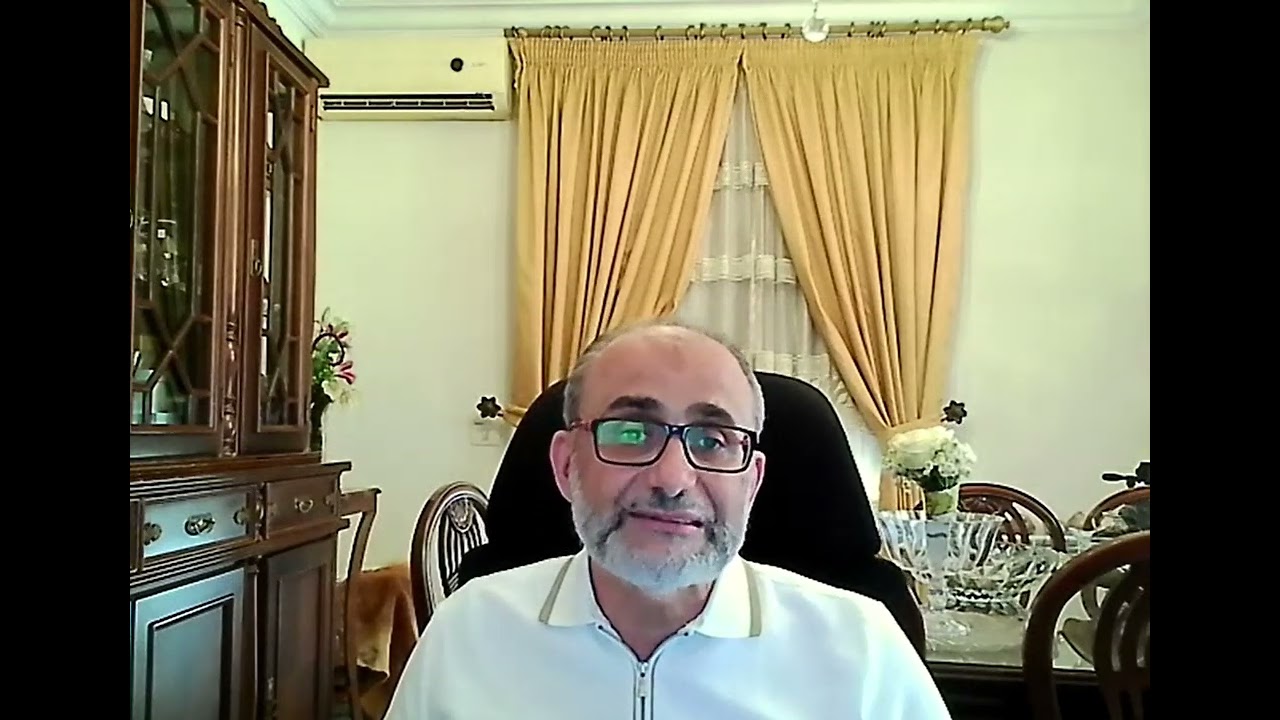
I am a PhD-qualified engineer, university professor, researcher, and multidisciplinary tutor with more than 30 years of experience in teaching, training, mentoring, research, engineering, and technology.
I enjoy helping students move from confusion to genuine understanding. My approach is structured, patient, personalized, and concept-driven: I first identify your goals and the real source of difficulty, then explain the underlying ideas clearly using visual, numerical, and real-world examples before moving to guided practice and independent problem solving.
I work with teenagers, university students, graduate researchers, engineers, professionals, and adult learners. My areas include statistics, probability, research methods, quantitative analysis, data science, mathematics, physics, chemistry, programming, engineering, CAD/BIM/3D modelling, GIS, and project management.
I do not simply provide formulas, software commands, or final answers. My goal is to help you understand why a method works, when to use it, how to verify the result, and how to apply the same reasoning confidently to new problems.
Whether you are strengthening your foundations, preparing for an exam, analyzing data, conducting research, learning technical software, or solving an advanced engineering problem, I adapt each lesson to your level, objectives, and pace. I value serious learning, curiosity, open communication, and a respectful environment where questions are always welcome.
I enjoy helping students move from confusion to genuine understanding. My approach is structured, patient, personalized, and concept-driven: I first identify your goals and the real source of difficulty, then explain the underlying ideas clearly using visual, numerical, and real-world examples before moving to guided practice and independent problem solving.
I work with teenagers, university students, graduate researchers, engineers, professionals, and adult learners. My areas include statistics, probability, research methods, quantitative analysis, data science, mathematics, physics, chemistry, programming, engineering, CAD/BIM/3D modelling, GIS, and project management.
I do not simply provide formulas, software commands, or final answers. My goal is to help you understand why a method works, when to use it, how to verify the result, and how to apply the same reasoning confidently to new problems.
Whether you are strengthening your foundations, preparing for an exam, analyzing data, conducting research, learning technical software, or solving an advanced engineering problem, I adapt each lesson to your level, objectives, and pace. I value serious learning, curiosity, open communication, and a respectful environment where questions are always welcome.
Education
Bachelor of Applied Science in Mechanical Engineering, Engineering Management Option — University of Ottawa, Canada, 1990. Graduated Magna Cum Laude.
Master of Business Administration (MBA), Management Information Systems / Business Intelligence — Jinan University, 2004. Rank: Very Good. Graduate research focused on data mining for business applications, including clustering, decision trees, and neural networks.
PhD in Management Information Systems (Knowledge Management) — Jinan University, 2008. Rank: Excellent. Doctoral research focused on knowledge representation, organizational memory, ontology development, reasoning, and educational knowledge management.
My multidisciplinary education connects engineering and scientific problem solving with quantitative analysis, research, data, information systems, technology, and management.
Master of Business Administration (MBA), Management Information Systems / Business Intelligence — Jinan University, 2004. Rank: Very Good. Graduate research focused on data mining for business applications, including clustering, decision trees, and neural networks.
PhD in Management Information Systems (Knowledge Management) — Jinan University, 2008. Rank: Excellent. Doctoral research focused on knowledge representation, organizational memory, ontology development, reasoning, and educational knowledge management.
My multidisciplinary education connects engineering and scientific problem solving with quantitative analysis, research, data, information systems, technology, and management.
Experience / Qualifications
More than 30 years of university teaching, professional training, mentoring, research, engineering, and consulting experience. Former Associate Professor, Dean of a Faculty of Business Administration, Vice President for Scientific Research and Higher Studies, and Vice President for Development and Technology.
Extensive undergraduate and graduate teaching experience in statistics, advanced quantitative methods, research methodology, data mining, business intelligence, mathematics, operations research, project management, construction management, database systems, management information systems, and related analytical disciplines.
Strong practical experience in statistical and data-analysis tools including SPSS, Stata, SAS, Excel, Python, and related analytical workflows; programming and information technologies; and engineering/design tools including AutoCAD, Revit, BIM workflows, 3D modelling, Primavera, MS Project, ArcGIS, and other technical software.
Professional engineering experience includes engineering analysis and design, project planning and control, CAD-based technical work, GIS and spatial analysis, infrastructure-related studies, engineering software development, and multidisciplinary project consulting.
Experienced in supporting university students, graduate researchers, engineers, professionals, and adult learners with theoretical understanding, problem solving, research design, quantitative analysis, interpretation of results, software workflows, technical projects, and independent skill development.
Extensive undergraduate and graduate teaching experience in statistics, advanced quantitative methods, research methodology, data mining, business intelligence, mathematics, operations research, project management, construction management, database systems, management information systems, and related analytical disciplines.
Strong practical experience in statistical and data-analysis tools including SPSS, Stata, SAS, Excel, Python, and related analytical workflows; programming and information technologies; and engineering/design tools including AutoCAD, Revit, BIM workflows, 3D modelling, Primavera, MS Project, ArcGIS, and other technical software.
Professional engineering experience includes engineering analysis and design, project planning and control, CAD-based technical work, GIS and spatial analysis, infrastructure-related studies, engineering software development, and multidisciplinary project consulting.
Experienced in supporting university students, graduate researchers, engineers, professionals, and adult learners with theoretical understanding, problem solving, research design, quantitative analysis, interpretation of results, software workflows, technical projects, and independent skill development.
Age
Children (7-12 years old)
Teenagers (13-17 years old)
Adults (18-64 years old)
Seniors (65+ years old)
Student level
Beginner
Intermediate
Advanced
Duration
60 minutes
The class is taught in
English
French
Arabic

Reviews
Availability of a typical week
(GMT -04:00)
New York

Online via webcam

At student's home
Mon
Tue
Wed
Thu
Fri
Sat
Sun
00-04
04-08
08-12
12-16
16-20
20-24
Complex academic and professional goals become manageable when the objective is clear, the methodology is sound, the work is properly planned, and decisions are based on structured reasoning rather than improvisation.
I am a PhD-qualified engineer, university professor, published researcher, former senior academic leader, project practitioner, and multidisciplinary mentor with more than 30 years of experience across teaching, research, supervision, engineering, project planning, management, professional development, and decision support.
This class provides personalized guidance for university students, graduate researchers, engineers, professionals, managers, career changers, and adult learners. Depending on your objective, we can focus on one of three clearly defined pathways or connect them when your situation genuinely requires an integrated approach.
RESEARCH METHODS, THESIS & DISSERTATION
• Defining and narrowing a research problem
• Developing research questions and objectives
• Formulating hypotheses
• Building conceptual and theoretical frameworks
• Literature-review strategy and source evaluation
• Connecting theories, constructs, variables, and measurement
• Quantitative research design
• Qualitative research design
• Mixed-methods research
• Experimental, observational, survey, and case-study approaches
• Population and sampling decisions
• Sample-size considerations
• Questionnaire and survey design
• Reliability and validity
• Operationalization of variables
• Coding plans and data preparation
• Research ethics and responsible data handling
• Selecting appropriate analytical methods
• Developing a coherent data-analysis plan
• Interpreting quantitative and qualitative findings
• Structuring methodology and results chapters
• Connecting findings to research questions and hypotheses
• Discussion, limitations, implications, and recommendations
• Responding systematically to supervisor feedback
• Preparing to explain and defend methodological decisions
• Academic and scientific writing structure
• Citation, referencing, and reference-management workflows
• Preparing research presentations, proposals, posters, or defense materials
PROJECT MANAGEMENT, ENGINEERING MANAGEMENT & PROFESSIONAL EXECUTION
• Project objectives and success criteria
• Scope definition and requirements
• Work Breakdown Structure (WBS)
• Activity definition and sequencing
• Network diagrams
• Critical Path Method (CPM)
• PERT and schedule uncertainty
• Milestones and deliverables
• Resource planning and allocation
• Cost estimation and budgeting concepts
• Project scheduling and control
• Risk identification, analysis, and response planning
• Stakeholder analysis
• Communication planning
• Quality and performance monitoring
• Change management
• Traditional, Agile, and hybrid approaches
• Construction and engineering project contexts
• Microsoft Project workflows
• Primavera planning and scheduling
• Diagnosing delayed or underperforming projects
• Turning complex objectives into executable action plans
• Engineering-management principles and technical decision making
• Managing multidisciplinary engineering and technical teams
• Balancing technical performance, cost, schedule, quality, risk, and resources
• Engineering operations, productivity, and process improvement
• Technology and innovation management
• Decision analysis and evaluation of technical alternatives
• Quality-management and continuous-improvement principles
• Translating strategic objectives into engineering and operational actions
3. CAREER STRATEGY, JOB SEARCH & INTERVIEW PREPARATION
• Clarifying career direction and professional objectives
• Identifying transferable skills
• Skills-gap analysis
• Career-transition planning
• Professional positioning and value proposition
• CV and résumé strategy
• Matching experience to job requirements
• Preparing for behavioral interviews
• Preparing for technical and analytical interviews
• Structuring evidence-based answers
• STAR and other response frameworks
• Developing strong professional examples and stories
• Mock-interview practice
• Diagnosing weak or unclear answers
• Communicating complex experience concisely
• Preparing for questions about strengths, weaknesses, conflict, leadership, failure, and problem solving
• Interview preparation for academic, technical, engineering, analytical, and management roles
• Building a realistic professional-development plan
• Job-search strategy and targeted opportunity identification
• LinkedIn profile development and professional positioning
• Networking and professional relationship building
• Personal branding and professional visibility
• Cover-letter strategy
• Evaluating job opportunities and career alternatives
• Preparing for promotion, internal mobility, or management transition
LEADERSHIP & PROFESSIONAL DEVELOPMENT
• Leadership styles and situational leadership
• Leading technical, academic, and multidisciplinary teams
• Communication, delegation, accountability, and feedback
• Motivation and team performance
• Conflict management and difficult conversations
• Decision making under uncertainty
• Problem solving and critical thinking in leadership situations
• Emotional intelligence and interpersonal effectiveness
• Managing change and organizational resistance
• Coaching, mentoring, and developing others
• Professional presence, credibility, and influence
• Transitioning from technical specialist to team or management roles
My approach follows a common structured logic:
define the objective → diagnose the current situation → identify constraints → select the appropriate methodology → build the plan → execute → monitor → evaluate → communicate the result → improve
We can work with your research proposal, thesis plan, supervisor feedback, conceptual framework, questionnaire, methodology chapter, project schedule, WBS, risk register, MS Project or Primavera file, CV, job description, interview questions, or professional-development challenge.
I do not simply provide generic templates or ready-made answers. I help you understand why a method or strategy fits your situation, what assumptions it depends on, how to evaluate alternatives, how to detect weaknesses, and how to defend the final decision clearly.
Academic and professional integrity are essential. I provide teaching, methodological guidance, critical feedback, analytical support, planning, coaching, and supervision-style mentoring. I do not write assessed theses or dissertations, complete examinations, fabricate research results, or misrepresent a student’s or professional’s experience.
My goal is to help you become the genuine owner of your research, project, or professional path—able to explain your decisions, manage complexity, communicate clearly, and move forward independently.
I am a PhD-qualified engineer, university professor, published researcher, former senior academic leader, project practitioner, and multidisciplinary mentor with more than 30 years of experience across teaching, research, supervision, engineering, project planning, management, professional development, and decision support.
This class provides personalized guidance for university students, graduate researchers, engineers, professionals, managers, career changers, and adult learners. Depending on your objective, we can focus on one of three clearly defined pathways or connect them when your situation genuinely requires an integrated approach.
RESEARCH METHODS, THESIS & DISSERTATION
• Defining and narrowing a research problem
• Developing research questions and objectives
• Formulating hypotheses
• Building conceptual and theoretical frameworks
• Literature-review strategy and source evaluation
• Connecting theories, constructs, variables, and measurement
• Quantitative research design
• Qualitative research design
• Mixed-methods research
• Experimental, observational, survey, and case-study approaches
• Population and sampling decisions
• Sample-size considerations
• Questionnaire and survey design
• Reliability and validity
• Operationalization of variables
• Coding plans and data preparation
• Research ethics and responsible data handling
• Selecting appropriate analytical methods
• Developing a coherent data-analysis plan
• Interpreting quantitative and qualitative findings
• Structuring methodology and results chapters
• Connecting findings to research questions and hypotheses
• Discussion, limitations, implications, and recommendations
• Responding systematically to supervisor feedback
• Preparing to explain and defend methodological decisions
• Academic and scientific writing structure
• Citation, referencing, and reference-management workflows
• Preparing research presentations, proposals, posters, or defense materials
PROJECT MANAGEMENT, ENGINEERING MANAGEMENT & PROFESSIONAL EXECUTION
• Project objectives and success criteria
• Scope definition and requirements
• Work Breakdown Structure (WBS)
• Activity definition and sequencing
• Network diagrams
• Critical Path Method (CPM)
• PERT and schedule uncertainty
• Milestones and deliverables
• Resource planning and allocation
• Cost estimation and budgeting concepts
• Project scheduling and control
• Risk identification, analysis, and response planning
• Stakeholder analysis
• Communication planning
• Quality and performance monitoring
• Change management
• Traditional, Agile, and hybrid approaches
• Construction and engineering project contexts
• Microsoft Project workflows
• Primavera planning and scheduling
• Diagnosing delayed or underperforming projects
• Turning complex objectives into executable action plans
• Engineering-management principles and technical decision making
• Managing multidisciplinary engineering and technical teams
• Balancing technical performance, cost, schedule, quality, risk, and resources
• Engineering operations, productivity, and process improvement
• Technology and innovation management
• Decision analysis and evaluation of technical alternatives
• Quality-management and continuous-improvement principles
• Translating strategic objectives into engineering and operational actions
3. CAREER STRATEGY, JOB SEARCH & INTERVIEW PREPARATION
• Clarifying career direction and professional objectives
• Identifying transferable skills
• Skills-gap analysis
• Career-transition planning
• Professional positioning and value proposition
• CV and résumé strategy
• Matching experience to job requirements
• Preparing for behavioral interviews
• Preparing for technical and analytical interviews
• Structuring evidence-based answers
• STAR and other response frameworks
• Developing strong professional examples and stories
• Mock-interview practice
• Diagnosing weak or unclear answers
• Communicating complex experience concisely
• Preparing for questions about strengths, weaknesses, conflict, leadership, failure, and problem solving
• Interview preparation for academic, technical, engineering, analytical, and management roles
• Building a realistic professional-development plan
• Job-search strategy and targeted opportunity identification
• LinkedIn profile development and professional positioning
• Networking and professional relationship building
• Personal branding and professional visibility
• Cover-letter strategy
• Evaluating job opportunities and career alternatives
• Preparing for promotion, internal mobility, or management transition
LEADERSHIP & PROFESSIONAL DEVELOPMENT
• Leadership styles and situational leadership
• Leading technical, academic, and multidisciplinary teams
• Communication, delegation, accountability, and feedback
• Motivation and team performance
• Conflict management and difficult conversations
• Decision making under uncertainty
• Problem solving and critical thinking in leadership situations
• Emotional intelligence and interpersonal effectiveness
• Managing change and organizational resistance
• Coaching, mentoring, and developing others
• Professional presence, credibility, and influence
• Transitioning from technical specialist to team or management roles
My approach follows a common structured logic:
define the objective → diagnose the current situation → identify constraints → select the appropriate methodology → build the plan → execute → monitor → evaluate → communicate the result → improve
We can work with your research proposal, thesis plan, supervisor feedback, conceptual framework, questionnaire, methodology chapter, project schedule, WBS, risk register, MS Project or Primavera file, CV, job description, interview questions, or professional-development challenge.
I do not simply provide generic templates or ready-made answers. I help you understand why a method or strategy fits your situation, what assumptions it depends on, how to evaluate alternatives, how to detect weaknesses, and how to defend the final decision clearly.
Academic and professional integrity are essential. I provide teaching, methodological guidance, critical feedback, analytical support, planning, coaching, and supervision-style mentoring. I do not write assessed theses or dissertations, complete examinations, fabricate research results, or misrepresent a student’s or professional’s experience.
My goal is to help you become the genuine owner of your research, project, or professional path—able to explain your decisions, manage complexity, communicate clearly, and move forward independently.
Mathematics, statistics, and data analysis become much easier when formulas, reasoning, computation, and real-world interpretation are connected clearly.
I am a PhD-qualified engineer, university professor, researcher, and multidisciplinary tutor with more than 30 years of experience in teaching, quantitative methods, mathematical problem solving, statistical analysis, research, engineering, data analysis, and professional decision support.
This class provides a structured and personalized learning pathway for school and university students, graduate researchers, engineers, professionals, and adult learners. Depending on your goals, we can focus on one specific area or connect several areas into a coherent program.
MATHEMATICS
• Arithmetic, fractions, ratios, percentages, and mathematical foundations
• Algebraic expressions, equations, inequalities, and systems
• Functions, graphs, and transformations
• Geometry and analytic geometry
• Trigonometry
• Precalculus
• Limits and continuity
• Differential calculus and applications
• Integral calculus and applications
• Sequences and series
• Multivariable calculus
• Linear algebra, matrices, vectors, and systems
• Differential equations
• Numerical methods
• Applied and engineering mathematics
STATISTICS, PROBABILITY & ECONOMETRICS
• Descriptive statistics
• Probability rules and probabilistic reasoning
• Conditional probability, independence, Bayes’ theorem, and counting methods
• Expected value, variance, covariance, and properties of common probability distributions
• Random variables and probability distributions
• Sampling and sampling distributions
• Confidence intervals
• Hypothesis testing
• Correlation and regression
• Multiple regression
• ANOVA, ANCOVA, and MANOVA
• Nonparametric methods
• Multivariate statistical analysis
• Econometrics and quantitative methods
• Time-series analysis and forecasting
• Mediation and moderation analysis
• Statistical modelling and predictive analysis
• Econometrics
• Multiple regression
• Time series
• Forecasting
• Mediation/moderation
• Predictive analysis
DATA ANALYSIS & VISUALIZATION
• Data organization and quality assessment
• Data cleaning and preparation
• Data transformation, filtering, grouping, merging, and reshaping
• Relationships between variables and graphical/statistical diagnostics
• Missing values, duplicates, inconsistencies, and outliers
• Exploratory data analysis
• Summary tables and analytical reporting
• PivotTables and aggregation
• Data visualization and appropriate chart selection
• Trend and pattern analysis
• KPI development and performance analysis
• Dashboard concepts and decision-support reporting
• Research and survey data preparation
• Interpretation and communication of analytical findings
Depending on your needs, practical work may involve Excel, SPSS, Stata, R, SAS, Power BI, SQL, Python, or other relevant analytical tools. Software is never treated as a substitute for understanding: I explain the reasoning behind the method, the assumptions involved, the meaning of the output, and how to verify whether the conclusion is sound.
My teaching approach follows a clear progression:
understand the problem → identify the appropriate concept or method → develop the reasoning → calculate or analyze → verify the result → interpret it → communicate the conclusion
We can work with your course syllabus, textbook, representative exercises, exam topics, dataset, statistical output, research question, spreadsheet, dashboard, engineering application, or professional analytical problem.
Whether you are rebuilding mathematical foundations, preparing for an examination, studying advanced calculus, learning statistics, conducting econometric analysis, interpreting research data, or developing practical analytical skills, I will adapt the sessions to your level, objectives, and pace.
My goal is not merely to help you obtain an answer, but to help you understand the reasoning, choose appropriate methods, verify results, interpret findings correctly, and solve new problems independently.
I am a PhD-qualified engineer, university professor, researcher, and multidisciplinary tutor with more than 30 years of experience in teaching, quantitative methods, mathematical problem solving, statistical analysis, research, engineering, data analysis, and professional decision support.
This class provides a structured and personalized learning pathway for school and university students, graduate researchers, engineers, professionals, and adult learners. Depending on your goals, we can focus on one specific area or connect several areas into a coherent program.
MATHEMATICS
• Arithmetic, fractions, ratios, percentages, and mathematical foundations
• Algebraic expressions, equations, inequalities, and systems
• Functions, graphs, and transformations
• Geometry and analytic geometry
• Trigonometry
• Precalculus
• Limits and continuity
• Differential calculus and applications
• Integral calculus and applications
• Sequences and series
• Multivariable calculus
• Linear algebra, matrices, vectors, and systems
• Differential equations
• Numerical methods
• Applied and engineering mathematics
STATISTICS, PROBABILITY & ECONOMETRICS
• Descriptive statistics
• Probability rules and probabilistic reasoning
• Conditional probability, independence, Bayes’ theorem, and counting methods
• Expected value, variance, covariance, and properties of common probability distributions
• Random variables and probability distributions
• Sampling and sampling distributions
• Confidence intervals
• Hypothesis testing
• Correlation and regression
• Multiple regression
• ANOVA, ANCOVA, and MANOVA
• Nonparametric methods
• Multivariate statistical analysis
• Econometrics and quantitative methods
• Time-series analysis and forecasting
• Mediation and moderation analysis
• Statistical modelling and predictive analysis
• Econometrics
• Multiple regression
• Time series
• Forecasting
• Mediation/moderation
• Predictive analysis
DATA ANALYSIS & VISUALIZATION
• Data organization and quality assessment
• Data cleaning and preparation
• Data transformation, filtering, grouping, merging, and reshaping
• Relationships between variables and graphical/statistical diagnostics
• Missing values, duplicates, inconsistencies, and outliers
• Exploratory data analysis
• Summary tables and analytical reporting
• PivotTables and aggregation
• Data visualization and appropriate chart selection
• Trend and pattern analysis
• KPI development and performance analysis
• Dashboard concepts and decision-support reporting
• Research and survey data preparation
• Interpretation and communication of analytical findings
Depending on your needs, practical work may involve Excel, SPSS, Stata, R, SAS, Power BI, SQL, Python, or other relevant analytical tools. Software is never treated as a substitute for understanding: I explain the reasoning behind the method, the assumptions involved, the meaning of the output, and how to verify whether the conclusion is sound.
My teaching approach follows a clear progression:
understand the problem → identify the appropriate concept or method → develop the reasoning → calculate or analyze → verify the result → interpret it → communicate the conclusion
We can work with your course syllabus, textbook, representative exercises, exam topics, dataset, statistical output, research question, spreadsheet, dashboard, engineering application, or professional analytical problem.
Whether you are rebuilding mathematical foundations, preparing for an examination, studying advanced calculus, learning statistics, conducting econometric analysis, interpreting research data, or developing practical analytical skills, I will adapt the sessions to your level, objectives, and pace.
My goal is not merely to help you obtain an answer, but to help you understand the reasoning, choose appropriate methods, verify results, interpret findings correctly, and solve new problems independently.
Show more
Similar classes




Similar classes
Good-fit Instructor Guarantee


Contact Ammar