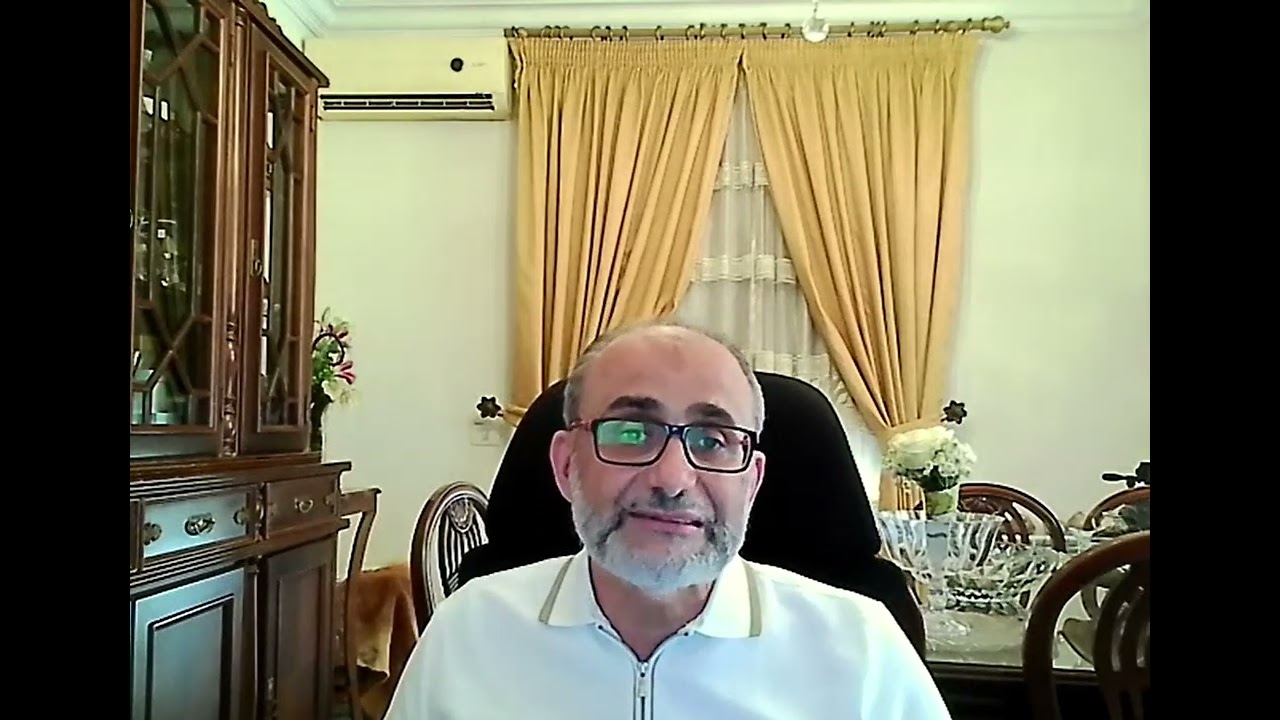
Trusted teacher

2Students
Master AI, Machine Learning, Data Science, Python & Programming with a PhD Engineer and Professor | 25+ Years’ Expertise | All levels
Master AI, Machine Learning, Data Science, Python & Programming with a PhD Engineer and Professor | 25+ Years’ Expertise | All levels
A- TOPICS YOU CAN EXPLORE AND MASTER:
1- PYTHON FOUNDATIONS
• Variables, data types, operators, conditional structures, loops, functions, modules, files, exceptions, and object-oriented programming
• Lists, tuples, dictionaries, sets, comprehensions, debugging, and writing clear, reusable, well-structured code
• Jupyter Notebook, Anaconda, Visual Studio Code, virtual environments, and package management
2 — PROGRAMMING, ALGORITHMS, AND COMPUTER SCIENCE FOUNDATIONS
• Algorithmic thinking, problem decomposition, pseudocode, flowcharts, procedural programming, object-oriented programming, recursion, and modular program design
• Fundamental data structures including arrays, lists, stacks, queues, dictionaries/hash tables, sets, trees, graphs, and their appropriate use
• Searching, sorting, traversal, algorithm efficiency, computational complexity, Big-O notation, debugging, testing, code organization, and problem-solving strategies
• Practical programming exercises ranging from beginner problems to university-level algorithmic and computational challenges
3- DATA PREPARATION AND EXPLORATION
• NumPy and pandas for importing, cleaning, transforming, filtering, grouping, reshaping, and merging data
• Missing values, duplicates, outliers, inconsistent formats, data leakage, and data-quality validation
• Exploratory data analysis using descriptive statistics, Matplotlib, Seaborn, and graphical interpretation
4- MATHEMATICAL FOUNDATIONS
• Linear algebra, vectors, matrices, derivatives, optimization, probability, and statistics
• Loss functions, gradients, distance measures, regularization, likelihood, and model complexity
• Mathematical concepts are explained according to the learner’s level and the requirements of the selected algorithms
5- SUPERVISED MACHINE LEARNING
• Linear and polynomial regression, logistic regression, and regularized models
• k-nearest neighbours, decision trees, random forests, gradient boosting, support vector machines, and Naive Bayes classifiers
• Classification, regression, model assumptions, decision boundaries, feature importance, and interpretation of results
6- UNSUPERVISED LEARNING
• Clustering using k-means, hierarchical clustering, and density-based methods
• Principal component analysis, dimensionality reduction, anomaly detection, and pattern or structure discovery
• Method selection, evaluation of data structure, and interpretation of results without predefined labels
7- MODEL EVALUATION AND IMPROVEMENT
• Training, validation, and test sets; cross-validation; hyperparameter optimization
• Accuracy, precision, recall, specificity, F1 score, ROC–AUC, confusion matrices, MAE, MSE, RMSE, and R2
• Underfitting, overfitting, bias–variance trade-off, class imbalance, feature engineering, feature selection, scaling, and regularization
8- DEEP LEARNING
• Neural-network foundations, activation functions, forward propagation, backpropagation, and gradient descent
• Multilayer perceptrons, convolutional neural networks, recurrent neural networks, and Transformer foundations
• TensorFlow, Keras, or PyTorch depending on the learner’s project and working environment
9- ARTIFICIAL INTELLIGENCE APPLICATIONS
• Natural language processing, text classification, embeddings, sentiment analysis, and foundations of language models
• Computer vision, image classification, fundamental principles of object detection, and image preprocessing
• Recommendation systems, forecasting, anomaly detection, intelligent automation, and decision-support applications
10- GENERATIVE AI AND LARGE LANGUAGE MODELS
• Transformer architecture, tokens, embeddings, attention mechanisms, prompt engineering, Retrieval-Augmented Generation (RAG), and model evaluation
• Use of artificial-intelligence APIs, vector databases, document-retrieval systems, and structured AI-enabled workflows when relevant
• Reliability, hallucinations, bias, privacy, responsible use, and appropriate human validation
11- TOOLS AND LIBRARIES
• Python, NumPy, pandas, Matplotlib, Seaborn, scikit-learn, SciPy, Statsmodels, TensorFlow, Keras, and PyTorch
• Jupyter Notebook, Anaconda, Visual Studio Code, Git, GitHub, SQL, Excel, and Power BI when useful to the project
• Additional libraries may be introduced depending on the selected specialization and dataset
12- PROJECTS, RESEARCH, AND INTERVIEW PREPARATION
• Complete projects covering data preparation, model development, evaluation, interpretation, and presentation of results
• University assignments, dissertations, theses, research projects, portfolio projects, technical interviews, and professional applications
• Code review, debugging, documentation, reproducibility, model comparison, and communication of results
-------------------------------------------------------------------------------------------------------------------------------------------------------------------------------
B- PERSONALIZED TUTORING: LEARNING HOW TO REASON
Machine learning and artificial intelligence become much more accessible when mathematics, algorithms, Python code, data, and real-world applications are clearly connected.
My lessons help you move beyond simply copying code or using models as “black boxes.” You will learn how to define the problem correctly, prepare the data, select an appropriate algorithm, understand how it works, train and evaluate the model, diagnose errors, improve performance, and interpret results rigorously and responsibly.
Each lesson is personalized according to your current level, mathematical background, programming experience, dataset, university work, research project, interview preparation, or professional objective. We begin by identifying your existing knowledge, software environment, expected outcomes, and main conceptual or technical difficulties. We then establish a structured learning plan.
The first lesson combines a discussion of your background, objectives, and tutoring needs; an initial assessment of your current knowledge; personalized planning and organization of future sessions; and a short trial lesson to determine the most effective learning approach.
A typical session may include conceptual explanation, development of mathematical intuition, live coding, guided implementation, model evaluation, technical problem solving, and a concise summary of the next steps.
You may work with your own dataset, university assignment, research project, or professional problem, provided that confidential information is handled appropriately. I can also provide structured examples and datasets suited to your level.
My goal is not simply to help you run an algorithm. It is to help you understand why it is appropriate, how it learns from data, how to evaluate it correctly, why it may fail, and how to build a reliable, interpretable, and scientifically rigorous solution.