facebook
favorite button
super instructor icon
Trusted teacher
This teacher has a fast response time and rate, demonstrating a high quality of service to their students.
member since icon
Since May 2023
Instructor since May 2023
Translated by GoogleSee original
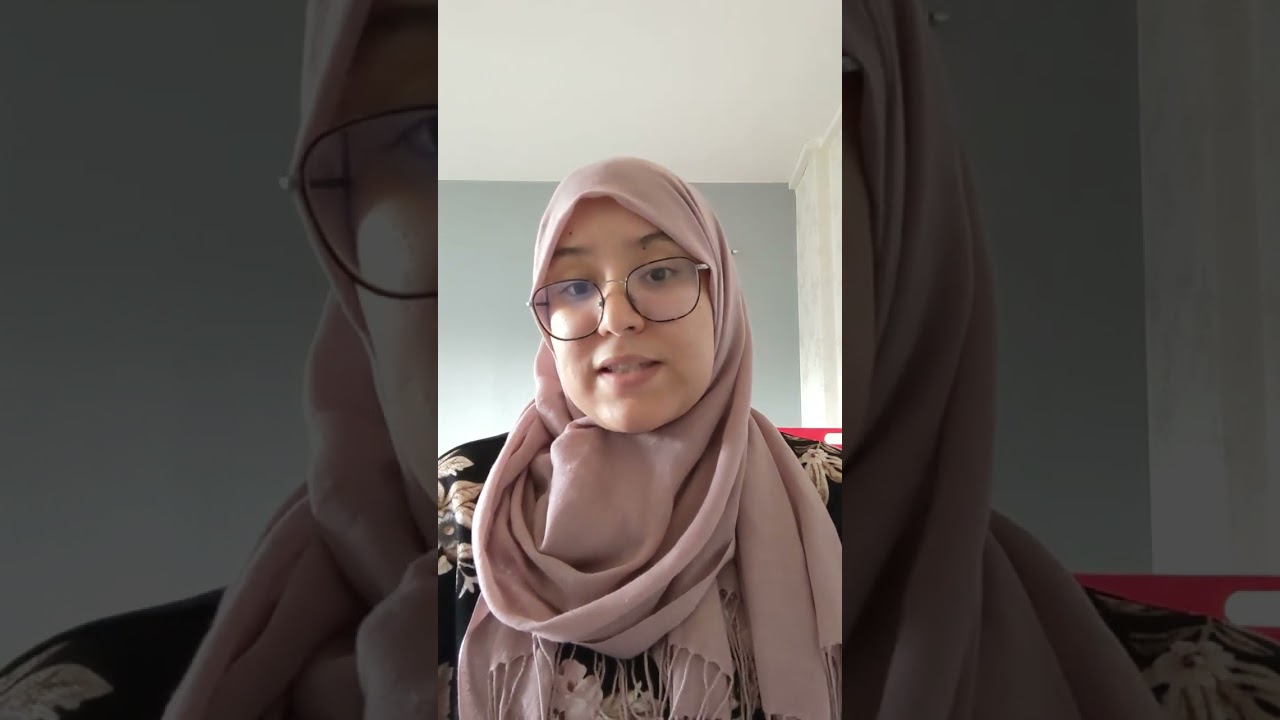
Computer courses taught by a doctor of computer science
course price icon
From 15 € /h
arrow icon
Are you looking for a qualified teacher to help you improve your computer skills? Do not search anymore ! I am a PhD in computer science and I offer courses in different computer science subjects including databases, UML, algorithms, and much more.

Whether you're in college or higher, I'm here to guide you and help you deepen your understanding of these complex topics. With a solid background in the IT field and a passion for teaching, I strive to make IT concepts clear, accessible and interesting for my students.

My lessons are adapted to your level and your pace of learning. Whether you want to strengthen your computer basics or prepare for important exams, I am here to accompany you throughout the process.

Don't wait any longer, contact me now to book your personalized computer course. Together we will explore the fascinating world of IT and you will successfully achieve your learning goals!
Location
location type icon
Online from France
About Me
I am an expert in computer science and languages, holding a Ph.D. in Computer Science and an engineering degree. With my academic and professional background, I offer courses in computer science as well as languages (Arabic, French, English).

Thanks to my Ph.D. in Computer Science, I have gained in-depth expertise in the field. I have conducted advanced research and developed a solid understanding of computer science concepts, enabling me to teach with precision and clarity. As an engineer, I also have practical and hands-on experience, allowing me to share knowledge based on real-world applications.

In addition to my computer science skills, I am also passionate about languages. With proficiency in Arabic, French, and English, I provide language courses suitable for all levels. Whether you are a beginner or looking to enhance your existing skills, I will help you develop language proficiency through effective and interactive teaching methods.

With my dedication to teaching and my eagerness to share knowledge, I am committed to providing you with a rewarding learning experience. Whether you seek to strengthen your computer science skills, improve your language mastery, or combine both, I am here to guide you towards success.

Feel free to contact me now to reserve your personalized courses. Together, we will explore the exciting realms of computer science and languages, propelling you towards your learning goals.
Education
Ph.D. in Computer Science, Major: Social-technical systems - French University
Computer Engineering Degree Major:, information systems and technologies - Higher School in Algeria
Experience / Qualifications
4 years of experience as a research assistant and teaching assistant for TD / TPs
1 year of experience as a supervisor for M1 internships.
Age
Preschool children (4-6 years old)
Children (7-12 years old)
Teenagers (13-17 years old)
Adults (18-64 years old)
Seniors (65+ years old)
Student level
Beginner
Intermediate
Advanced
Duration
60 minutes
The class is taught in
French
English
Arabic
Availability of a typical week
(GMT -04:00)
New York
at teacher icon
Online via webcam
Mon
Tue
Wed
Thu
Fri
Sat
Sun
00-04
04-08
08-12
12-16
16-20
20-24
Similar classes
arrow icon previousarrow icon next
verified badge
Hello, I am a doctoral student in electrical engineering and associate professor in engineering sciences, experienced in the field of electrical engineering, I offer support courses in the subjects of engineering sciences (Electronics, automatics, electrical engineering, automation, programming).

Digital electronics
Analog electronic
electromagnetism (propagation of high frequency waves)
Automatic (continuous, sampled)
electrical engineering (transformers, electrical machines, switching power supply)
C / c ++ programming, Assembler, ARM, STM32
renewable energy (wind, PV)
engineering Sciences
RDM
Python,VHDL
PIC Microprocessor and Microcontroller
Signal processing and data acquisition
Engineering Sciences

These courses allow the student to get up to speed and regain confidence in all scientific subjects, just as they prepare him effectively for the Baccalaureate, the Preparatory Classes or various examinations of the engineering classes.

COURSE OBJECTIVES AND PEDAGOGICAL APPROACH

Resumption and deepening of fundamental concepts through exercises with course reminders.

Put the student in a situation of questioning and research.

Respond to individual issues and questions

Exercise training in order to achieve real mastery of the content.

Learn to build theoretical reasoning from observable facts or hypotheses.

Specific preparation for higher education requirements (in-depth content, increase in work capacity, enrichment of scientific background)

This educational approach is effective since it has often led me to interesting results with my students.

Associate professor provides support courses in electrical engineering
verified badge
As a Franco-Belgian management teacher, I give Excel lessons with passion!
Whether remotely or face-to-face, I offer many examples and exercises to accompany you.
I travel without problem throughout the region of Brussels and its surroundings, for lessons of at least 2 hours. For France, courses are only given remotely.

Here are some key words that will be covered in my classes:
Scenario analysis, Year, Rounding, Today, Bdnb, Bdnbval, Bdsum, Search, Column, Copy/paste in values, Copy/paste with transposition, Consolidation, Date, Datedif, Determat, Dollar, Right, Righterg, Equiv, Esterror, Estna, Frequency, Filter (simple and advanced), Format of cells, Left, Large.Value, Printing of documents, Index, Indirect, Inversemat, Day, Weekday, Line, Matrix, Max, Maxa, Max.Si, Min , Mina, Mina.If, Formatting of cells and ranges, Month, Average, Average.If, Nb, Nb.If, Nbval, Naming of cells and ranges, No, Small.value, Product, Productmat, Protection of cells, Lookup (Lookup), Lookupv (VLookup), Lookuph (HLookup), If (If), If.Not.Disp, If.Conditions, Iferror, Sum, Sumproduct, Sum.If, Sum.If.Set, Substitute , Pivot tables, Sorting, Cell locking

Do not hesitate to contact me to organize your lessons according to your needs and availability. Together, we will develop your Excel skills in an efficient and personalized way.
verified badge
Don't settle for anything less than excellence.
I am an Aerospace Engineer with a Master's degree in Quantum Physics and have completed Ph.D. work at the University of Cambridge in Computational Physics. Additionally, I have 4 years of experience developing MATLAB and possess deep programming skills in MATLAB/Simulink family, C/C++, Fortran, and Python.

With over 12 years of tutoring experience, I have successfully guided more than 50 students worldwide to achieve distinction in various fields. Consistent results are my priority, and I strive for excellence in all aspects of my teaching.

My lessons are customized to meet each student's unique needs and are designed to be engaging and insightful.

Whether you are at a school level or require advanced or professional-level instruction, I offer support in the following areas:
- Preparation for IB/IA, A-Levels, GCSE, University Entry, or equivalent.
- Experience in preparing students to access world-class schools and universities, including Cambridge University, Oxford, Ivy League and other top institutions in the UK and US.
- University levels (undergraduate and postgraduate).
- High school studies and diploma programs.
- Assistance with specific projects at a professional level, including job interview preparation.
- Extensive experience working with children.

Every lesson is meticulously planned in advance to ensure that it aligns with your goals and targets areas for improvement.
I prioritize a dynamic and interactive learning experience, with one-on-one sessions tailored to your individual requirements. Lessons will be conducted via webcam, enabling you to connect from anywhere.

I have a highly flexible schedule and can adapt to accommodate your needs.
If you have any questions about my teaching method, availability, or pricing, please don't hesitate to reach out. I am here to assist you and provide the support you need.
verified badge
Are you a university student, engineer, or professional who needs to actually use data — not just learn theory about it?
This course is built around real problems and real code. We skip the textbook formulas and go straight to applying statistics and data science the way professionals do: with Python (pandas, NumPy, scikit-learn, matplotlib) and R (RStudio).
What we cover, adapted to your level and goals:
- Descriptive and inferential statistics (the ones that actually matter)
- Data cleaning, exploration, and visualization
- Regression, classification, and intro to machine learning
- Time series and forecasting basics
- R for statistical analysis and academic research

Who this is for:
- University students in statistics, economics, engineering, or biology
- Professionals wanting to move into data analysis or data science
- Researchers who need to process and present data properly

I use Python and R professionally as a working engineer — everything I teach comes from real application, not just academic exercises.
verified badge
You will learn Systematic Reasoning & Logical Thinking which is a requirement for entering Computer Science program in many universities.
The book “Delftse Foundations of Computation” especially its second chapter will be the main source of our lesson, but other more in-depth books will be also covered if you want to improve even further on logical thinking.
The topics in our lesson include:
• Propositional Logic: Logical operators; Precedence rules; Logical equivalence; Implications in English; Exclusive or; Universal operators; Classifying propositions
• Boolean Algebra: Substitution laws
• Logic Circuits: Logic gates; Combining gates to create circuits; From circuits to propositions; Disjunctive Normal Form; Binary addition.
• Predicate Logic: Predicates; Quantifiers; Tarski’s world and formal structures;
• Deduction: Valid arguments and proofs; Proofs in predicate logic

If you have any additional questions before starting a class, please feel free to ask me. I am here to assist! :)
verified badge
Master Python with Personalized Courses

Discover the art of programming with Python courses tailor-made to meet your specific needs. Whether you are a beginner, intermediate or professional, my lessons are suitable for all levels.

Why Choose My Courses?

Personalized Teaching Approach: Each course is tailored to your skill level and individual goals.

Practical Experience: Learn by doing with real-world projects that build your understanding and skills.

Ongoing Support: Get unlimited email support for any questions you have between sessions.

As a Python expert, I have a passion for teaching and sharing my knowledge. My goal is to guide you effectively in your learning journey.

Book Your First Lesson:

Start your journey to Python mastery now by booking your first lesson. Whether you aspire to enter the development field or hone your existing skills, these courses are designed for you.
verified badge
Experienced and patient teacher of logic for computer science.

I have taught logic, formal languages and automata theory to undergraduates for six years. My tutoring is adapted to the student's level and goals. Whether you need to learn logic for your studies, or you would simply like to know more about the subject, I will be more than happy to help you improve your understanding and skills.

Logic
The sciences presuppose a certain standard of rationality. An ability to distinguish between correct reasoning and claims that do not follow from the assumptions. In this class we study the basic principles of logic and apply mathematical techniques to the study thereof.
Topics include:
Propositional and Predicate Logic
Syntax and semantics
Natural deduction
Semantic tableaux
Correctness and soundness
Completeness

Formal languages and automata
A formal language is an abstraction of general characteristics of programming languages. Such a languages consists of a set of symbols together with some rules to determine whether a string made up out of those symbols is a member of the language.

Topics include:
Regular languages, context-free languages
Finite automata, pushdown automata, Turing machines
Regular expressions
Regular grammar, context-sensitive grammar
Pumping lemmas for regular and context-free languages
verified badge
This course is designed for anyone interested in learning data science using Python. It provides a hands-on introduction to fundamental data analysis tools such as NumPy, pandas, matplotlib, and seaborn. You'll learn how to manipulate datasets, create visualizations, and lay the foundations for statistical analysis and machine learning.

The course combines theory and practical exercises for effective, practical progress. No prior programming experience is necessary: we'll start with the basics to build solid, usable skills quickly.
verified badge
# **Master C/C++: Build the Foundation of Modern Software Development**

Unlock the power of one of the most influential programming languages in computing history! Whether you're an absolute beginner or looking to deepen your expertise, this comprehensive C/C++ course delivers structured learning from fundamentals to advanced concepts that power operating systems, game engines, and high-performance applications.

## **Why Choose This C/C++ Program?**

**Industry-Relevant Curriculum:** Learn expert guidance on the design of effective classes, functions, templates, and inheritance patterns that form the backbone of professional C++ development. Move beyond basic syntax to understand how to write clean, efficient, and maintainable code that stands the test of time.

**Templates & Generic Programming Mastery:** Go beyond introductory material with in-depth coverage of templates—the cornerstone of modern C++—enabling you to create robust, reusable code components that work across multiple data types. Discover how function templates, class templates, and variadic templates work to maximize your coding efficiency.

**Practical, Hands-On Approach:** This isn't just theory! You'll build real-world projects that demonstrate memory management, object-oriented programming, and system-level programming techniques used in today's technology landscape.

## **Your Learning Journey**

Our structured path takes you from writing your first "Hello World" program through advanced template metaprogramming, with special attention to modern C++ standards (up to C++20). You'll gain the confidence to tackle complex programming challenges and understand the "why" behind effective C++ practices—not just the "how."

## **Transform Your Career Today**

C/C++ skills remain in high demand across industries from finance to gaming to IoT. By mastering these foundational languages, you'll develop problem-solving abilities that translate to any programming environment.
verified badge
Objective: To understand AI without fear, to use it to simplify one's life, to know how to identify digital traps, and to use Word, Excel, etc. without difficulty.

1: Demystifying AI (What exactly is it?)
AI is not a movie robot: Difference between fiction and reality.

How it works (simply): The image of the "giant library": AI has read billions of books and uses them to predict the continuation of a sentence or create an image.

Where is it already present? Spell checkers, Netflix/YouTube suggestions, GPS, and voice assistants (Siri/Alexa).

2: Using AI to make life easier
Conversing with AI (ChatGPT, Claude, Gemini):

Ask him to write an administrative email or a complex letter.

Summarize a long newspaper article or document.

Plan a travel itinerary or find recipe ideas with what's left in the fridge.

AI for creativity and memory:

Generate images to illustrate a birthday card (Midjourney, DALL-E).

Using AI to restore or colorize old family photos.

3: Learning to "talk" to AI (The Art of the Prompt)
The context method: Why "Give me a cake recipe" is less effective than "I am allergic to gluten and I am hosting 4 people, give me a simple chocolate cake recipe".

The expert's role: Learning to tell AI "Act like a travel guide" or "Act like an expert gardener".

4: Precautions and Critical Thinking (The Survival Guide)
"Hallucinations": Understand that AI can make false claims with complete certainty (never take medical or legal advice from AI without verification).

Privacy protection:

Never give sensitive data (social security number, passwords, bank details) to an AI.

Knowing that everything we write to the AI is potentially used to train it.

Spotting "Deepfakes":

How to recognize a doctored image or video (details on the hands, strange reflections, slightly metallic voice).

Verify the information: the golden rule of cross-referencing sources.

5: Ethics and Impacts (To go further)
Copyright: Who owns an image created by AI?

The environmental impact: The water and energy consumption of AI servers.

The future: Will AI replace us or assist us?
verified badge
Session 1: Revolutionizing your Scientific Writing with LaTeX & AI
Duration: 2 Hours | Level: Beginner | Tools: Overleaf + AI**

First Hour: Foundations and Cloud Environment (60 min)

1. Introduction to LaTeX Philosophy (15 min)

- The "WYSIWYM" concept:** Explain the difference between Word (*What You See Is What You Get*) and LaTeX (*What You See Is What You Mean*). Why content takes precedence over form.
- Key advantages:** Unrivaled typographic quality, automatic reference management, stability on long documents (theses), and free of charge.
- The structure of a file:** Distinction between the **preamble** (the brain: settings and packages) and the **body of the document** (the heart: text).

2. Immersion in Overleaf (25 min)

- Configuration:** Creation of an account and first project "Blank Project".
- Exploring the interface:** The file panel (left), the code editor (middle) and the PDF preview (right).
- Real-time collaboration:** How to share a project and leave comments (like on Google Docs).
- History and versions:** How to revert to a previous version in case of a compilation error.

3. Practical Workshop: My First Document (20 min)

* Writing basic commands: `\documentclass`, `\usepackage[french]{babel}`, `\title`, `\author`.
* Compilation of the document and observation of the result.
* Structuring: Use of `\section` and `\subsection`.

Second Hour: Mathematics and the Magic of AI (60 min)

4. The Power of Mathematics (20 min)

- Mathematical modes:** Difference between the text (`$...$`) and the centered block (`\[...\]`).
- Essential syntax:** Fractions `\frac{}{}`, exponents `^`, indices `_`, and roots `\sqrt{}`.
- Introduction to AMS packages: Why amsmath and amssymb are essential for professional rendering.

5. From hand to screen: AI at the service of LaTeX (30 min)

- Presentation of OCR tools:** Use of **Mathpix Snip** (the leader) or models like Gemini/ChatGPT to transform a photo into code.
- Concrete demonstration:
1. Take a picture of a complex handwritten formula (e.g., an integral with matrices).
2. Use AI to generate the corresponding LaTeX code.
3. Correction and insertion: Learn to check the AI-generated code before copying and pasting it into Overleaf.

6. Conclusion and Q&A (10 min)

* Summary of achievements.
* Resources for further exploration
* Definition of the exercise for the next session.
verified badge
I'm a working MEP engineer, currently building Python automation for Revit workflows daily - plan checks, model coordination, and repetitive drafting tasks. I teach other engineers, architects, and BIM professionals how to do the same, using pyRevit and real project workflows, not toy examples.

Topics include:
pyRevit fundamentals and setup
Automating repetitive Revit tasks (model checks, plan generation, data extraction)
Writing custom scripts for your firm's specific workflows
Applying Python automation to real MEP/BIM projects
verified badge
📊Microsoft Office: To establish your office skills, manage data via Excel, write professional reports with Word, and prepare impressive presentations with PowerPoint.

📐 AutoCAD: To learn engineering drawing and design two-dimensional and three-dimensional plans with high accuracy and speed.

🛣️ Civil 3D: To learn road design, network design, surveying, and quantity surveying in a scientific and practical way
verified badge
Microsoft Excel is a powerful Microsoft corporation application that helps one do various mathematical, statistical and logic operations on data sets. It's a powerful tool for data analysis.

In this lesson you will be introduced to Microsoft Excel, it's importance and the basic features of the Microsoft Excel user interface.
verified badge
Are you interested in learning Python but don't know where to start? This course is designed to help you understand the fundamentals of Python programming in a simple, practical, and enjoyable way.

Python is one of the most popular programming languages in the world. It is widely used in software development, automation, data analysis, artificial intelligence, and web development.

Whether you are a complete beginner, a student, or someone looking to develop new technical skills, these lessons will help you build a strong foundation in programming.

You will learn
1. Introduction to Python
2. Python Fundamentals
3. Conditional Statements and Loops
4. Working with Data
5. Functions and Practical Programming
6. Mini Projects
Video thumbnail
Play icon
MiRa's video
message icon
Contact MiRa
repeat students icon
1st lesson is backed
by our
Good-fit Instructor Guarantee
Similar classes
arrow icon previousarrow icon next
verified badge
Hello, I am a doctoral student in electrical engineering and associate professor in engineering sciences, experienced in the field of electrical engineering, I offer support courses in the subjects of engineering sciences (Electronics, automatics, electrical engineering, automation, programming).

Digital electronics
Analog electronic
electromagnetism (propagation of high frequency waves)
Automatic (continuous, sampled)
electrical engineering (transformers, electrical machines, switching power supply)
C / c ++ programming, Assembler, ARM, STM32
renewable energy (wind, PV)
engineering Sciences
RDM
Python,VHDL
PIC Microprocessor and Microcontroller
Signal processing and data acquisition
Engineering Sciences

These courses allow the student to get up to speed and regain confidence in all scientific subjects, just as they prepare him effectively for the Baccalaureate, the Preparatory Classes or various examinations of the engineering classes.

COURSE OBJECTIVES AND PEDAGOGICAL APPROACH

Resumption and deepening of fundamental concepts through exercises with course reminders.

Put the student in a situation of questioning and research.

Respond to individual issues and questions

Exercise training in order to achieve real mastery of the content.

Learn to build theoretical reasoning from observable facts or hypotheses.

Specific preparation for higher education requirements (in-depth content, increase in work capacity, enrichment of scientific background)

This educational approach is effective since it has often led me to interesting results with my students.

Associate professor provides support courses in electrical engineering
verified badge
As a Franco-Belgian management teacher, I give Excel lessons with passion!
Whether remotely or face-to-face, I offer many examples and exercises to accompany you.
I travel without problem throughout the region of Brussels and its surroundings, for lessons of at least 2 hours. For France, courses are only given remotely.

Here are some key words that will be covered in my classes:
Scenario analysis, Year, Rounding, Today, Bdnb, Bdnbval, Bdsum, Search, Column, Copy/paste in values, Copy/paste with transposition, Consolidation, Date, Datedif, Determat, Dollar, Right, Righterg, Equiv, Esterror, Estna, Frequency, Filter (simple and advanced), Format of cells, Left, Large.Value, Printing of documents, Index, Indirect, Inversemat, Day, Weekday, Line, Matrix, Max, Maxa, Max.Si, Min , Mina, Mina.If, Formatting of cells and ranges, Month, Average, Average.If, Nb, Nb.If, Nbval, Naming of cells and ranges, No, Small.value, Product, Productmat, Protection of cells, Lookup (Lookup), Lookupv (VLookup), Lookuph (HLookup), If (If), If.Not.Disp, If.Conditions, Iferror, Sum, Sumproduct, Sum.If, Sum.If.Set, Substitute , Pivot tables, Sorting, Cell locking

Do not hesitate to contact me to organize your lessons according to your needs and availability. Together, we will develop your Excel skills in an efficient and personalized way.
verified badge
Don't settle for anything less than excellence.
I am an Aerospace Engineer with a Master's degree in Quantum Physics and have completed Ph.D. work at the University of Cambridge in Computational Physics. Additionally, I have 4 years of experience developing MATLAB and possess deep programming skills in MATLAB/Simulink family, C/C++, Fortran, and Python.

With over 12 years of tutoring experience, I have successfully guided more than 50 students worldwide to achieve distinction in various fields. Consistent results are my priority, and I strive for excellence in all aspects of my teaching.

My lessons are customized to meet each student's unique needs and are designed to be engaging and insightful.

Whether you are at a school level or require advanced or professional-level instruction, I offer support in the following areas:
- Preparation for IB/IA, A-Levels, GCSE, University Entry, or equivalent.
- Experience in preparing students to access world-class schools and universities, including Cambridge University, Oxford, Ivy League and other top institutions in the UK and US.
- University levels (undergraduate and postgraduate).
- High school studies and diploma programs.
- Assistance with specific projects at a professional level, including job interview preparation.
- Extensive experience working with children.

Every lesson is meticulously planned in advance to ensure that it aligns with your goals and targets areas for improvement.
I prioritize a dynamic and interactive learning experience, with one-on-one sessions tailored to your individual requirements. Lessons will be conducted via webcam, enabling you to connect from anywhere.

I have a highly flexible schedule and can adapt to accommodate your needs.
If you have any questions about my teaching method, availability, or pricing, please don't hesitate to reach out. I am here to assist you and provide the support you need.
verified badge
Are you a university student, engineer, or professional who needs to actually use data — not just learn theory about it?
This course is built around real problems and real code. We skip the textbook formulas and go straight to applying statistics and data science the way professionals do: with Python (pandas, NumPy, scikit-learn, matplotlib) and R (RStudio).
What we cover, adapted to your level and goals:
- Descriptive and inferential statistics (the ones that actually matter)
- Data cleaning, exploration, and visualization
- Regression, classification, and intro to machine learning
- Time series and forecasting basics
- R for statistical analysis and academic research

Who this is for:
- University students in statistics, economics, engineering, or biology
- Professionals wanting to move into data analysis or data science
- Researchers who need to process and present data properly

I use Python and R professionally as a working engineer — everything I teach comes from real application, not just academic exercises.
verified badge
You will learn Systematic Reasoning & Logical Thinking which is a requirement for entering Computer Science program in many universities.
The book “Delftse Foundations of Computation” especially its second chapter will be the main source of our lesson, but other more in-depth books will be also covered if you want to improve even further on logical thinking.
The topics in our lesson include:
• Propositional Logic: Logical operators; Precedence rules; Logical equivalence; Implications in English; Exclusive or; Universal operators; Classifying propositions
• Boolean Algebra: Substitution laws
• Logic Circuits: Logic gates; Combining gates to create circuits; From circuits to propositions; Disjunctive Normal Form; Binary addition.
• Predicate Logic: Predicates; Quantifiers; Tarski’s world and formal structures;
• Deduction: Valid arguments and proofs; Proofs in predicate logic

If you have any additional questions before starting a class, please feel free to ask me. I am here to assist! :)
verified badge
Master Python with Personalized Courses

Discover the art of programming with Python courses tailor-made to meet your specific needs. Whether you are a beginner, intermediate or professional, my lessons are suitable for all levels.

Why Choose My Courses?

Personalized Teaching Approach: Each course is tailored to your skill level and individual goals.

Practical Experience: Learn by doing with real-world projects that build your understanding and skills.

Ongoing Support: Get unlimited email support for any questions you have between sessions.

As a Python expert, I have a passion for teaching and sharing my knowledge. My goal is to guide you effectively in your learning journey.

Book Your First Lesson:

Start your journey to Python mastery now by booking your first lesson. Whether you aspire to enter the development field or hone your existing skills, these courses are designed for you.
verified badge
Experienced and patient teacher of logic for computer science.

I have taught logic, formal languages and automata theory to undergraduates for six years. My tutoring is adapted to the student's level and goals. Whether you need to learn logic for your studies, or you would simply like to know more about the subject, I will be more than happy to help you improve your understanding and skills.

Logic
The sciences presuppose a certain standard of rationality. An ability to distinguish between correct reasoning and claims that do not follow from the assumptions. In this class we study the basic principles of logic and apply mathematical techniques to the study thereof.
Topics include:
Propositional and Predicate Logic
Syntax and semantics
Natural deduction
Semantic tableaux
Correctness and soundness
Completeness

Formal languages and automata
A formal language is an abstraction of general characteristics of programming languages. Such a languages consists of a set of symbols together with some rules to determine whether a string made up out of those symbols is a member of the language.

Topics include:
Regular languages, context-free languages
Finite automata, pushdown automata, Turing machines
Regular expressions
Regular grammar, context-sensitive grammar
Pumping lemmas for regular and context-free languages
verified badge
This course is designed for anyone interested in learning data science using Python. It provides a hands-on introduction to fundamental data analysis tools such as NumPy, pandas, matplotlib, and seaborn. You'll learn how to manipulate datasets, create visualizations, and lay the foundations for statistical analysis and machine learning.

The course combines theory and practical exercises for effective, practical progress. No prior programming experience is necessary: we'll start with the basics to build solid, usable skills quickly.
verified badge
# **Master C/C++: Build the Foundation of Modern Software Development**

Unlock the power of one of the most influential programming languages in computing history! Whether you're an absolute beginner or looking to deepen your expertise, this comprehensive C/C++ course delivers structured learning from fundamentals to advanced concepts that power operating systems, game engines, and high-performance applications.

## **Why Choose This C/C++ Program?**

**Industry-Relevant Curriculum:** Learn expert guidance on the design of effective classes, functions, templates, and inheritance patterns that form the backbone of professional C++ development. Move beyond basic syntax to understand how to write clean, efficient, and maintainable code that stands the test of time.

**Templates & Generic Programming Mastery:** Go beyond introductory material with in-depth coverage of templates—the cornerstone of modern C++—enabling you to create robust, reusable code components that work across multiple data types. Discover how function templates, class templates, and variadic templates work to maximize your coding efficiency.

**Practical, Hands-On Approach:** This isn't just theory! You'll build real-world projects that demonstrate memory management, object-oriented programming, and system-level programming techniques used in today's technology landscape.

## **Your Learning Journey**

Our structured path takes you from writing your first "Hello World" program through advanced template metaprogramming, with special attention to modern C++ standards (up to C++20). You'll gain the confidence to tackle complex programming challenges and understand the "why" behind effective C++ practices—not just the "how."

## **Transform Your Career Today**

C/C++ skills remain in high demand across industries from finance to gaming to IoT. By mastering these foundational languages, you'll develop problem-solving abilities that translate to any programming environment.
verified badge
Objective: To understand AI without fear, to use it to simplify one's life, to know how to identify digital traps, and to use Word, Excel, etc. without difficulty.

1: Demystifying AI (What exactly is it?)
AI is not a movie robot: Difference between fiction and reality.

How it works (simply): The image of the "giant library": AI has read billions of books and uses them to predict the continuation of a sentence or create an image.

Where is it already present? Spell checkers, Netflix/YouTube suggestions, GPS, and voice assistants (Siri/Alexa).

2: Using AI to make life easier
Conversing with AI (ChatGPT, Claude, Gemini):

Ask him to write an administrative email or a complex letter.

Summarize a long newspaper article or document.

Plan a travel itinerary or find recipe ideas with what's left in the fridge.

AI for creativity and memory:

Generate images to illustrate a birthday card (Midjourney, DALL-E).

Using AI to restore or colorize old family photos.

3: Learning to "talk" to AI (The Art of the Prompt)
The context method: Why "Give me a cake recipe" is less effective than "I am allergic to gluten and I am hosting 4 people, give me a simple chocolate cake recipe".

The expert's role: Learning to tell AI "Act like a travel guide" or "Act like an expert gardener".

4: Precautions and Critical Thinking (The Survival Guide)
"Hallucinations": Understand that AI can make false claims with complete certainty (never take medical or legal advice from AI without verification).

Privacy protection:

Never give sensitive data (social security number, passwords, bank details) to an AI.

Knowing that everything we write to the AI is potentially used to train it.

Spotting "Deepfakes":

How to recognize a doctored image or video (details on the hands, strange reflections, slightly metallic voice).

Verify the information: the golden rule of cross-referencing sources.

5: Ethics and Impacts (To go further)
Copyright: Who owns an image created by AI?

The environmental impact: The water and energy consumption of AI servers.

The future: Will AI replace us or assist us?
verified badge
Session 1: Revolutionizing your Scientific Writing with LaTeX & AI
Duration: 2 Hours | Level: Beginner | Tools: Overleaf + AI**

First Hour: Foundations and Cloud Environment (60 min)

1. Introduction to LaTeX Philosophy (15 min)

- The "WYSIWYM" concept:** Explain the difference between Word (*What You See Is What You Get*) and LaTeX (*What You See Is What You Mean*). Why content takes precedence over form.
- Key advantages:** Unrivaled typographic quality, automatic reference management, stability on long documents (theses), and free of charge.
- The structure of a file:** Distinction between the **preamble** (the brain: settings and packages) and the **body of the document** (the heart: text).

2. Immersion in Overleaf (25 min)

- Configuration:** Creation of an account and first project "Blank Project".
- Exploring the interface:** The file panel (left), the code editor (middle) and the PDF preview (right).
- Real-time collaboration:** How to share a project and leave comments (like on Google Docs).
- History and versions:** How to revert to a previous version in case of a compilation error.

3. Practical Workshop: My First Document (20 min)

* Writing basic commands: `\documentclass`, `\usepackage[french]{babel}`, `\title`, `\author`.
* Compilation of the document and observation of the result.
* Structuring: Use of `\section` and `\subsection`.

Second Hour: Mathematics and the Magic of AI (60 min)

4. The Power of Mathematics (20 min)

- Mathematical modes:** Difference between the text (`$...$`) and the centered block (`\[...\]`).
- Essential syntax:** Fractions `\frac{}{}`, exponents `^`, indices `_`, and roots `\sqrt{}`.
- Introduction to AMS packages: Why amsmath and amssymb are essential for professional rendering.

5. From hand to screen: AI at the service of LaTeX (30 min)

- Presentation of OCR tools:** Use of **Mathpix Snip** (the leader) or models like Gemini/ChatGPT to transform a photo into code.
- Concrete demonstration:
1. Take a picture of a complex handwritten formula (e.g., an integral with matrices).
2. Use AI to generate the corresponding LaTeX code.
3. Correction and insertion: Learn to check the AI-generated code before copying and pasting it into Overleaf.

6. Conclusion and Q&A (10 min)

* Summary of achievements.
* Resources for further exploration
* Definition of the exercise for the next session.
verified badge
I'm a working MEP engineer, currently building Python automation for Revit workflows daily - plan checks, model coordination, and repetitive drafting tasks. I teach other engineers, architects, and BIM professionals how to do the same, using pyRevit and real project workflows, not toy examples.

Topics include:
pyRevit fundamentals and setup
Automating repetitive Revit tasks (model checks, plan generation, data extraction)
Writing custom scripts for your firm's specific workflows
Applying Python automation to real MEP/BIM projects
verified badge
📊Microsoft Office: To establish your office skills, manage data via Excel, write professional reports with Word, and prepare impressive presentations with PowerPoint.

📐 AutoCAD: To learn engineering drawing and design two-dimensional and three-dimensional plans with high accuracy and speed.

🛣️ Civil 3D: To learn road design, network design, surveying, and quantity surveying in a scientific and practical way
verified badge
Microsoft Excel is a powerful Microsoft corporation application that helps one do various mathematical, statistical and logic operations on data sets. It's a powerful tool for data analysis.

In this lesson you will be introduced to Microsoft Excel, it's importance and the basic features of the Microsoft Excel user interface.
verified badge
Are you interested in learning Python but don't know where to start? This course is designed to help you understand the fundamentals of Python programming in a simple, practical, and enjoyable way.

Python is one of the most popular programming languages in the world. It is widely used in software development, automation, data analysis, artificial intelligence, and web development.

Whether you are a complete beginner, a student, or someone looking to develop new technical skills, these lessons will help you build a strong foundation in programming.

You will learn
1. Introduction to Python
2. Python Fundamentals
3. Conditional Statements and Loops
4. Working with Data
5. Functions and Practical Programming
6. Mini Projects
Good-fit Instructor Guarantee
favorite button
message icon
Contact MiRa