facebook
favorite button
1/3
dot icon
Recently active
super instructor icon
Trusted teacher
This teacher has a fast response time and rate, demonstrating a high quality of service to their students.
member since icon
Since October 2025
Instructor since October 2025
repeat students icon
4 repeat students
Trusted choice for 4 returning students
Translated by GoogleSee original
Artificial intelligence for seniors and the use of basic software
course price icon
From 35 € /h
arrow icon
Objective: To understand AI without fear, to use it to simplify one's life, to know how to identify digital traps, and to use Word, Excel, etc. without difficulty.

1: Demystifying AI (What exactly is it?)
AI is not a movie robot: Difference between fiction and reality.

How it works (simply): The image of the "giant library": AI has read billions of books and uses them to predict the continuation of a sentence or create an image.

Where is it already present? Spell checkers, Netflix/YouTube suggestions, GPS, and voice assistants (Siri/Alexa).

2: Using AI to make life easier
Conversing with AI (ChatGPT, Claude, Gemini):

Ask him to write an administrative email or a complex letter.

Summarize a long newspaper article or document.

Plan a travel itinerary or find recipe ideas with what's left in the fridge.

AI for creativity and memory:

Generate images to illustrate a birthday card (Midjourney, DALL-E).

Using AI to restore or colorize old family photos.

3: Learning to "talk" to AI (The Art of the Prompt)
The context method: Why "Give me a cake recipe" is less effective than "I am allergic to gluten and I am hosting 4 people, give me a simple chocolate cake recipe".

The expert's role: Learning to tell AI "Act like a travel guide" or "Act like an expert gardener".

4: Precautions and Critical Thinking (The Survival Guide)
"Hallucinations": Understand that AI can make false claims with complete certainty (never take medical or legal advice from AI without verification).

Privacy protection:

Never give sensitive data (social security number, passwords, bank details) to an AI.

Knowing that everything we write to the AI is potentially used to train it.

Spotting "Deepfakes":

How to recognize a doctored image or video (details on the hands, strange reflections, slightly metallic voice).

Verify the information: the golden rule of cross-referencing sources.

5: Ethics and Impacts (To go further)
Copyright: Who owns an image created by AI?

The environmental impact: The water and energy consumption of AI servers.

The future: Will AI replace us or assist us?
Extra information
To be smart with artificial intelligence despite your age!
Location
location type icon
Online from Luxembourg
About Me
About me and my approach
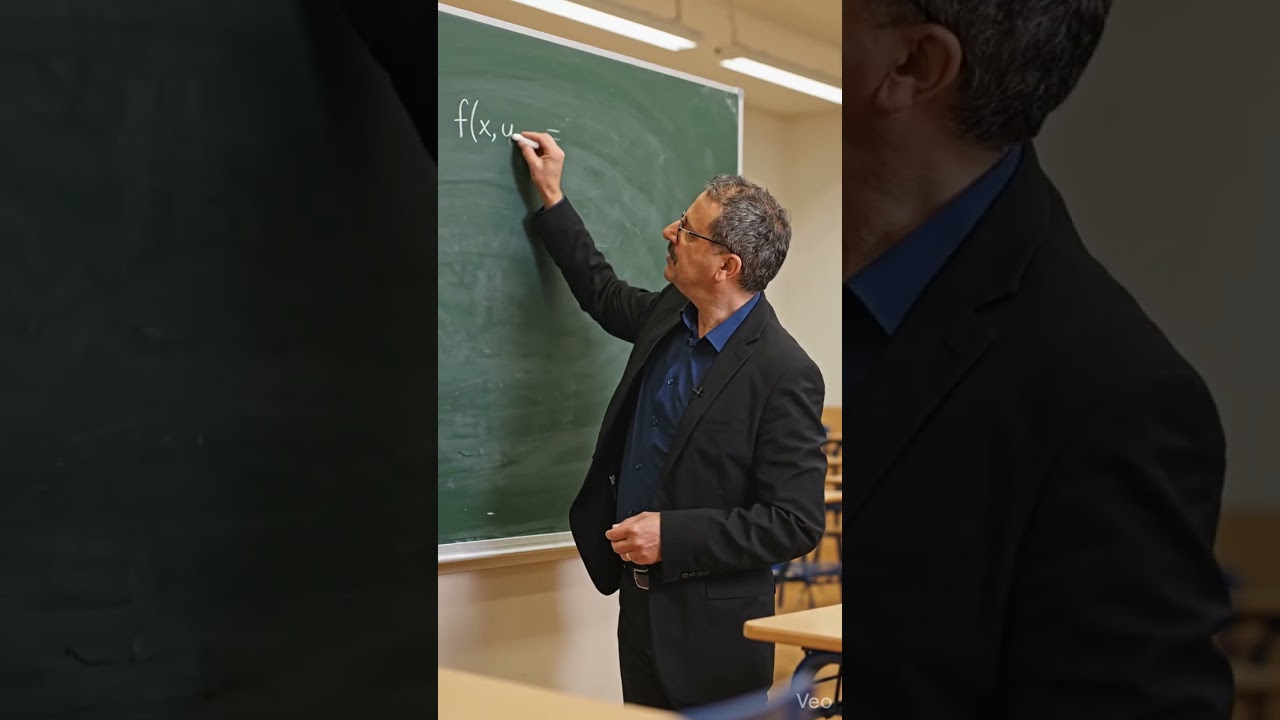
Dr. Raouf holds a PhD in Mathematics and has extensive experience in higher education and personalized academic support. I offer high-level academic guidance from the final years of secondary school through to the Master's level.

My goal is not just to help you pass your exams, but to give you a deep and lasting understanding of mathematics. In the face of increasingly competitive academic programs, I help you structure your reasoning, develop unwavering rigor, and gain confidence.

**For students in Switzerland and Luxembourg**
I am fully familiar with the requirements of your educational systems. I specifically support students in:

* Switzerland: Intensive preparation for the **Maturité gymnasiale** (standard and advanced levels) and support for university students, especially those aiming for or entering polytechnic schools (such as **EPFL** or **ETH**) and cantonal universities.
* Luxembourg: Preparation for the **Secondary School Leaving Diploma** (scientific sections) and support for Bachelor/Master students at the University of Luxembourg or abroad.

** Specialization: Mathematics for Engineering and Artificial Intelligence
Beyond the traditional curriculum, I possess strong expertise in the mathematical foundations of modern technologies. If you are a Bachelor's, engineering, or Master's student, I offer in-depth tutoring on key modules:

* Advanced linear algebra (matrices, SVDs, etc.)
* Differential calculus and optimization (gradients, cost functions)
* Probability and statistics for Data Science and Machine Learning

**A premium and interactive online learning experience**
Distance learning must not be compromised. My courses take place in a professional virtual environment:
* Lessons and solutions to exercises written in real time
* Course notes and exercise solutions will be sent in PDF format after each session.
* Regular monitoring and methodology adapted to your own pace of assimilation.

Whether you need to fill in knowledge gaps, strive for excellence in a crucial exam, or master the mathematical tools of AI, feel free to contact me to discuss your situation. Together, we will define the best strategy for success.
Education
Master's degree in Mathematics. PhD in Applied Mathematics. Mathematical researcher at the Modeling Laboratory of the National Engineering School of Tunis. My areas of expertise in mathematics range from the foundational concepts acquired during secondary education to advanced mathematics at the Bachelor's and Master's levels, as well as preparatory classes for engineering studies. I am also proficient in the numerical analysis and functional analysis curricula taught in engineering schools.
Experience / Qualifications
A career spanning more than 20 years in an engineering school in Tunisia whose training programs are EUR-ACE accredited.
Age
Adults (18-64 years old)
Seniors (65+ years old)
Student level
Beginner
Duration
60 minutes
The class is taught in
French
English
Arabic
Reviews
Availability of a typical week
(GMT -04:00)
New York
at teacher icon
Online via webcam
Mon
Tue
Wed
Thu
Fri
Sat
Sun
00-04
04-08
08-12
12-16
16-20
20-24
The final year of secondary school is approaching, and with it, the famous high school diploma! The mathematics program in the final year (whether in Classical or General education) is demanding and requires a solid foundation.

This support from the beginning of the year is specifically designed for students in the Luxembourg system who are transitioning from 2nd to 1st year of secondary school. The goal is to start now to consolidate existing knowledge, fill any gaps in understanding, and get a head start on the curriculum for the start of the academic year, allowing them to approach their final year of secondary school with confidence and composure.

🎯 Immediate objectives:

Review of 2nd year basics: Identify and correct the blocking points from the previous year.

Preparing for the 1st year program: A gentle introduction to the first major chapters to avoid the shock of starting school.

Baccalaureate methodology: Learning to write a clear essay, justify one's reasoning and manage one's time when faced with a complex problem.

📚 Sample program (Adaptable according to the student's section - B, C, D, G, etc.):

Module 1: Consolidation of Foundations (Basic Algebra and Analysis)

Perfect mastery of algebraic calculation, fractions and powers.

Solving complex equations and inequalities.

In-depth review of derivatives and the study of functions (variation tables, asymptotes).

Module 2: Introduction to the key concepts of the 1st

Introduction to logarithmic and exponential functions (ln and exp).

Introduction to integral calculus (calculating areas).

Depending on the section: Complex numbers, analytic geometry in space, or probability/statistics.

⚙️ Methodology and Format:

Initial assessment: The first lesson begins with a short placement test to adapt the program to the student's actual needs.

Flexibility: Pack of 10h, 15h or 20h spread over the summer (for example, 2 to 3 times a week in July and August to prepare for the start of the school year).

Ongoing support: Summary sheets provided at the end of each session and availability via message for small questions between classes.
Read more
Master the mathematics curriculum and approach your final exams with absolute confidence.

The first year of secondary school is a crucial step towards obtaining your diploma and preparing for higher education. This tailored online course is designed to guide you step by step towards excellence, whether you are in Classical Secondary Education (ESC) or General Secondary Education (ESG).

What we will cover:

In-depth analysis: Study of functions, differential and integral calculus, numerical sequences (notions of limits and asymptotic behavior).

Algebra and Geometry: Complex numbers, geometry in space, systems of equations.

Probability and Statistics: Combinatorics, probability laws, and conditioning.

My methodology:
As a university professor and mathematician, my teaching approach goes beyond simply applying formulas. I emphasize a deep understanding of concepts and rigorous reasoning.

Initial assessment: Identifying your weaknesses and strengths.

Clear and structured explanations: Simplification of abstract concepts through concrete examples.

Intensive training: Solving typical exercises and past papers from the Luxembourg final exam.

Preparation for higher education: Introduction to the working methods required to succeed at university (engineering schools, preparatory classes, faculties of science or economics).

Who should attend ?
For final year (1st year) students in Luxembourg who wish to consolidate their foundations, significantly increase their average, or aim for excellence to enter selective programs.

Format:
Interactive online course with screen sharing, clear visual support, and review materials provided after each session.
Read more
Show more
arrow icon
Similar classes
arrow icon previousarrow icon next
verified badge
As a Franco-Belgian management teacher, I give Excel lessons with passion!
Whether remotely or face-to-face, I offer many examples and exercises to accompany you.
I travel without problem throughout the region of Brussels and its surroundings, for lessons of at least 2 hours. For France, courses are only given remotely.

Here are some key words that will be covered in my classes:
Scenario analysis, Year, Rounding, Today, Bdnb, Bdnbval, Bdsum, Search, Column, Copy/paste in values, Copy/paste with transposition, Consolidation, Date, Datedif, Determat, Dollar, Right, Righterg, Equiv, Esterror, Estna, Frequency, Filter (simple and advanced), Format of cells, Left, Large.Value, Printing of documents, Index, Indirect, Inversemat, Day, Weekday, Line, Matrix, Max, Maxa, Max.Si, Min , Mina, Mina.If, Formatting of cells and ranges, Month, Average, Average.If, Nb, Nb.If, Nbval, Naming of cells and ranges, No, Small.value, Product, Productmat, Protection of cells, Lookup (Lookup), Lookupv (VLookup), Lookuph (HLookup), If (If), If.Not.Disp, If.Conditions, Iferror, Sum, Sumproduct, Sum.If, Sum.If.Set, Substitute , Pivot tables, Sorting, Cell locking

Do not hesitate to contact me to organize your lessons according to your needs and availability. Together, we will develop your Excel skills in an efficient and personalized way.
verified badge
Python is the most in-demand programming language in the world right now — and one of the easiest to learn with the right guidance.
Whether you've never written a line of code or you're a student who needs to pass a programming course, this is a practical, no-fluff introduction that gets you writing real code from session one.
What we can cover depending on your goals:

Python fundamentals: variables, loops, functions, data structures
- Object-oriented programming (OOP)
- Data manipulation with pandas and NumPy
- Introduction to machine learning with scikit-learn
- Database management with SQL
- C and Java upon request
- MATLAB and R available for engineering/science students

Why learn with me?
I'm not a student teaching on the side — I'm a professional engineer who uses Python daily for data analysis, modeling, and automation. I know exactly which concepts matter in the real world and which ones you can skip for now.
Sessions are 100% personalized: I adapt the pace, the examples, and the exercises to your background and your goal — whether that's passing your university exam, building a project, or landing a job.
verified badge
You will learn Systematic Reasoning & Logical Thinking which is a requirement for entering Computer Science program in many universities.
The book “Delftse Foundations of Computation” especially its second chapter will be the main source of our lesson, but other more in-depth books will be also covered if you want to improve even further on logical thinking.
The topics in our lesson include:
• Propositional Logic: Logical operators; Precedence rules; Logical equivalence; Implications in English; Exclusive or; Universal operators; Classifying propositions
• Boolean Algebra: Substitution laws
• Logic Circuits: Logic gates; Combining gates to create circuits; From circuits to propositions; Disjunctive Normal Form; Binary addition.
• Predicate Logic: Predicates; Quantifiers; Tarski’s world and formal structures;
• Deduction: Valid arguments and proofs; Proofs in predicate logic

If you have any additional questions before starting a class, please feel free to ask me. I am here to assist! :)
verified badge
Experienced and patient teacher of logic for computer science.

I have taught logic, formal languages and automata theory to undergraduates for six years. My tutoring is adapted to the student's level and goals. Whether you need to learn logic for your studies, or you would simply like to know more about the subject, I will be more than happy to help you improve your understanding and skills.

Logic
The sciences presuppose a certain standard of rationality. An ability to distinguish between correct reasoning and claims that do not follow from the assumptions. In this class we study the basic principles of logic and apply mathematical techniques to the study thereof.
Topics include:
Propositional and Predicate Logic
Syntax and semantics
Natural deduction
Semantic tableaux
Correctness and soundness
Completeness

Formal languages and automata
A formal language is an abstraction of general characteristics of programming languages. Such a languages consists of a set of symbols together with some rules to determine whether a string made up out of those symbols is a member of the language.

Topics include:
Regular languages, context-free languages
Finite automata, pushdown automata, Turing machines
Regular expressions
Regular grammar, context-sensitive grammar
Pumping lemmas for regular and context-free languages
verified badge
I teach Python specifically for finance and data applications - the kind used in economics, business analytics, and quantitative programs. This isn't a general "learn to code" course; it's built around real financial data, benchmarking, and the workflows you'll actually use in coursework or early career work.

Topics include:
Python fundamentals through a finance lens (data structures, functions, control flow).
Working with financial data and datasets.
Performance benchmarking and writing efficient code.
Applying concepts from Hilpisch's Python for Finance.
verified badge
With over seven years of experience in teaching Computer Science & Information Technology (ICT), I have developed a strong expertise in delivering high-quality education across multiple internationally recognized curricula, including Cambridge IGCSE, GCSE, A-Levels, O-Levels, and Checkpoint. My passion lies in equipping students with coding, cybersecurity, and digital literacy skills, ensuring they are well-prepared for the evolving demands of the digital world.

Expertise & Teaching Areas:
✅ Programming & Software Development: Python, Java, C++
✅ Cybersecurity: Ethical hacking, data protection, network security
✅ Digital Literacy: ICT applications, online safety, cloud computing
✅ Data Science & AI: Data analysis, machine learning fundamentals
✅ Web Development: HTML, CSS, JavaScript

Curriculum & Pedagogical Experience:
🔹 Cambridge IGCSE & GCSE ICT & Computer Science – Teaching core and extended syllabi, focusing on programming logic, databases, and networking.
🔹 Cambridge A-Levels & O-Levels Computer Science – Preparing students for advanced computing concepts, problem-solving, and algorithm development.
🔹 Cambridge Checkpoint ICT – Building foundational skills in digital technology and computer applications.

Professional Impact:
📌 Mentored students to achieve top grades in Cambridge ICT & Computer Science exams.
📌 Developed interactive lesson plans integrating real-world applications of technology.
📌 Conducted coding boot camps and cybersecurity workshops to enhance practical learning.
📌 Guided students in project-based learning, including app development and website design.

With a strong commitment to student-centered learning and technological innovation, I am dedicated to shaping future tech leaders and empowering learners with skills relevant to careers in technology, data science, and software development.
verified badge
In today's rapidly evolving technological landscape, **Python programming** has emerged as one of the most **critical skill sets** for professionals across industries. With applications spanning web development, data science, artificial intelligence, automation, and more, Python continues to dominate as the **language of choice** for developers and organizations worldwide. This proposal outlines a comprehensive Python course designed and delivered by **Amr**, a developer and instructor with over **20 years of experience** in the field. The course combines fundamental programming concepts with practical, real-world applications, ensuring students gain not just theoretical knowledge but **marketable skills** that align with current industry demands. By leveraging cutting-edge teaching methodologies and extensive professional experience, this course offers an unparalleled learning opportunity for aspiring programmers and experienced developers alike.

## 1 Introduction to Python Programming

Python has established itself as a **powerhouse programming language** across various domains, from web development and data analysis to artificial intelligence and automation. As of 2025, the demand for Python skills continues to soar, with industry giants like Cisco, IBM, and Google leveraging its capabilities for their projects . Python's dominance in the technology sector is undeniable – it remains the **most requested programming language** in job postings across multiple industries, including finance, healthcare, technology, and entertainment.

The language's popularity stems from several key factors: its **user-friendly syntax** that resembles natural English, making it exceptionally accessible for beginners; its **versatile nature** that supports multiple programming paradigms; and its **extensive ecosystem** of libraries and frameworks that simplify complex programming tasks. Python's cross-platform compatibility ensures code runs seamlessly on Windows, macOS, and Linux environments, while its open-source nature has fostered a massive community of contributors who continuously expand its capabilities . These attributes make Python not just a programming language but a **comprehensive toolset** for solving diverse computational problems.

For professionals looking to future-proof their careers, Python offers **exceptional value**. According to industry data, Python developers in the United States earn an average of **$116,028 per year**, reflecting the high market demand for these skills . Beyond financial rewards, Python proficiency opens doors to cutting-edge fields like machine learning, natural language processing, and data analytics – domains that are shaping the future of technology across industries.

## 2 Course Overview & Learning Objectives

### 2.1 Course Philosophy
This Python programming course is designed with a **practice-oriented approach** that emphasizes hands-on learning and real-world application. Unlike traditional programming courses that focus heavily on theory, this program balances conceptual understanding with **practical implementation**, ensuring students develop the skills needed to solve actual business problems. The curriculum is structured to build proficiency gradually, starting with fundamental concepts and progressing to advanced applications, with each module incorporating **project-based learning** components.

### 2.2 Key Learning Objectives
Upon successful completion of this course, students will be able to:

- **Demonstrate proficiency** in core Python programming concepts including data structures, control flow, functions, and file handling
- **Develop functional applications** using Python for various domains including web development, data analysis, and automation
- **Implement object-oriented programming** principles to create modular, maintainable code
- **Utilize popular Python libraries** such as Pandas, NumPy, and BeautifulSoup for specialized tasks
- **Integrate with databases** and web APIs to create full-stack applications
- **Apply debugging and testing** techniques to ensure code quality and reliability
- **Build portfolio-worthy projects** that demonstrate marketable skills to potential employers


## 3 Instructor Qualifications & Experience

### 3.1 Professional Background
**Amr** brings an exceptional **twenty-year track record** of development and instruction experience to this Python course. His extensive background encompasses both corporate training and software development, providing a unique blend of pedagogical expertise and practical knowledge. With credentials including a **Bachelor of Computer Science and Management Technology** from Modern Academy and a **Computer Science Diploma** from Arab Academy for Science and Technology, Amr possesses the academic foundation to complement his extensive professional experience.

His career demonstrates **progressive responsibility** and expertise across multiple programming languages and frameworks. Beginning as a technical instructor at renowned institutions including NewHorizons, Knowlogy, and Informatica, he quickly established himself as a developer at Microtech and ITS, where he worked on enterprise-level systems including **ERP and banking applications**. This combination of education and hands-on development experience creates an ideal foundation for teaching programming concepts with both theoretical rigor and practical relevance.

### 3.2 Industry Client Portfolio
Amr's exceptional teaching credentials are further enhanced by his impressive roster of **corporate clients**, which includes some of the world's most recognized brands:

- **Technology Leaders**: Microsoft, IBM, Siemens, Vodafone, and Telecom Egypt
- **Financial Institutions**: National Bank of Egypt, NSGB, CIB, and Central Bank of Egypt
- **Global Consumer Brands**: Pepsi, Coca-Cola, Nestlé, Cadbury, and Americana
- **Industrial Conglomerates**: Chrysler, Valeo, 3M, ABB, and BP (British Petroleum)
- **Government Entities**: Libya Government IT Department, Sudan Army Officers, Egyptian Airports Company

This diverse client experience has provided Amr with **unparalleled insight** into how Python is applied across different industries and organizational contexts. His exposure to various business domains allows him to teach Python not as an abstract academic exercise but as a **practical tool** for solving real business problems.

### 3.3 Teaching Methodology
Amr employs a **learner-centered approach** that emphasizes interactive engagement and practical application. His teaching philosophy is based on the principle that programming is best learned through doing, rather than passive listening. Each concept is introduced through **clear explanations** followed immediately by hands-on exercises that reinforce learning. He adapts his pace and approach based on student comprehension, ensuring no one is left behind while maintaining challenging content for advanced learners.

*Table: Instructor's Recent Training Engagements (2023-2025)*

| **Year** | **Corporate Clients** | **Training Centers** | **Technologies Covered** |
|----------|-----------------------|----------------------|--------------------------|
| **2023** | International Finance Corporation, Raya Integration | Raya Academy, IT-Egypt | VBA, Office Automation, Web Technologies, Software Fundamentals with C#, SQL Server Database Design and Querying, Introduction to .NET Core Framework, Building ASP.NET Core Web API, Front-End Development Basics (HTML, CSS, JavaScript, TypeScript), Advanced Front-End Development with Angular, Integration and Deployment |
| **2024** | 3M, Pepsi | NewHorizons, Radio & Television Institute, Informatics (Lebanon), Total-Tech (KSA), Global Business Star (USA) | SQL Query (20761), SQL Development (20762), SQL Admin (20764,20765), Tabular, MQL5, ASP.NET Core MVC Web Applications (20486), Programming in C# (20483), Programming in HTML5 with JavaScript and CSS3 (20480), LINQ, EF (Entity Framework) |
| **2025** | Siemens, Vodafone | YAT, Future University | Full Stack Development, Data Analysis |

## 4 Detailed Course Curriculum

### 4.1 Module Breakdown
The Python course is structured into **eight comprehensive modules** that systematically build programming proficiency from foundation to advanced application:

1. **Python Fundamentals** (10 hours): Syntax, variables, data types, operators, and basic input/output operations. Students will write their first programs and understand how Python interprets and executes code.

2. **Control Structures & Functions** (15 hours): Conditional statements (if/elif/else), loops (for/while), function definition, parameters, return values, and scope. Emphasis on writing clean, reusable code.

3. **Data Structures** (20 hours): Lists, tuples, dictionaries, sets, and their appropriate applications. Includes comprehensive exercises on data manipulation and storage.

4. **Object-Oriented Programming** (20 hours): Classes, objects, inheritance, polymorphism, and encapsulation. Students will learn to structure code using OOP principles for better maintainability.

5. **File Handling & Modules** (10 hours): Reading/writing files, exception handling, importing modules, and creating custom modules. Practical applications for data persistence.

6. **Web Development with Python** (25 hours): Introduction to Flask/Django frameworks, REST APIs, and basic front-end integration. Students will build a functional web application.

7. **Data Analysis & Visualization** (25 hours): Using Pandas for data manipulation, NumPy for numerical computing, and Matplotlib/Seaborn for visualization. Real-world datasets will be used for analysis.

8. **Introduction to Automation & Scripting** (15 hours): Applying Python to automate repetitive tasks, web scraping with BeautifulSoup, and working with APIs.

### 4.2 Practical Projects
The curriculum includes **five portfolio projects** that allow students to apply their learning:

1. **Data Analysis Project**: Analyzing real business data to extract insights and create visualizations
2. **Web Application Project**: Building a fully functional web application with database integration
3. **Automation Script**: Creating a practical tool to automate a repetitive computer task
4. **API Integration Project**: Connecting to external services and processing returned data
5. **Final Capstone Project**: A comprehensive application that demonstrates mastery of course concepts

### 4.3 Python in Marketing Analytics
A special section of the course will focus on **Python applications in digital marketing**, covering how Python can be used for marketing automation, data analysis, and operations . Students will learn:

- **Working with APIs** to connect different software tools and automate marketing workflows
- **Web scraping** to gather data from web pages for content analysis and competitive intelligence
- **Text analysis** for sentiment analysis, content optimization, and customer feedback processing
- **Data analysis** for marketing analytics using Pandas and visualization libraries
- **Technical SEO** applications using Python libraries like advertools and EcommerceTools

This specialized content demonstrates Python's versatility beyond traditional programming roles, showing its value in business functions like marketing where data skills are increasingly crucial.

## 5 Training Methodology & Delivery

### 5.1 Interactive Learning Approach
This Python course employs a **multimodal teaching methodology** that accommodates diverse learning styles while ensuring practical skill development. Each session follows a structured pattern:

1. **Concept Introduction**: Clear explanation of programming concepts with real-world analogies
2. **Live Coding Demonstration**: Step-by-step coding examples that students can follow along
3. **Guided Practice**: Structured exercises with instructor support and immediate feedback
4. **Independent Challenge**: Problem-solving activities that require applying concepts creatively
5. **Code Review**: Collaborative analysis of solutions to identify best practices and improvements

This approach ensures that students not only understand theoretical concepts but develop the **problem-solving mindset** essential for effective programming. The emphasis is always on writing clean, efficient, and maintainable code following industry standards.

### 5.2 Hands-On Labs & Exercises
A distinctive feature of this course is the extensive **hands-on programming practice** integrated throughout the curriculum. Students will spend approximately **60% of course time** actively writing code rather than passively listening to lectures. Practical components include:

- **Coding exercises** for each new concept introduced
- **Mini-projects** that combine multiple concepts into functional applications
- **Debugging challenges** that develop problem-solving skills
- **Code optimization** activities focusing on efficiency and performance
- **Pair programming** sessions to foster collaboration and knowledge sharing

ِSend me if you have any questions,
Regars,
Amr
verified badge
Python is today one of the most widely used programming languages in the world, both in Data Science, Artificial Intelligence, Web Development and for task automation.
In this course, I will guide you step by step according to your level:

Beginner: basics of the language (variables, loops, conditions, functions).

Intermediate: data manipulation (Pandas, NumPy), file management, object-oriented programming.

Advanced: practical projects (data analysis, machine learning, automation, API, web scraping).

My goal is to make learning clear, practical, and motivating. You'll not only learn how to code in Python, but also how to structure your projects and apply your knowledge to real-life scenarios.
verified badge
🐍 Python Course – Learn to code and create your projects!

This course is for anyone who wants to:

✅ Learn Python from the beginning
✅ Strengthen their programming skills

📚 On the program:

Variables

Loops

Functions

Data structures

Practical projects for implementation

💡 How does the course work?

Clear explanations to understand the programming logic

Targeted exercises adapted to your level

Concrete projects to create your own applications

🎯 My goal:

Helping you understand the logic behind the code

Progress at your own pace

Create your own projects in Python and gain independence
verified badge
Technology is everywhere, and understanding how it works and how to protect it can open doors to exciting opportunities. I’ve designed this course as a hands-on journey into networking, programming, and cybersecurity, where you don’t just learn theory, you practice real skills that matter in the digital world.

In this course, I’ll guide you through building and analyzing networks, writing programs with Python and other languages, and exploring how systems communicate and interact. You’ll dive into cybersecurity fundamentals, learn to identify vulnerabilities, understand how attacks happen, and practice defending systems like a pro.

Through interactive exercises, practical examples, and real-world scenarios, I’ll show you how hackers think, how organizations respond to threats, and how to secure systems effectively.

By the end of the course, you’ll have the confidence, knowledge, and hands-on experience to tackle networking, programming, and security challenges and apply these skills in your studies, career, or personal projects.
verified badge
I am a dynamic and demanding teacher who gives private lessons in Physics-Chemistry as well as Mathematics.

I graduated from teaching seven years ago, after a masters in physical sciences with honors, and I teach in college and high school since.
I have also been preparing students for the Baccalaureate Science for many years, all of whom have been awarded very good honors.
I also prepare my students for different exams (Matu, Bac, preparation for EPFL, etc...)

I make sure to rework the basics so that the student can progress quickly. It is important to me that my students acquire a solid foundation of knowledge.
I also give effective work methods that will allow him to progress much more quickly and so he can regain self-confidence.

I can travel to the student's home or also conduct the lesson via Zoom/Google Meet.
verified badge
Working part-time in the watch industry, I have been tutoring for several years in the context of refresher, occasional support or preparation of exams or competitions. Very experienced in relation to the difficulties encountered by students and pedagogue, I adapt to the needs of each to quickly regain the necessary confidence, the methodology of mathematical reasoning and allow a rapid improvement of results.
Experienced and pedagogue, I adapt to the needs of the student to help him consolidate his knowledge methodically, to regain confidence and improve as quickly as possible its results. I teach these courses in a radius of 30 km around Geneva.
verified badge
Session 1: Revolutionizing your Scientific Writing with LaTeX & AI
Duration: 2 Hours | Level: Beginner | Tools: Overleaf + AI**

First Hour: Foundations and Cloud Environment (60 min)

1. Introduction to LaTeX Philosophy (15 min)

- The "WYSIWYM" concept:** Explain the difference between Word (*What You See Is What You Get*) and LaTeX (*What You See Is What You Mean*). Why content takes precedence over form.
- Key advantages:** Unrivaled typographic quality, automatic reference management, stability on long documents (theses), and free of charge.
- The structure of a file:** Distinction between the **preamble** (the brain: settings and packages) and the **body of the document** (the heart: text).

2. Immersion in Overleaf (25 min)

- Configuration:** Creation of an account and first project "Blank Project".
- Exploring the interface:** The file panel (left), the code editor (middle) and the PDF preview (right).
- Real-time collaboration:** How to share a project and leave comments (like on Google Docs).
- History and versions:** How to revert to a previous version in case of a compilation error.

3. Practical Workshop: My First Document (20 min)

* Writing basic commands: `\documentclass`, `\usepackage[french]{babel}`, `\title`, `\author`.
* Compilation of the document and observation of the result.
* Structuring: Use of `\section` and `\subsection`.

Second Hour: Mathematics and the Magic of AI (60 min)

4. The Power of Mathematics (20 min)

- Mathematical modes:** Difference between the text (`$...$`) and the centered block (`\[...\]`).
- Essential syntax:** Fractions `\frac{}{}`, exponents `^`, indices `_`, and roots `\sqrt{}`.
- Introduction to AMS packages: Why amsmath and amssymb are essential for professional rendering.

5. From hand to screen: AI at the service of LaTeX (30 min)

- Presentation of OCR tools:** Use of **Mathpix Snip** (the leader) or models like Gemini/ChatGPT to transform a photo into code.
- Concrete demonstration:
1. Take a picture of a complex handwritten formula (e.g., an integral with matrices).
2. Use AI to generate the corresponding LaTeX code.
3. Correction and insertion: Learn to check the AI-generated code before copying and pasting it into Overleaf.

6. Conclusion and Q&A (10 min)

* Summary of achievements.
* Resources for further exploration
* Definition of the exercise for the next session.
verified badge
• Teaching methodology and techniques: I favour a personalized approach, adapting the courses according to the profile and academic background of each student.
• Typical course structure: tutoring in economics, econometrics, statistics and probability, financial mathematics, trading, investment, or political economy. Courses can take place at home, via videoconference, or at a pre-selected location, ideally quiet, free, and conducive to learning.
• Specifics as a teacher: I offer support throughout the school year, with free corrections of exercises outside of class, regular availability, and the guarantee of being accessible until the end of the year, subject to the general conditions of Superprof.
• Target audience: all levels, regardless of diploma, class or specific characteristics.
-------
The path and the method are in there; take a little bit of each.

Holding a degree in mathematics from EPFL, I offer private lessons in Geneva or online.

I graduated from EPFL with a degree in mathematics, having completed all the Bachelor's level courses in this discipline. I have gained significant experience tutoring students from middle school to university level (mathematics and physics). I have also assisted with teaching at EPFL, particularly in specialized courses such as analytic geometry (advanced mathematics course), analysis (first and second year Bachelor's level), and linear algebra (first year Bachelor's level). My in-depth mastery of the theory in these disciplines provides me with the skills and teaching abilities necessary to effectively support high school and university students, helping them understand the theoretical concepts in their courses and apply them practically in their exercises.

Typical course: a quick review (adapted to needs) of the essential concepts of the course, followed by practical exercises and oral role-playing (going to the board, discussion on the physical meaning, etc.), as in a competitive oral exam.

All my lessons are prepared in advance based on the topics covered in class (the student specifies their needs from one session to the next). I also create a handout containing sample exercises illustrating different methods, fully corrected and explained by me.

My commitment to my students' success is absolute. I only prioritize motivated students who are ready to put in the necessary effort to progress.

My main focus is on in-depth understanding and the quality of work. Depending on the student's request, I can also suggest exercises to do between sessions (not mandatory, depending on available time and homework already assigned by their school).
verified badge
Python is one of the easiest and most in-demand programming languages in today's job market, used in artificial intelligence, data analysis, web development, and game development. As an IT teacher with experience in school teaching, I designed these lessons to be practical and interactive:

Programming basics (variables, conditions, loops)
Solve realistic exercises and small projects
A simplified approach perfectly suited for beginners with no prior experience.
Suitable for students who want support with their school curriculum (IGCSE/British/American) or anyone who wants to start programming from scratch
Video thumbnail
Play icon
Raouf's video
message icon
Contact Raouf
repeat students icon
1st lesson is backed
by our
Good-fit Instructor Guarantee
Similar classes
arrow icon previousarrow icon next
verified badge
As a Franco-Belgian management teacher, I give Excel lessons with passion!
Whether remotely or face-to-face, I offer many examples and exercises to accompany you.
I travel without problem throughout the region of Brussels and its surroundings, for lessons of at least 2 hours. For France, courses are only given remotely.

Here are some key words that will be covered in my classes:
Scenario analysis, Year, Rounding, Today, Bdnb, Bdnbval, Bdsum, Search, Column, Copy/paste in values, Copy/paste with transposition, Consolidation, Date, Datedif, Determat, Dollar, Right, Righterg, Equiv, Esterror, Estna, Frequency, Filter (simple and advanced), Format of cells, Left, Large.Value, Printing of documents, Index, Indirect, Inversemat, Day, Weekday, Line, Matrix, Max, Maxa, Max.Si, Min , Mina, Mina.If, Formatting of cells and ranges, Month, Average, Average.If, Nb, Nb.If, Nbval, Naming of cells and ranges, No, Small.value, Product, Productmat, Protection of cells, Lookup (Lookup), Lookupv (VLookup), Lookuph (HLookup), If (If), If.Not.Disp, If.Conditions, Iferror, Sum, Sumproduct, Sum.If, Sum.If.Set, Substitute , Pivot tables, Sorting, Cell locking

Do not hesitate to contact me to organize your lessons according to your needs and availability. Together, we will develop your Excel skills in an efficient and personalized way.
verified badge
Python is the most in-demand programming language in the world right now — and one of the easiest to learn with the right guidance.
Whether you've never written a line of code or you're a student who needs to pass a programming course, this is a practical, no-fluff introduction that gets you writing real code from session one.
What we can cover depending on your goals:

Python fundamentals: variables, loops, functions, data structures
- Object-oriented programming (OOP)
- Data manipulation with pandas and NumPy
- Introduction to machine learning with scikit-learn
- Database management with SQL
- C and Java upon request
- MATLAB and R available for engineering/science students

Why learn with me?
I'm not a student teaching on the side — I'm a professional engineer who uses Python daily for data analysis, modeling, and automation. I know exactly which concepts matter in the real world and which ones you can skip for now.
Sessions are 100% personalized: I adapt the pace, the examples, and the exercises to your background and your goal — whether that's passing your university exam, building a project, or landing a job.
verified badge
You will learn Systematic Reasoning & Logical Thinking which is a requirement for entering Computer Science program in many universities.
The book “Delftse Foundations of Computation” especially its second chapter will be the main source of our lesson, but other more in-depth books will be also covered if you want to improve even further on logical thinking.
The topics in our lesson include:
• Propositional Logic: Logical operators; Precedence rules; Logical equivalence; Implications in English; Exclusive or; Universal operators; Classifying propositions
• Boolean Algebra: Substitution laws
• Logic Circuits: Logic gates; Combining gates to create circuits; From circuits to propositions; Disjunctive Normal Form; Binary addition.
• Predicate Logic: Predicates; Quantifiers; Tarski’s world and formal structures;
• Deduction: Valid arguments and proofs; Proofs in predicate logic

If you have any additional questions before starting a class, please feel free to ask me. I am here to assist! :)
verified badge
Experienced and patient teacher of logic for computer science.

I have taught logic, formal languages and automata theory to undergraduates for six years. My tutoring is adapted to the student's level and goals. Whether you need to learn logic for your studies, or you would simply like to know more about the subject, I will be more than happy to help you improve your understanding and skills.

Logic
The sciences presuppose a certain standard of rationality. An ability to distinguish between correct reasoning and claims that do not follow from the assumptions. In this class we study the basic principles of logic and apply mathematical techniques to the study thereof.
Topics include:
Propositional and Predicate Logic
Syntax and semantics
Natural deduction
Semantic tableaux
Correctness and soundness
Completeness

Formal languages and automata
A formal language is an abstraction of general characteristics of programming languages. Such a languages consists of a set of symbols together with some rules to determine whether a string made up out of those symbols is a member of the language.

Topics include:
Regular languages, context-free languages
Finite automata, pushdown automata, Turing machines
Regular expressions
Regular grammar, context-sensitive grammar
Pumping lemmas for regular and context-free languages
verified badge
I teach Python specifically for finance and data applications - the kind used in economics, business analytics, and quantitative programs. This isn't a general "learn to code" course; it's built around real financial data, benchmarking, and the workflows you'll actually use in coursework or early career work.

Topics include:
Python fundamentals through a finance lens (data structures, functions, control flow).
Working with financial data and datasets.
Performance benchmarking and writing efficient code.
Applying concepts from Hilpisch's Python for Finance.
verified badge
With over seven years of experience in teaching Computer Science & Information Technology (ICT), I have developed a strong expertise in delivering high-quality education across multiple internationally recognized curricula, including Cambridge IGCSE, GCSE, A-Levels, O-Levels, and Checkpoint. My passion lies in equipping students with coding, cybersecurity, and digital literacy skills, ensuring they are well-prepared for the evolving demands of the digital world.

Expertise & Teaching Areas:
✅ Programming & Software Development: Python, Java, C++
✅ Cybersecurity: Ethical hacking, data protection, network security
✅ Digital Literacy: ICT applications, online safety, cloud computing
✅ Data Science & AI: Data analysis, machine learning fundamentals
✅ Web Development: HTML, CSS, JavaScript

Curriculum & Pedagogical Experience:
🔹 Cambridge IGCSE & GCSE ICT & Computer Science – Teaching core and extended syllabi, focusing on programming logic, databases, and networking.
🔹 Cambridge A-Levels & O-Levels Computer Science – Preparing students for advanced computing concepts, problem-solving, and algorithm development.
🔹 Cambridge Checkpoint ICT – Building foundational skills in digital technology and computer applications.

Professional Impact:
📌 Mentored students to achieve top grades in Cambridge ICT & Computer Science exams.
📌 Developed interactive lesson plans integrating real-world applications of technology.
📌 Conducted coding boot camps and cybersecurity workshops to enhance practical learning.
📌 Guided students in project-based learning, including app development and website design.

With a strong commitment to student-centered learning and technological innovation, I am dedicated to shaping future tech leaders and empowering learners with skills relevant to careers in technology, data science, and software development.
verified badge
In today's rapidly evolving technological landscape, **Python programming** has emerged as one of the most **critical skill sets** for professionals across industries. With applications spanning web development, data science, artificial intelligence, automation, and more, Python continues to dominate as the **language of choice** for developers and organizations worldwide. This proposal outlines a comprehensive Python course designed and delivered by **Amr**, a developer and instructor with over **20 years of experience** in the field. The course combines fundamental programming concepts with practical, real-world applications, ensuring students gain not just theoretical knowledge but **marketable skills** that align with current industry demands. By leveraging cutting-edge teaching methodologies and extensive professional experience, this course offers an unparalleled learning opportunity for aspiring programmers and experienced developers alike.

## 1 Introduction to Python Programming

Python has established itself as a **powerhouse programming language** across various domains, from web development and data analysis to artificial intelligence and automation. As of 2025, the demand for Python skills continues to soar, with industry giants like Cisco, IBM, and Google leveraging its capabilities for their projects . Python's dominance in the technology sector is undeniable – it remains the **most requested programming language** in job postings across multiple industries, including finance, healthcare, technology, and entertainment.

The language's popularity stems from several key factors: its **user-friendly syntax** that resembles natural English, making it exceptionally accessible for beginners; its **versatile nature** that supports multiple programming paradigms; and its **extensive ecosystem** of libraries and frameworks that simplify complex programming tasks. Python's cross-platform compatibility ensures code runs seamlessly on Windows, macOS, and Linux environments, while its open-source nature has fostered a massive community of contributors who continuously expand its capabilities . These attributes make Python not just a programming language but a **comprehensive toolset** for solving diverse computational problems.

For professionals looking to future-proof their careers, Python offers **exceptional value**. According to industry data, Python developers in the United States earn an average of **$116,028 per year**, reflecting the high market demand for these skills . Beyond financial rewards, Python proficiency opens doors to cutting-edge fields like machine learning, natural language processing, and data analytics – domains that are shaping the future of technology across industries.

## 2 Course Overview & Learning Objectives

### 2.1 Course Philosophy
This Python programming course is designed with a **practice-oriented approach** that emphasizes hands-on learning and real-world application. Unlike traditional programming courses that focus heavily on theory, this program balances conceptual understanding with **practical implementation**, ensuring students develop the skills needed to solve actual business problems. The curriculum is structured to build proficiency gradually, starting with fundamental concepts and progressing to advanced applications, with each module incorporating **project-based learning** components.

### 2.2 Key Learning Objectives
Upon successful completion of this course, students will be able to:

- **Demonstrate proficiency** in core Python programming concepts including data structures, control flow, functions, and file handling
- **Develop functional applications** using Python for various domains including web development, data analysis, and automation
- **Implement object-oriented programming** principles to create modular, maintainable code
- **Utilize popular Python libraries** such as Pandas, NumPy, and BeautifulSoup for specialized tasks
- **Integrate with databases** and web APIs to create full-stack applications
- **Apply debugging and testing** techniques to ensure code quality and reliability
- **Build portfolio-worthy projects** that demonstrate marketable skills to potential employers


## 3 Instructor Qualifications & Experience

### 3.1 Professional Background
**Amr** brings an exceptional **twenty-year track record** of development and instruction experience to this Python course. His extensive background encompasses both corporate training and software development, providing a unique blend of pedagogical expertise and practical knowledge. With credentials including a **Bachelor of Computer Science and Management Technology** from Modern Academy and a **Computer Science Diploma** from Arab Academy for Science and Technology, Amr possesses the academic foundation to complement his extensive professional experience.

His career demonstrates **progressive responsibility** and expertise across multiple programming languages and frameworks. Beginning as a technical instructor at renowned institutions including NewHorizons, Knowlogy, and Informatica, he quickly established himself as a developer at Microtech and ITS, where he worked on enterprise-level systems including **ERP and banking applications**. This combination of education and hands-on development experience creates an ideal foundation for teaching programming concepts with both theoretical rigor and practical relevance.

### 3.2 Industry Client Portfolio
Amr's exceptional teaching credentials are further enhanced by his impressive roster of **corporate clients**, which includes some of the world's most recognized brands:

- **Technology Leaders**: Microsoft, IBM, Siemens, Vodafone, and Telecom Egypt
- **Financial Institutions**: National Bank of Egypt, NSGB, CIB, and Central Bank of Egypt
- **Global Consumer Brands**: Pepsi, Coca-Cola, Nestlé, Cadbury, and Americana
- **Industrial Conglomerates**: Chrysler, Valeo, 3M, ABB, and BP (British Petroleum)
- **Government Entities**: Libya Government IT Department, Sudan Army Officers, Egyptian Airports Company

This diverse client experience has provided Amr with **unparalleled insight** into how Python is applied across different industries and organizational contexts. His exposure to various business domains allows him to teach Python not as an abstract academic exercise but as a **practical tool** for solving real business problems.

### 3.3 Teaching Methodology
Amr employs a **learner-centered approach** that emphasizes interactive engagement and practical application. His teaching philosophy is based on the principle that programming is best learned through doing, rather than passive listening. Each concept is introduced through **clear explanations** followed immediately by hands-on exercises that reinforce learning. He adapts his pace and approach based on student comprehension, ensuring no one is left behind while maintaining challenging content for advanced learners.

*Table: Instructor's Recent Training Engagements (2023-2025)*

| **Year** | **Corporate Clients** | **Training Centers** | **Technologies Covered** |
|----------|-----------------------|----------------------|--------------------------|
| **2023** | International Finance Corporation, Raya Integration | Raya Academy, IT-Egypt | VBA, Office Automation, Web Technologies, Software Fundamentals with C#, SQL Server Database Design and Querying, Introduction to .NET Core Framework, Building ASP.NET Core Web API, Front-End Development Basics (HTML, CSS, JavaScript, TypeScript), Advanced Front-End Development with Angular, Integration and Deployment |
| **2024** | 3M, Pepsi | NewHorizons, Radio & Television Institute, Informatics (Lebanon), Total-Tech (KSA), Global Business Star (USA) | SQL Query (20761), SQL Development (20762), SQL Admin (20764,20765), Tabular, MQL5, ASP.NET Core MVC Web Applications (20486), Programming in C# (20483), Programming in HTML5 with JavaScript and CSS3 (20480), LINQ, EF (Entity Framework) |
| **2025** | Siemens, Vodafone | YAT, Future University | Full Stack Development, Data Analysis |

## 4 Detailed Course Curriculum

### 4.1 Module Breakdown
The Python course is structured into **eight comprehensive modules** that systematically build programming proficiency from foundation to advanced application:

1. **Python Fundamentals** (10 hours): Syntax, variables, data types, operators, and basic input/output operations. Students will write their first programs and understand how Python interprets and executes code.

2. **Control Structures & Functions** (15 hours): Conditional statements (if/elif/else), loops (for/while), function definition, parameters, return values, and scope. Emphasis on writing clean, reusable code.

3. **Data Structures** (20 hours): Lists, tuples, dictionaries, sets, and their appropriate applications. Includes comprehensive exercises on data manipulation and storage.

4. **Object-Oriented Programming** (20 hours): Classes, objects, inheritance, polymorphism, and encapsulation. Students will learn to structure code using OOP principles for better maintainability.

5. **File Handling & Modules** (10 hours): Reading/writing files, exception handling, importing modules, and creating custom modules. Practical applications for data persistence.

6. **Web Development with Python** (25 hours): Introduction to Flask/Django frameworks, REST APIs, and basic front-end integration. Students will build a functional web application.

7. **Data Analysis & Visualization** (25 hours): Using Pandas for data manipulation, NumPy for numerical computing, and Matplotlib/Seaborn for visualization. Real-world datasets will be used for analysis.

8. **Introduction to Automation & Scripting** (15 hours): Applying Python to automate repetitive tasks, web scraping with BeautifulSoup, and working with APIs.

### 4.2 Practical Projects
The curriculum includes **five portfolio projects** that allow students to apply their learning:

1. **Data Analysis Project**: Analyzing real business data to extract insights and create visualizations
2. **Web Application Project**: Building a fully functional web application with database integration
3. **Automation Script**: Creating a practical tool to automate a repetitive computer task
4. **API Integration Project**: Connecting to external services and processing returned data
5. **Final Capstone Project**: A comprehensive application that demonstrates mastery of course concepts

### 4.3 Python in Marketing Analytics
A special section of the course will focus on **Python applications in digital marketing**, covering how Python can be used for marketing automation, data analysis, and operations . Students will learn:

- **Working with APIs** to connect different software tools and automate marketing workflows
- **Web scraping** to gather data from web pages for content analysis and competitive intelligence
- **Text analysis** for sentiment analysis, content optimization, and customer feedback processing
- **Data analysis** for marketing analytics using Pandas and visualization libraries
- **Technical SEO** applications using Python libraries like advertools and EcommerceTools

This specialized content demonstrates Python's versatility beyond traditional programming roles, showing its value in business functions like marketing where data skills are increasingly crucial.

## 5 Training Methodology & Delivery

### 5.1 Interactive Learning Approach
This Python course employs a **multimodal teaching methodology** that accommodates diverse learning styles while ensuring practical skill development. Each session follows a structured pattern:

1. **Concept Introduction**: Clear explanation of programming concepts with real-world analogies
2. **Live Coding Demonstration**: Step-by-step coding examples that students can follow along
3. **Guided Practice**: Structured exercises with instructor support and immediate feedback
4. **Independent Challenge**: Problem-solving activities that require applying concepts creatively
5. **Code Review**: Collaborative analysis of solutions to identify best practices and improvements

This approach ensures that students not only understand theoretical concepts but develop the **problem-solving mindset** essential for effective programming. The emphasis is always on writing clean, efficient, and maintainable code following industry standards.

### 5.2 Hands-On Labs & Exercises
A distinctive feature of this course is the extensive **hands-on programming practice** integrated throughout the curriculum. Students will spend approximately **60% of course time** actively writing code rather than passively listening to lectures. Practical components include:

- **Coding exercises** for each new concept introduced
- **Mini-projects** that combine multiple concepts into functional applications
- **Debugging challenges** that develop problem-solving skills
- **Code optimization** activities focusing on efficiency and performance
- **Pair programming** sessions to foster collaboration and knowledge sharing

ِSend me if you have any questions,
Regars,
Amr
verified badge
Python is today one of the most widely used programming languages in the world, both in Data Science, Artificial Intelligence, Web Development and for task automation.
In this course, I will guide you step by step according to your level:

Beginner: basics of the language (variables, loops, conditions, functions).

Intermediate: data manipulation (Pandas, NumPy), file management, object-oriented programming.

Advanced: practical projects (data analysis, machine learning, automation, API, web scraping).

My goal is to make learning clear, practical, and motivating. You'll not only learn how to code in Python, but also how to structure your projects and apply your knowledge to real-life scenarios.
verified badge
🐍 Python Course – Learn to code and create your projects!

This course is for anyone who wants to:

✅ Learn Python from the beginning
✅ Strengthen their programming skills

📚 On the program:

Variables

Loops

Functions

Data structures

Practical projects for implementation

💡 How does the course work?

Clear explanations to understand the programming logic

Targeted exercises adapted to your level

Concrete projects to create your own applications

🎯 My goal:

Helping you understand the logic behind the code

Progress at your own pace

Create your own projects in Python and gain independence
verified badge
Technology is everywhere, and understanding how it works and how to protect it can open doors to exciting opportunities. I’ve designed this course as a hands-on journey into networking, programming, and cybersecurity, where you don’t just learn theory, you practice real skills that matter in the digital world.

In this course, I’ll guide you through building and analyzing networks, writing programs with Python and other languages, and exploring how systems communicate and interact. You’ll dive into cybersecurity fundamentals, learn to identify vulnerabilities, understand how attacks happen, and practice defending systems like a pro.

Through interactive exercises, practical examples, and real-world scenarios, I’ll show you how hackers think, how organizations respond to threats, and how to secure systems effectively.

By the end of the course, you’ll have the confidence, knowledge, and hands-on experience to tackle networking, programming, and security challenges and apply these skills in your studies, career, or personal projects.
verified badge
I am a dynamic and demanding teacher who gives private lessons in Physics-Chemistry as well as Mathematics.

I graduated from teaching seven years ago, after a masters in physical sciences with honors, and I teach in college and high school since.
I have also been preparing students for the Baccalaureate Science for many years, all of whom have been awarded very good honors.
I also prepare my students for different exams (Matu, Bac, preparation for EPFL, etc...)

I make sure to rework the basics so that the student can progress quickly. It is important to me that my students acquire a solid foundation of knowledge.
I also give effective work methods that will allow him to progress much more quickly and so he can regain self-confidence.

I can travel to the student's home or also conduct the lesson via Zoom/Google Meet.
verified badge
Working part-time in the watch industry, I have been tutoring for several years in the context of refresher, occasional support or preparation of exams or competitions. Very experienced in relation to the difficulties encountered by students and pedagogue, I adapt to the needs of each to quickly regain the necessary confidence, the methodology of mathematical reasoning and allow a rapid improvement of results.
Experienced and pedagogue, I adapt to the needs of the student to help him consolidate his knowledge methodically, to regain confidence and improve as quickly as possible its results. I teach these courses in a radius of 30 km around Geneva.
verified badge
Session 1: Revolutionizing your Scientific Writing with LaTeX & AI
Duration: 2 Hours | Level: Beginner | Tools: Overleaf + AI**

First Hour: Foundations and Cloud Environment (60 min)

1. Introduction to LaTeX Philosophy (15 min)

- The "WYSIWYM" concept:** Explain the difference between Word (*What You See Is What You Get*) and LaTeX (*What You See Is What You Mean*). Why content takes precedence over form.
- Key advantages:** Unrivaled typographic quality, automatic reference management, stability on long documents (theses), and free of charge.
- The structure of a file:** Distinction between the **preamble** (the brain: settings and packages) and the **body of the document** (the heart: text).

2. Immersion in Overleaf (25 min)

- Configuration:** Creation of an account and first project "Blank Project".
- Exploring the interface:** The file panel (left), the code editor (middle) and the PDF preview (right).
- Real-time collaboration:** How to share a project and leave comments (like on Google Docs).
- History and versions:** How to revert to a previous version in case of a compilation error.

3. Practical Workshop: My First Document (20 min)

* Writing basic commands: `\documentclass`, `\usepackage[french]{babel}`, `\title`, `\author`.
* Compilation of the document and observation of the result.
* Structuring: Use of `\section` and `\subsection`.

Second Hour: Mathematics and the Magic of AI (60 min)

4. The Power of Mathematics (20 min)

- Mathematical modes:** Difference between the text (`$...$`) and the centered block (`\[...\]`).
- Essential syntax:** Fractions `\frac{}{}`, exponents `^`, indices `_`, and roots `\sqrt{}`.
- Introduction to AMS packages: Why amsmath and amssymb are essential for professional rendering.

5. From hand to screen: AI at the service of LaTeX (30 min)

- Presentation of OCR tools:** Use of **Mathpix Snip** (the leader) or models like Gemini/ChatGPT to transform a photo into code.
- Concrete demonstration:
1. Take a picture of a complex handwritten formula (e.g., an integral with matrices).
2. Use AI to generate the corresponding LaTeX code.
3. Correction and insertion: Learn to check the AI-generated code before copying and pasting it into Overleaf.

6. Conclusion and Q&A (10 min)

* Summary of achievements.
* Resources for further exploration
* Definition of the exercise for the next session.
verified badge
• Teaching methodology and techniques: I favour a personalized approach, adapting the courses according to the profile and academic background of each student.
• Typical course structure: tutoring in economics, econometrics, statistics and probability, financial mathematics, trading, investment, or political economy. Courses can take place at home, via videoconference, or at a pre-selected location, ideally quiet, free, and conducive to learning.
• Specifics as a teacher: I offer support throughout the school year, with free corrections of exercises outside of class, regular availability, and the guarantee of being accessible until the end of the year, subject to the general conditions of Superprof.
• Target audience: all levels, regardless of diploma, class or specific characteristics.
-------
The path and the method are in there; take a little bit of each.

Holding a degree in mathematics from EPFL, I offer private lessons in Geneva or online.

I graduated from EPFL with a degree in mathematics, having completed all the Bachelor's level courses in this discipline. I have gained significant experience tutoring students from middle school to university level (mathematics and physics). I have also assisted with teaching at EPFL, particularly in specialized courses such as analytic geometry (advanced mathematics course), analysis (first and second year Bachelor's level), and linear algebra (first year Bachelor's level). My in-depth mastery of the theory in these disciplines provides me with the skills and teaching abilities necessary to effectively support high school and university students, helping them understand the theoretical concepts in their courses and apply them practically in their exercises.

Typical course: a quick review (adapted to needs) of the essential concepts of the course, followed by practical exercises and oral role-playing (going to the board, discussion on the physical meaning, etc.), as in a competitive oral exam.

All my lessons are prepared in advance based on the topics covered in class (the student specifies their needs from one session to the next). I also create a handout containing sample exercises illustrating different methods, fully corrected and explained by me.

My commitment to my students' success is absolute. I only prioritize motivated students who are ready to put in the necessary effort to progress.

My main focus is on in-depth understanding and the quality of work. Depending on the student's request, I can also suggest exercises to do between sessions (not mandatory, depending on available time and homework already assigned by their school).
verified badge
Python is one of the easiest and most in-demand programming languages in today's job market, used in artificial intelligence, data analysis, web development, and game development. As an IT teacher with experience in school teaching, I designed these lessons to be practical and interactive:

Programming basics (variables, conditions, loops)
Solve realistic exercises and small projects
A simplified approach perfectly suited for beginners with no prior experience.
Suitable for students who want support with their school curriculum (IGCSE/British/American) or anyone who wants to start programming from scratch
Good-fit Instructor Guarantee
favorite button
message icon
Contact Raouf