


Getting to Grips with Music Theory is simpler than you think!

من 2445.62 EGP /س

The theory of everything tends to be really scary and music theory can be too. I am very keen to make music theory easy for everyone. For some people there is only one way to tackle the unmentionable but I believe there are many different approaches and one of them will click with you. It is simply finding out what is best for each person. Once we find the key we can unlock the problems that have puzzled you for ages.
Music theory needs to be more than a requirement, it needs to be the way to really appreciate the music you are playing. Certain aspects can also lead to additional practical skills such as improvisation which can be very useful as well as very enjoyable.
Whether you want to understand a particular aspect of music theory or If you struggle with music theory in general, then this is the class for you - why not give it a try?
Music theory needs to be more than a requirement, it needs to be the way to really appreciate the music you are playing. Certain aspects can also lead to additional practical skills such as improvisation which can be very useful as well as very enjoyable.
Whether you want to understand a particular aspect of music theory or If you struggle with music theory in general, then this is the class for you - why not give it a try?
المكان

عبر الانترنت من المملكة المتحدة
من أنا؟
Music has always been my passion. Ever since I was 13 I wanted to become a Music teacher to inspire others to enjoy creating Music. I qualified as a specialist Music teacher in 1984 and taught in a comprehensive school in England for over 34 years before taking early retirement. However, I still had a great desire to teach students from home which I continue to do via the internet.
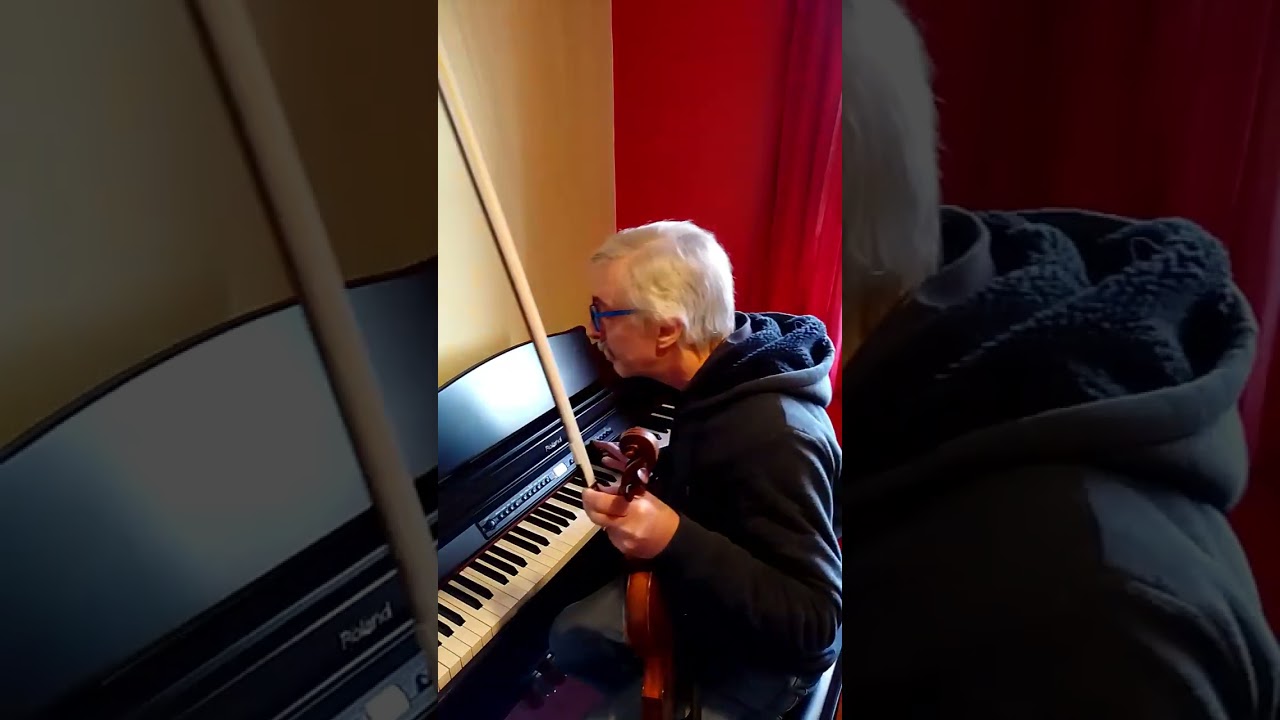
I have played piano and violin to a high standard for many years. Whilst still a student myself I had plenty of opportunities to play in orchestras and chamber ensembles on a regular basis. Additionally I went on to conduct orchestras, bands and choirs. I have given many pupils the chance to be involved in making music in various different groups, thus enhancing their social experience of combining and co-operating with others.
My great interest in compositing music has been enhanced by having the opportunity to learn the basics of trumpet, guitar, drum kit and ukulele. I have composed in a variety of different genres including instrumental, choral/vocal, incidental music and avant garde. I have composed conventionally (using manuscript paper), using studio techniques and computers.
I have always enjoyed working with a wide range of different musical styles, catering for the interests of my students. This enables me to offer bespoke lessons to my students, demonstrating a great insight into the individuality of each person that I teach.
I have played piano and violin to a high standard for many years. Whilst still a student myself I had plenty of opportunities to play in orchestras and chamber ensembles on a regular basis. Additionally I went on to conduct orchestras, bands and choirs. I have given many pupils the chance to be involved in making music in various different groups, thus enhancing their social experience of combining and co-operating with others.
My great interest in compositing music has been enhanced by having the opportunity to learn the basics of trumpet, guitar, drum kit and ukulele. I have composed in a variety of different genres including instrumental, choral/vocal, incidental music and avant garde. I have composed conventionally (using manuscript paper), using studio techniques and computers.
I have always enjoyed working with a wide range of different musical styles, catering for the interests of my students. This enables me to offer bespoke lessons to my students, demonstrating a great insight into the individuality of each person that I teach.
المستوى التعليمي
CNAA certificate for specialist Music Teachers
B Mus (2i) Birmingham University
S level Music - 2
A level Music - A
O level Music - A
Grade 8 violin
Grade 8 piano
B Mus (2i) Birmingham University
S level Music - 2
A level Music - A
O level Music - A
Grade 8 violin
Grade 8 piano
الخبرة / المؤهلات
Software programs used :-
Logic Pro
Garageband
Sibelius
Personal Composer
Instruments played :-
Piano/keyboard/organ
Violin/viola
Drums
Bass guitar
Logic Pro
Garageband
Sibelius
Personal Composer
Instruments played :-
Piano/keyboard/organ
Violin/viola
Drums
Bass guitar
السن
الأطفال (7-12 سنة)
شباب (13-17 سنة)
الكبار (18-64 سنة)
الكبار (65 سنة فأكثر)
مستوى الطالب
مبتدئ
متوسط
متقدم
المدة
30 دقيقة
الدرس يدور باللغة
الإنجليزية
مهارات

المراجعات
الجاهزية في الأسبوع العادي
(GMT -04:00)
نيويورك

على الانترنت عبر كاميرا ويب
Mon
Tue
Wed
Thu
Fri
Sat
Sun
00-04
04-08
08-12
12-16
16-20
20-24
2445.62 EGP /س
Composing your own music has always been a very rewarding task. This has never been so true as the present day when you can hear what you compose instantly if you use computers to generate and play back your own music. However, to ensure that your music sounds really great (whether using computers, manuscript or actual instruments) there are many principles to be considered.
I have had a great interest in composing for over 45 years. I have composed for various combinations of instruments and voices in a wide variety of styles. Having been a music teacher in a comprehensive school for over 30 years, I have had a lot of very relevant experience in teaching composition to a wide range of different ages and abilities. These opportunities have enabled me to tutor students in a diverse variety of genres.
The class will be personalized to your particular standard and chosen style of composition. We would focus on generic building blocks such as structure and instrumentation as well as looking at how to develop ideas. Using a range of compositional devices will also be key to enhancing your compositions. I will tailor-make the class to suit you.
I have had a great interest in composing for over 45 years. I have composed for various combinations of instruments and voices in a wide variety of styles. Having been a music teacher in a comprehensive school for over 30 years, I have had a lot of very relevant experience in teaching composition to a wide range of different ages and abilities. These opportunities have enabled me to tutor students in a diverse variety of genres.
The class will be personalized to your particular standard and chosen style of composition. We would focus on generic building blocks such as structure and instrumentation as well as looking at how to develop ideas. Using a range of compositional devices will also be key to enhancing your compositions. I will tailor-make the class to suit you.
Would you classify improvisation as composition or performance? Well actually it is both! When you improvise you are composing music on the spot, performing what you have made up at the same time as you have composed it.
For many people improvisation is a scary word and having to improvise in a group or band is an alarming prospect. However, this really does not need to be the case. As long as you have a basic knowledge of how to play your instrument you will be able to improvise. Once you know the principle of how chords are formed you will soon be improvising with ease.
The key to success is understanding chords. Once you know how chords are formed and know what notes make up a few chords you will be well on your way towards being able to improvise. We will, therefore, start by ensuring a firm knowledge of certain chords. After this we will progress to improvising a simple melody over the top of these chords. The next stage is to start using notes that are not in the chord. The process is then open ended with emphasis on developing the melody.
If you play a keyboard instrument you will be able to improvise your own pieces and be able to entertain your friends at a moments notice. On the other hand if you play in a band or a group you will be well equipped to do a real 'jam' session.
Whether you play a single line instrument (flute, saxophone, trumpet, violin etc.) or keyboard instruments, this class is for you.
For many people improvisation is a scary word and having to improvise in a group or band is an alarming prospect. However, this really does not need to be the case. As long as you have a basic knowledge of how to play your instrument you will be able to improvise. Once you know the principle of how chords are formed you will soon be improvising with ease.
The key to success is understanding chords. Once you know how chords are formed and know what notes make up a few chords you will be well on your way towards being able to improvise. We will, therefore, start by ensuring a firm knowledge of certain chords. After this we will progress to improvising a simple melody over the top of these chords. The next stage is to start using notes that are not in the chord. The process is then open ended with emphasis on developing the melody.
If you play a keyboard instrument you will be able to improvise your own pieces and be able to entertain your friends at a moments notice. On the other hand if you play in a band or a group you will be well equipped to do a real 'jam' session.
Whether you play a single line instrument (flute, saxophone, trumpet, violin etc.) or keyboard instruments, this class is for you.
عرض المزيد
فصول مماثلة




فصول مماثلة
ضمان المدرس المناسب


اتصل بSteve